From First DUI to Death Penalty
Florida Criminal Case Process: What Happens at Each Stage

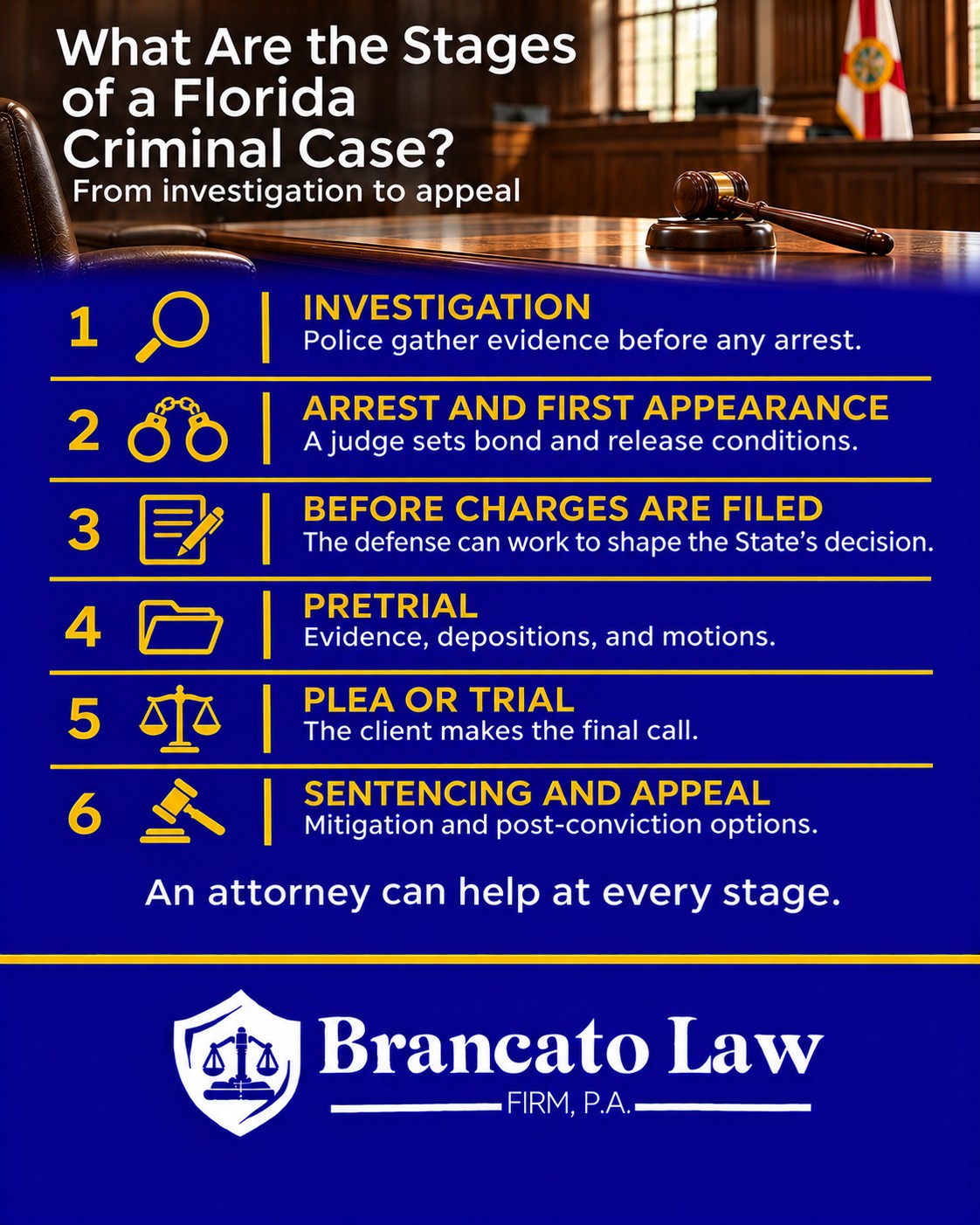
A Florida criminal case moves through predictable stages: investigation, arrest and first appearance, representation before charges are filed, the State’s charging decision, pretrial hearings and motions, plea negotiations or trial, sentencing, and, if needed, appeal. The Brancato Law Firm, P.A. defends clients at every stage in Hillsborough, Pinellas, and Pasco Counties. The guides below, written by our attorneys, explain each stage in detail. For guides on a specific charge, see our criminal defense practice areas, and for quick answers see our criminal law FAQs.
Under Investigation: Police Contact, Searches, and Your Rights
Many cases begin with an investigation before anyone is arrested. You have the right to remain silent and the right to an attorney, and police generally need a warrant or a recognized exception to search your home, your phone, or your blood. These guides explain when police can stop, search, record, or question you, and what to do if you think you are under investigation.
- Signs You Are Being Investigated for a Crime in Florida
- Do I Need a Lawyer If I’m Innocent in Tampa?
- Can Police Track Your Phone Without a Warrant in Florida?
- Can Police Take Your Blood Without a Warrant in Florida?
- Can Police Enter Your Home Without a Warrant in Florida?
- Case v. Montana: When Can Police Enter Your Home for a Welfare Check?
- Can Police Stop and Frisk You in Florida?
- Is It Legal to Film Police in Tampa, Florida?
- Is It Illegal to Secretly Record Someone in Florida?
- Does the Florida Accident Report Privilege Require You to Talk to Police After a Traffic Crash?
- Tampa Police Mistakes Can Lead to Case Dismissal
- What Did the Supreme Court Decide in Noem v. Vasquez Perdomo?
After an Arrest: Bond, Jail, and First Steps
After an arrest in Hillsborough County, the person is booked and brought before a judge at first appearance, usually within 24 hours, where bond and release conditions are set. Decisions made in the first days, including what to say to police and how bond is handled, can affect the rest of the case.
- What to Do After Being Arrested in Tampa: The First 48 Hours and First 30 Days
- Outstanding Warrant in Tampa? Here’s What to Do Now
- How Does a Bond Hearing Work in Tampa, Florida?
- What Is the Bond Walkthrough Process in Hillsborough County?
- Is the Jail Bond Phone Call Real? Spotting the Hillsborough County Bond Scam
- How Do I Use the Hillsborough County Jail Inmate Search?
- Missed a Court Date in Tampa? How to Clear a Capias
- Florida e-Notify: Free Court Date Reminders to Avoid Missed Appearances
- Tampa Attorney Jail Visits: A Hard Lesson From a FL Case
- My College Student Was Arrested in Tampa: What Should Parents Do?
- Arrested on a Cruise Ship in Tampa? What to Do Next
- Can an Off-Duty Police Officer Arrest You in Florida?
- Teacher Arrested in Florida: What Happens to Your Certification and Job?
Before Charges Are Filed: Pre-File Representation
An arrest or an investigation is not the same as a formal charge. Before the State Attorney’s Office files charges, there is often a window when a defense attorney can present evidence, witness information, and mitigation to the prosecutor and ask that the case not be filed, be filed as a lesser charge, or be routed to diversion. In Hillsborough County, some diversion programs, including DETRR for drug possession, can be arranged before charges are filed if the defense reaches the State Attorney’s Office early enough. Learn how our pre-file representation before charges are filed works, and how a mitigation report can be used at this stage.
- Google Account Legal Request in Florida: What to Do
- What Is the DETRR Program in Hillsborough County?
- Timing Optimization and Timing Management in Criminal Defense
Charges, Pretrial Hearings, Motions, and Evidence
After an arrest, the State Attorney’s Office decides whether to file formal charges. The pretrial stage is where the defense gathers evidence, takes depositions, files motions such as a motion to suppress, and tests the State’s case before trial.
- Felony vs. Misdemeanor in Florida: What Is the Difference?
- What Are the Steps in a Hillsborough County Criminal Case?
- Can Criminal Charges Be Dropped or Dismissed in Florida?
- What Is Florida’s 21-Day Rule for an Adversarial Preliminary Hearing?
- When Does Florida’s Speedy Trial Clock Start?
- How Does the Right to a Speedy Trial Work in Florida?
- Can You Get a Continuance in a Florida Criminal Case?
- What Is the Criminal Statute of Limitations in Florida?
- How Does a Motion to Suppress Work in Florida?
- How Do You Disqualify a Judge in Florida?
- Does the State Have to Reveal a Confidential Informant in Florida?
- Can You Fight Jailhouse Informant Testimony in Florida?
- What Happens When Police Destroy Evidence in Florida?
- Should Your Defense Attorney Visit the Crime Scene and Inspect the Evidence?
- Why Your Criminal Defense Attorney Must Personally Inspect the Evidence
- How Do You Challenge Fingerprint Evidence in Florida?
- Is Circumstantial Evidence Enough to Convict in Florida?
- How Does the Corpus Delicti Defense Work in Florida?
- What Is Clergy Privilege in Florida? Can a Pastor Testify Against You?
- What Are the Exceptions to Florida’s Rape Shield Law?
- Do I Have the Right to an Interpreter in Criminal Court?
Common Criminal Defenses
A defense can rest on the facts, on how the evidence was gathered, or on a legal doctrine such as entrapment or collateral estoppel.
- How Does the Entrapment Defense Work in Florida?
- Collateral Estoppel Defense Tampa: Stop Unjust Retrials
- The Paper Trail Defense
- How Do You Fight a False Confession in a Florida Sex Crime Case?
- When the Car—Not the Driver—Caused the Crash
Plea Decisions, Court, and Trial
Most criminal cases resolve without a trial, but the decision to accept a plea or go to trial belongs to the client. These guides cover plea decisions, courtroom conduct, choosing or changing lawyers, and what happens at a Florida jury trial.
- What Happens If You Reject a Plea Deal in Florida?
- How to Decide Whether to Accept a Plea Bargain in a Florida Criminal Case
- It’s the Client’s Call
- How Many Jurors Does a Florida Criminal Trial Have?
- Why Must Your Lawyer Object at Trial in Florida?
- Can I Bring My Child to Court?
- What to Wear to Court: Can You Wear Jeans, Sandals, or Shorts?
- What Is Contempt of Court in Florida? Jail, Fines, and Defenses
- Public Defender or Private Attorney in Tampa?
- How to Switch Criminal Defense Lawyers in Florida: 6 Red Flags
- Don’t Follow the Cones: How to Choose the Right Criminal Defense Attorney
Sentencing, Probation, and Diversion
Florida felony sentencing starts with the Criminal Punishment Code scoresheet, which sets the lowest permissible sentence. Diversion programs, youthful offender sentencing, downward departures, and mitigation can change the outcome.
- How to Fight a Probation Violation in Florida
- What Is Youthful Offender Sentencing in Florida?
- What Is a Mitigation Report in a Criminal Case?
- What Is Florida’s Mental Health Diversion Law? The Tristin Murphy Act
- What Is a Prison Releasee Reoffender in Florida?
- How to Get a Downward Departure in Florida (2026 Guide)
- Lowest Permissible Sentence Exceeds the Maximum in Florida
- Vindictive Sentencing Tampa: The “Trial Tax” Defense
- Out-of-State Jail Credit in Florida: What Ghoneim v. State Means for Your Case
- Florida Court Reverses Sentence: Judge Ignored Autism Evidence
Appeals, Post-Conviction Relief, and Records
After a conviction, relief may be available through a direct appeal or a post-conviction motion, and some records can be sealed or expunged.
- Can a Conviction Be Overturned for Prosecutorial Misconduct in Florida?
- When Your Lawyer’s Math Error Sends You to Prison: The Fernandez Ruling
- How Does Juvenile Expungement Work in Florida?
New Florida Criminal Laws
Florida changes its criminal laws every year. These posts explain new offenses and penalties as they take effect.
- What New Florida Criminal Laws Took Effect Oct. 1?
- Florida’s New Law Protecting Court Officials Takes Effect October 1, 2025
- Florida Utility Worker Law 2025: Stronger Protections, Harsher Penalties
- Trooper’s Law: Florida’s New Felony for Abandoning Dogs During Disasters
- Dexter’s Law: Florida’s New Animal Cruelty Penalties and Public Registry
Talk to a Tampa Criminal Defense Attorney
Our attorneys at The Brancato Law Firm, P.A., founded by Tampa criminal defense attorney Rocky Brancato, can step in at any stage of a case, including before charges are filed. Trial attorney Jean-Luc Adrien speaks Spanish, Haitian Creole, and French, and our office has Spanish-speaking staff; read our guide for Spanish-speaking and Haitian Creole-speaking clients. Call (813) 727-7159 for a confidential consultation.