- Free Consultation 24/7: (813) 727-7159 Tap Here To Call Us


From First DUI to Death Penalty



How to Decide Whether to Accept a Plea Bargain in a Florida Criminal Case



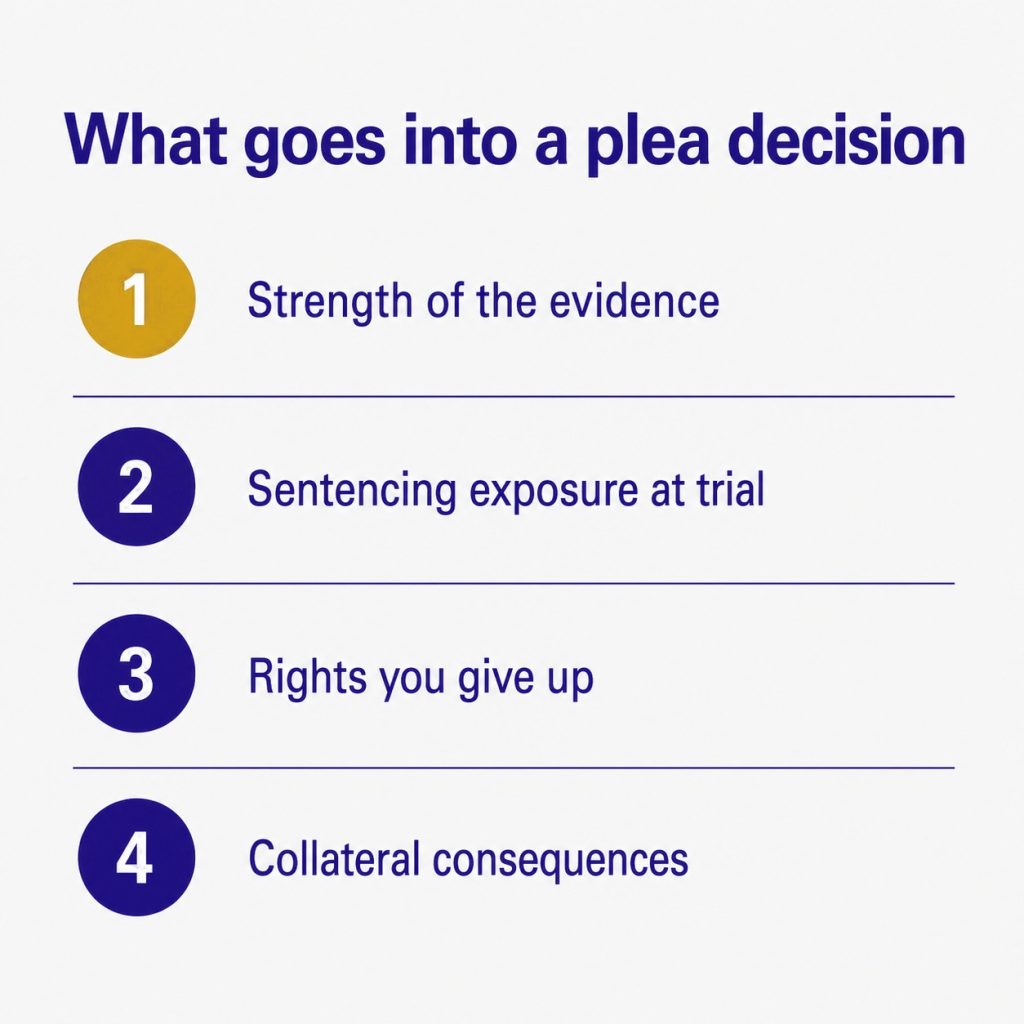
Deciding whether to accept a plea bargain comes down to weighing what the offer gives you against what you risk and give up. The offer provides certainty, often a reduced charge or a lighter sentence, and a faster end to the case. Against that, you weigh the strength of the State’s evidence, your sentencing exposure if you are convicted at trial, the rights and the clean record you surrender by pleading, and the effect a conviction has on the rest of your life. There is a second question stacked on top of the first that most people miss: a plea offer is only as good as the defense standing behind it. Prosecutors calibrate their offers to the opposition, so the same set of facts can produce very different deals depending on who is on the other side of the table.
At The Brancato Law Firm, we have tried more than 150 jury cases to verdict, and that record changes the conversation during negotiation. We defend people charged in Hillsborough, Pinellas, and Pasco Counties, and we practice trial-ready, not deal-ready: every case is prepared as if it will be tried, which is precisely what gives a client the standing to reject a weak offer. This guide walks through the factors that go into a real plea decision, in the order they actually matter, and how to tell whether the offer in front of you is a good one.
Are most criminal cases resolved by a plea bargain?
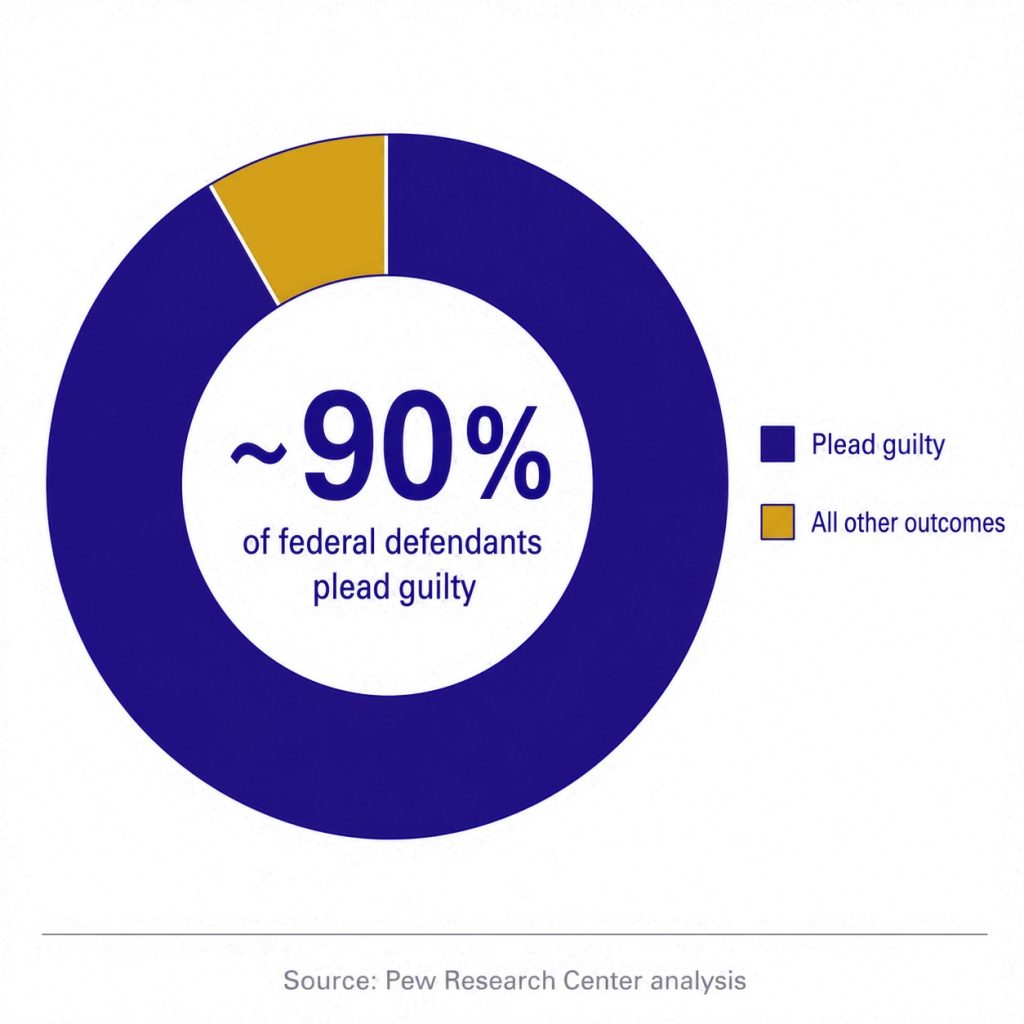
Yes. The large majority of criminal convictions in the United States come from guilty pleas rather than trials. In federal cases, for example, nearly 90 percent of defendants plead guilty rather than going to trial, according to a Pew Research Center analysis. Pleas exist for good reasons. They resolve cases faster, reduce uncertainty, and frequently produce a better outcome than the gamble of trial. Accepting a plea is often the right decision.
Pleas are often the right call. The point is to make that call from a position of strength, with an attorney who is prepared to reject the offer and try the case if the deal is not good enough. A defense that can only settle has already given away its leverage.
Who decides whether to accept a plea bargain?
The decision belongs to you. Your attorney advises, you decide, and a judge must accept the plea before it becomes final. Three things shape how that plays out in Florida:
- Your lawyer has to tell you about every offer. The U.S. Supreme Court has held that the right to effective counsel reaches the plea stage, including the duty to communicate formal offers and give competent advice about them. Lafler v. Cooper and its companion case established that a defendant cannot be left in the dark about a deal. Florida’s plea rules say the same thing: defense counsel must advise the client of all offers and the consequences attached to each one.
- The judge has to find the plea voluntary. A Florida judge cannot simply rubber-stamp an agreement. The court must confirm you understand the rights you are waiving and that there is a factual basis for the plea, and the judge can reject a deal.
- The choice is yours at the highest stakes too. We have written about how this plays out in a case where the client’s own decision shaped the outcome. Even when the exposure is severe, the call is the client’s to make.
Because the decision is yours, the quality of the advice you receive matters enormously. That thread runs through every factor below.
The factors that go into the decision
A sound plea decision is not a gut call. It is the result of weighing several concrete factors, each of which a competent attorney should be able to walk you through in plain language.
How strong is the evidence against you?
This is the starting point. How solid is the State’s case? Is there a confession, and was it lawfully obtained? Are the witnesses credible and consistent? Was the search that produced the evidence legal? Forensic evidence in particular is far less airtight than television suggests. Chain-of-custody gaps, lab error, contamination, and unreliable identification can all weaken a case that looks strong on paper.
This is where early investigation earns its keep. We build cases from day one and draw on a network of forensic experts, because the weaknesses you surface before trial are the same weaknesses that produce better offers, dismissals, or successful motions to suppress. An attorney who has not done that work cannot tell you how good your offer really is, because they do not yet know how weak the State’s case might be.
What is your sentencing exposure if you lose at trial?
You cannot evaluate an offer without knowing what you face if you reject it. In Florida, felony sentences are calculated using the Criminal Punishment Code scoresheet, which sets the lowest permissible sentence based on the offense and your record. Some charges carry mandatory minimum sentences, such as Florida’s firearm enhancements, that strip the judge of discretion entirely.
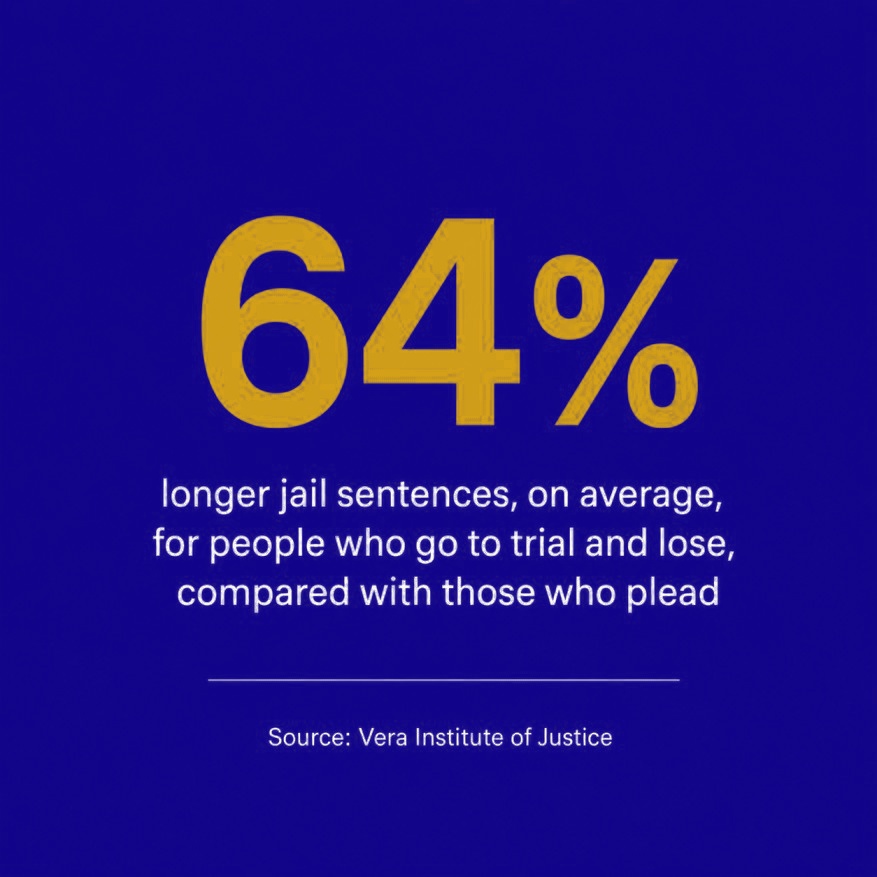
The gap between the offer and the maximum you face at trial is the heart of the math. In practice, a sentence after a trial loss is often heavier than the deal that was on the table, a pattern sometimes called the trial penalty. Understanding your real exposure, rather than the worst-case headline number, takes someone who knows how these cases are actually scored and sentenced in these courthouses. Rocky Brancato served as Chief Operations Officer of the Hillsborough County Public Defender’s Office, the largest criminal defense operation in the Tampa Bay region. That system-level knowledge of how cases get charged, negotiated, and resolved informs how we read an offer.
What are you permanently giving up by pleading?
A plea is a waiver. When you accept one, you give up:
- The right to a jury trial
- The right to confront and cross-examine the State’s witnesses
- The State’s burden to prove every element beyond a reasonable doubt
- Most of your ability to appeal the conviction
In most cases, a plea also creates a conviction on your record. A plea must be made knowingly and voluntarily, which means you should fully understand each of these consequences before you sign anything.
What are the collateral consequences?
The sentence is only part of the picture. A conviction, and sometimes the plea itself, can reach into parts of your life that have nothing to do with jail or probation:
- Immigration. A plea can trigger deportation or block naturalization for noncitizens. The Supreme Court requires your attorney to advise you of that risk before you plead, as it held in Padilla v. Kentucky.
- Professional licenses. Doctors, nurses, teachers, contractors, and many others can lose licensure over a conviction.
- Firearm rights. A felony conviction strips the right to possess a firearm.
- Sex offender registration. Certain charges carry mandatory registration that can outlast any sentence.
- Employment and housing. A record can follow you through background checks for years.
A real plea evaluation prices these in. An offer that looks reasonable on the sentence alone can be a poor deal once the collateral consequences are on the table.
What does the plea actually give you?
Pleas resolve the majority of cases for legitimate reasons, and an honest evaluation has to weigh the upside fairly:
- Certainty, instead of the unknown of a verdict
- A reduced charge or a lighter, agreed sentence
- A faster resolution and a sooner return to your life
- Access to diversion, treatment, or probation in some cases
- Lower cost and far less stress than a trial
- Sparing your family the strain of a public proceeding
Sometimes the offer is genuinely good and trial is not worth the risk. The goal is to know that with confidence rather than assume it.
Accepting a plea vs. going to trial: what you are weighing
| Factor | Accepting the plea | Going to trial |
| Certainty of outcome | Known and agreed in advance | Unknown until the verdict |
| Sentence | Negotiated, usually reduced | Set by the court, can be heavier |
| Criminal record | Conviction in most cases | Possible acquittal and no conviction |
| Trial rights | Waived | Fully exercised |
| Timeline | Faster resolution | Longer, often months or more |
| Cost and stress | Lower | Higher |
| Leverage | Spent once you agree | Preserved while the case is prepared |
How can you tell whether a plea offer is actually good?
A plea offer reflects the prosecutor’s read of your defense. The stronger your position looks, the more the State has to offer to avoid the risk and expense of trying the case. Give two people nearly identical facts, and the offers can still come back very different depending on who is representing them. An attorney with a verifiable record of trying cases commands stronger offers. An attorney who signals from the start that they want to settle invites weaker ones.
This is why a real trial record is the single most relevant credential when you are evaluating an offer. Our 150-plus jury trials to verdict, day-one trial preparation, and forensic expert network are the concrete things that create leverage and surface the weaknesses that move an offer in the client’s favor. The calculus also scales with the charge: a first-offense misdemeanor and a life felony are not the same decision, and serious preparation is not reserved for serious charges. We bring the same approach to the full range of cases across our practice areas. Each case is unique. Past results do not guarantee future outcomes.
Watch how your attorney’s fee is structured
Here is a part of the plea decision that rarely gets discussed: how your lawyer charges you can quietly shape the advice you get. A common pattern in the Florida market is to quote a lower fee for the pre-trial phase and a separate, higher fee for trial. That structure creates a financial incentive to settle the case before it is genuinely worked up for trial, because the attorney earns more by avoiding the heavier trial work. That incentive can color the advice you receive about whether to take a deal.
A single all-in flat fee that covers the entire case removes that incentive. It aligns your attorney’s interests with your interest in being fully prepared, whatever the case requires. Third-party costs, such as expert witnesses, investigators, and lab work, are handled separately from the attorney’s fee, so the fee structure never pressures the preparation. This is what trial-ready, not deal-ready looks like applied directly to the plea decision: your attorney has no reason to steer you toward a settlement and every reason to make the case as strong as it can be.
A note from Rocky Brancato
In his book on choosing a defense attorney, Rocky Brancato frames the choice as buying protection, not promises: “The right attorney does not make promises. They build protection.” Applied to a plea offer, that protection is an honest assessment of whether the deal in front of you is good, not a nudge toward whatever resolves the case fastest. His framework for evaluating an attorney is laid out in the firm’s free eBook, How to Choose a Major Crimes Attorney.

Frequently asked questions about Florida plea bargains
Does the judge have to accept my plea deal in Florida?
No. The judge must confirm that your plea is voluntary and that a factual basis supports it, and the court can reject the agreement. The deal between you and the prosecutor is not final until the judge accepts it.
Can I withdraw a plea after I accept it?
Sometimes, but it is difficult, and it becomes much harder once you have been sentenced. The grounds are limited. If you believe you entered a plea you should not have, speak with an attorney immediately, because timing matters.
Will pleading guilty always give me a criminal record?
Usually, but not always. In eligible cases, a Florida judge can withhold adjudication, which resolves the case without a formal conviction. Whether that option is available depends on the charge and your prior history, and it is one of the things worth asking about before you accept any offer.
Should I accept the first plea offer?
Not necessarily. Offers often change as the defense develops the case and surfaces weaknesses in the State’s evidence. An early offer made before your attorney has investigated is not always the best offer you will see.
What happens if I reject the plea and lose at trial?
You face the sentence the court imposes, which can be heavier than the offer that was on the table. That risk is real, and it is exactly why the strength of your defense, and the trial-readiness of your attorney, belong at the center of the decision.
Get a case-specific read on your plea offer
Every plea decision turns on the specifics of your case: the evidence, the charge, your record, and the realistic risk of trial. A general framework can tell you what to weigh, but only a review of your case can tell you whether the offer in front of you is one you should take.
Before you accept or reject a deal, talk to an attorney who prepares every case for trial. The Brancato Law Firm offers free, confidential consultations to people charged in Hillsborough, Pinellas, and Pasco Counties. Call us at (813) 727-7159 or reach us through our contact page to get an honest read on your options.
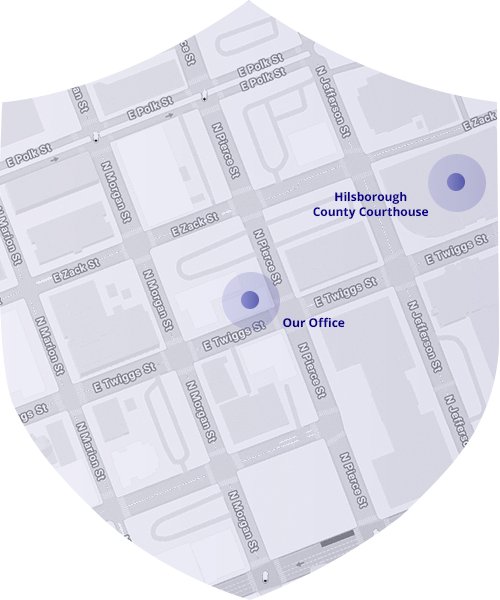
Visit Us

Tampa, FL 33602
Contact Us Now
Free Legal Consultation (813) 727-7159