
From First DUI to Death Penalty



How to Fight an Improper Exhibition Charge in Florida? (2026)



To fight an improper exhibition of a firearm or weapon charge in Florida, the defense attacks the manner of the display and the reason for it: the State must prove the person exhibited the weapon in a rude, careless, angry, or threatening manner, in the presence of at least one other person, and not in necessary self-defense. Under section 790.10, improper exhibition is a first-degree misdemeanor punishable by up to 1 year in jail and a $1,000 fine. It is also the lesser offense jurors most often return when an aggravated assault with a firearm case falls short, so the same facts can mean a felony or a misdemeanor.
A Florida judge or jury deciding an improper exhibition case is asking one question: was the gun shown in a way that frightened or endangered someone for no lawful reason? I’m Rocky Brancato, founder of The Brancato Law Firm, P.A., a Tampa criminal defense firm. I have answered that question for juries in more than 25 years in Hillsborough County courtrooms and more than 150 jury trials to verdict, and our attorneys build these defenses from the seconds before the gun appeared, because that is usually where self-defense and context live.
What is improper exhibition of a firearm in Florida?
Improper exhibition is showing a weapon to another person in a rude, careless, angry, or threatening manner when it is not necessary for self-defense. Section 790.10, Florida Statutes, covers “any dirk, sword, sword cane, firearm, electric weapon or device, or other weapon” exhibited “in the presence of one or more persons.” The charge applies to knives, stun guns, and other weapons as well as firearms.
The State must prove each of these elements beyond a reasonable doubt:
- The person had or carried a firearm or other weapon.
- The person exhibited it in a rude, careless, angry, or threatening manner.
- At least one other person was present.
- The display was not in necessary self-defense.
Exhibiting does not require pointing the weapon at anyone or saying anything. In our experience, the most common Hillsborough County arrest reports describe lifting a shirt to show a holstered gun during a road rage argument, setting a gun on a table during a dispute, or holding a firearm at one’s side while ordering someone off a property.
What are the penalties for improper exhibition in Florida?
Improper exhibition is a first-degree misdemeanor punishable by up to 1 year in jail and a $1,000 fine under section 775.082 and section 775.083. The same display becomes a third-degree felony under section 790.115(1) when it happens at a school-sponsored event, on school grounds, on a school bus or at a bus stop, or within 1,000 feet of an elementary, middle, or high school during school hours, with an exception for private property owners and their invited guests.
| Charge | Statute | Key difference | Degree and maximum |
|---|---|---|---|
| Improper exhibition of a weapon or firearm | s. 790.10 | Rude, careless, angry, or threatening display in someone’s presence | First-degree misdemeanor; 1 year, $1,000 |
| Exhibition at or near a school | s. 790.115(1) | Same display at a school event, on school grounds or a bus, or within 1,000 feet during school hours | Third-degree felony; 5 years, $5,000 |
| Aggravated assault with a deadly weapon | s. 784.021 | Intentional threat that creates a well-founded fear of imminent violence | Third-degree felony; 5 years, $5,000 |
| Simple assault | s. 784.011 | Threat of violence without a weapon | Second-degree misdemeanor; 60 days, $500 |
Many improper exhibition cases start as aggravated assault arrests. Our post on how to fight aggravated assault in Florida explains the felony, and our firm’s goal in those cases is often to show that the evidence supports, at most, the misdemeanor.
Is improper exhibition a lesser offense of aggravated assault?
Yes. When a jury does not believe the State proved an intentional threat that put the victim in well-founded fear, it can return improper exhibition instead. In Roberts v. State, 47 So. 3d 380 (Fla. 2d DCA 2010), a taxi driver argued with two men in a pickup truck parked near his cab, told them to leave, and pointed a firearm at them. He was charged with two counts of aggravated assault with a firearm, and the jury convicted him of improper exhibition on both counts as the lesser offense.
The Second District, which hears appeals from Hillsborough County, then vacated one of the two convictions. Because section 790.10 prohibits a display “in the presence of one or more persons,” the court held that one display in front of two men supported only a single conviction. Roberts gives our attorneys two arguments in the same case: the jury should have the misdemeanor option, and a single display cannot be split into multiple counts.
Does open carry change improper exhibition in Florida?
Open carry makes a visible gun lawful for people who may carry, but it does not make a threatening display lawful. In McDaniels v. State, 419 So. 3d 1180 (Fla. 1st DCA 2025), a man stood at a Pensacola intersection with a visible holstered handgun, and the First District struck down Florida’s open carry ban. The Attorney General’s September 15, 2025 guidance memorandum told law enforcement to stop arresting law-abiding people for visible carry, but it stated that officers may still act against anyone who exhibits a firearm “in a rude, careless, angry, or threatening manner” under section 790.10.
That makes the defense question sharper than it used to be. A gun that was simply visible on a hip is no longer a crime for an eligible person, so the State must prove something about the manner of the display. Our post on how to fight a concealed firearm charge in Florida covers who may carry in the first place.
Is showing a gun in self-defense legal in Florida?
Yes, when the person reasonably believes it is necessary. Section 776.012 says a person is justified in “using or threatening to use” force to defend against imminent unlawful force, and in threatening deadly force to prevent imminent death, great bodily harm, or a forcible felony. Displaying a firearm to stop an attack can be a lawful threatened use of force, and section 790.10 itself excludes displays made “in necessary self-defense.”
When the facts support it, our attorneys file a motion for Stand Your Ground immunity before trial, which can end the case without a jury. Our post comparing Stand Your Ground and self-defense in Florida explains how the two defenses differ.
How often are firearm threats reported in Florida?
Threats with weapons are among the most common violent crimes reported in Florida. Florida law enforcement agencies reported 63,190 aggravated assaults in 2024, a rate of 270.4 per 100,000 residents, according to the Bureau of Justice Statistics report Crime Known to Law Enforcement, 2024. Not every one involved a firearm, but a large share of improper exhibition cases begin as aggravated assault reports and are reduced later.
The pattern holds in Hillsborough County. In 2025, the county recorded 1,772 aggravated assault arrests, a rate of 112.5 per 100,000 residents, according to Florida Department of Law Enforcement arrest data published on the Florida Department of Health’s FLHealthCHARTS site.

Witness perception is often the weakest part of these cases. A 2018 meta-analysis of 78 studies, Arlin J. Benjamin Jr. et al., 22 Personality & Soc. Psychol. Rev. 347 (2018), found that the mere presence of weapons increased aggressive thoughts and hostile appraisals, though the authors cautioned that the published literature tends to overestimate the effect for some outcomes. In our experience, a witness who sees a gun often describes the person holding it as more aggressive than the video shows, which is why we compare every statement with the recordings.
How do our attorneys fight an improper exhibition charge?
Our attorneys fight these charges through our Tampa gun crimes lawyer practice by testing each element against the evidence. These are the defenses we raise most often.
| Element the State must prove | What the State usually relies on | Evidence our attorneys gather |
|---|---|---|
| Had or carried a weapon | Officer’s recovery of a firearm or knife | Ownership records and whether the item meets the statute’s definition |
| Rude, careless, angry, or threatening manner | A witness description of the display | Dash camera, doorbell, store, and phone video of the actual movement |
| In the presence of one or more persons | The complaining witness | Distance, lighting, and line of sight; count of persons for duplicate counts under Roberts |
| Not in necessary self-defense | The accuser’s version of who started it | 911 calls, injuries, prior threats, and the other person’s conduct before the gun appeared |
1. Show the display was not rude, careless, angry, or threatening
A gun that became visible when a shirt rode up, or that was moved from a seat to a holster, was not exhibited in a threatening manner. We collect dash camera, doorbell, store, and phone video to show what the gun was actually doing.
2. Raise self-defense
Road rage and neighbor disputes rarely start with the person who showed the gun. We build the timeline of what the other person did first, including 911 calls, prior threats, and injuries.
3. Test the witnesses
In many cases the only evidence is one witness who says a gun was shown. We look for bias, distance, lighting, and statements that changed between the 911 call and the deposition.
4. Challenge stacked counts
Under Roberts, one display in front of several people supports one count of improper exhibition. We move to dismiss or vacate duplicate counts.
5. Push felonies down to the misdemeanor
When the State files aggravated assault with a firearm, we argue that the evidence shows at most improper exhibition, which is a misdemeanor with no prison exposure.
6. Negotiate for an outcome that protects gun rights
A dismissal, or a resolution that avoids a conviction for a crime of violence, matters to anyone who wants to keep carrying. Our post on Florida gun crime laws explains how criminal records affect carry eligibility, and representation before charges are filed lets our attorneys present video to the State Attorney’s Office before it decides what to file.
What happens after an improper exhibition arrest in Hillsborough County?
After an improper exhibition arrest in Hillsborough County, a person charged only with the misdemeanor may be released on a notice to appear or on bond, while a person also charged with aggravated assault is usually booked and sees a judge at first appearance. In Hillsborough, the judge sits downtown and the arrested person appears by video from the jail, and the firearm is held as evidence. Our Hillsborough County criminal defense page covers the local courts, and our Florida criminal case process page walks through each stage from arrest to trial.
What should you do after an improper exhibition arrest?
- Do not contact the person who reported you, even to explain.
- Do not post about the incident or the gun on social media.
- Save any dash camera, doorbell, or phone video, and ask witnesses to save theirs.
- Write down what the other person said and did before the gun was visible.
- Call a defense lawyer before speaking with detectives.
Frequently asked questions about improper exhibition charges
Can improper exhibition charges be dropped in Florida?
Yes, prosecutors can drop an improper exhibition charge when video shows the display was not threatening, when self-defense is clear, or when the only witness is unreliable. The Brancato Law Firm gathers that evidence early and presents it through pre-file advocacy when possible.
Is flashing a gun during road rage a crime in Florida?
Yes, showing a gun to another driver in an angry or threatening way can be charged as improper exhibition, and pointing it can be charged as aggravated assault. Our attorneys at The Brancato Law Firm look first at dash camera and traffic camera video, because the other driver’s conduct often supports self-defense.
Can you be charged with improper exhibition on your own property?
Yes, section 790.10 has no exception for a person’s own home or yard if the display was threatening and not in necessary self-defense. The Brancato Law Firm examines whether the other person was trespassing or threatening harm, and our violent crime defense page explains how we handle confrontations at home.
Can an improper exhibition case affect my right to carry a gun in Florida?
It can. Under section 790.06(3)(a), a finding of guilt or withhold on a misdemeanor crime of violence bars carrying without a license until three years after probation ends, and a threatening gun display may be treated as one. Our team at The Brancato Law Firm keeps that consequence in view when negotiating any resolution.
Does improper exhibition apply to knives and stun guns?
Yes, section 790.10 covers any dirk, sword, firearm, electric weapon or device, or other weapon. The Brancato Law Firm defends knife and stun gun exhibition cases using the same elements and self-defense analysis as firearm cases.
What is the difference between improper exhibition and brandishing in Florida?
Florida law does not use the word brandishing for this crime; the statute is improper exhibition under section 790.10. Our attorneys at The Brancato Law Firm explain the charge in plain terms at the first meeting, and our gun crimes defense page covers related firearm offenses.
For more about our defense strategies, visit our Gun Crimes page.
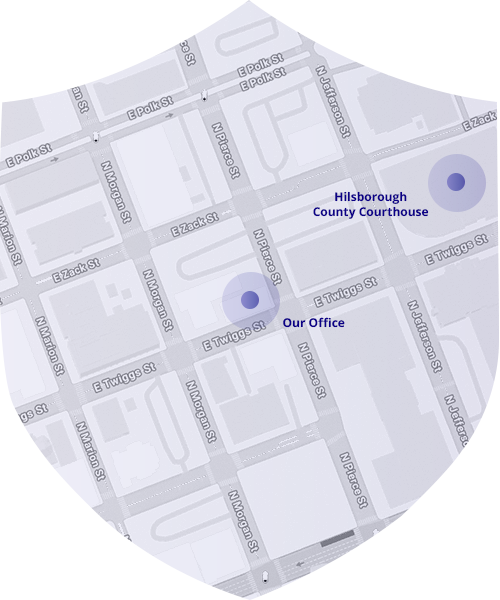
Our attorneys can start requesting the video that shows what really happened the day you call, before it is recorded over. Call The Brancato Law Firm, P.A., founded by Tampa Criminal Defense Attorney Rocky Brancato, at (813) 727-7159; call us at any hour. Rocky is a former Chief Operations Officer of the Hillsborough County Public Defender’s Office, where he oversaw a staff of over 100 attorneys, and our office is two blocks from the courthouse. Our firm has Spanish-speaking staff, and attorney Jean-Luc Adrien speaks Spanish, Haitian Creole, and French.
The Brancato Law Firm, P.A.
620 E. Twiggs Street, Suite 205, Tampa, FL 33602
(813) 727-7159
Serving Hillsborough, Pinellas, and Pasco Counties
The Brancato Law Firm, P.A. is a Tampa-based criminal defense practice. We are not affiliated with any other Brancato-named law firms.
Visit Us
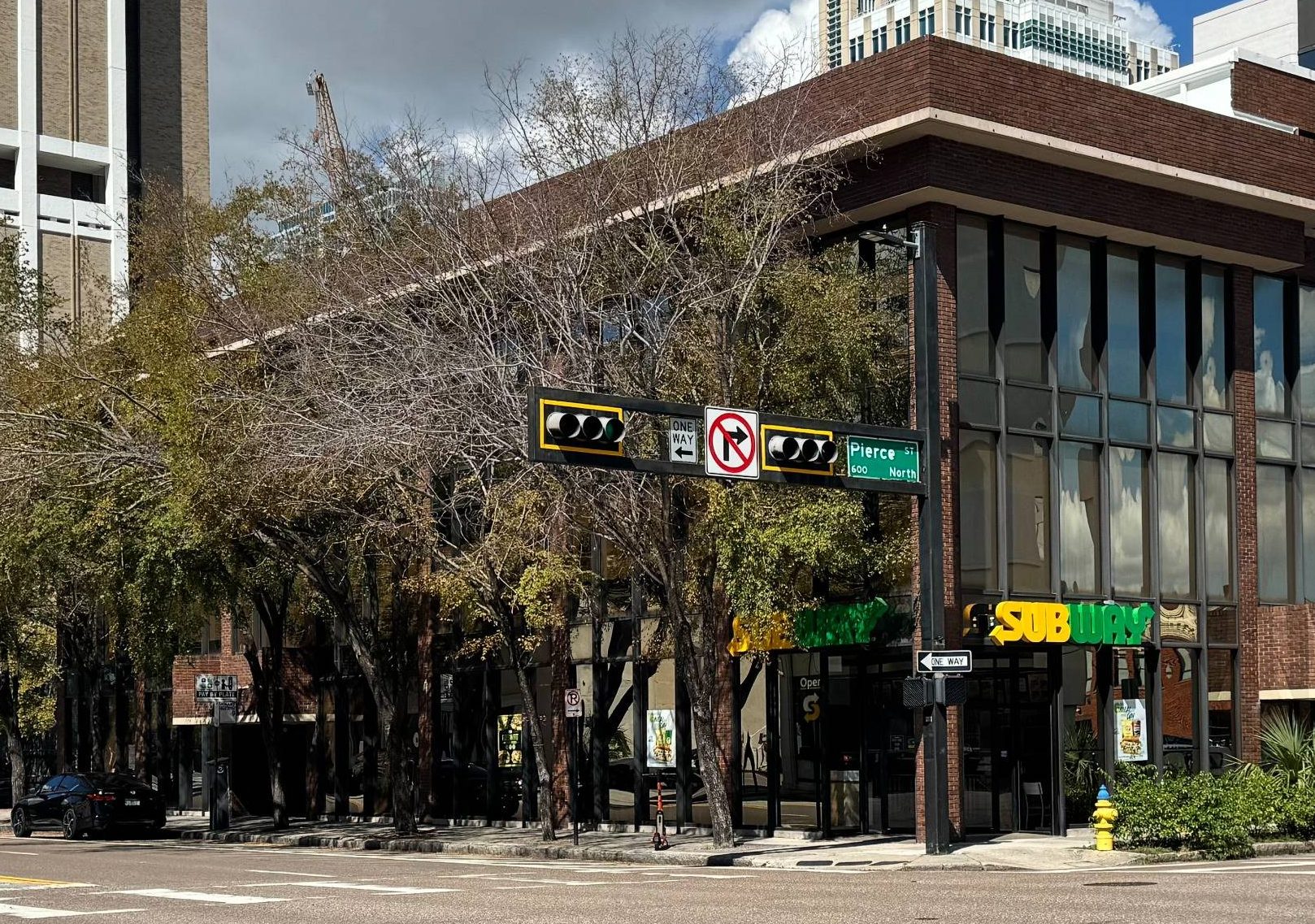
Tampa, FL 33602
Contact Us Now
Free Legal Consultation (813) 727-7159