- Free Consultation 24/7: (813) 727-7159 Tap Here To Call Us


From First DUI to Death Penalty



What Is Constructive Possession in a Florida Drug Case?


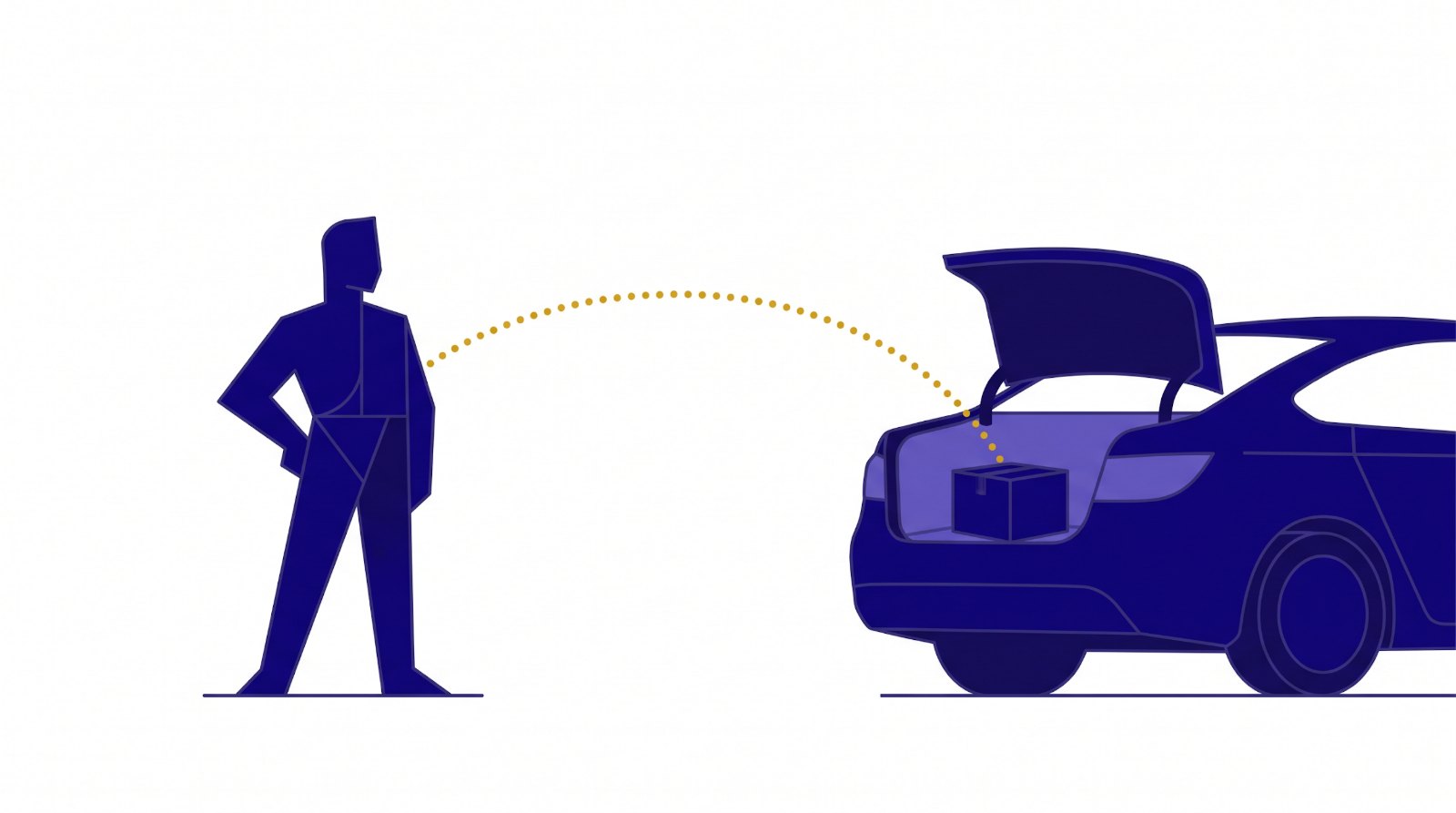
Constructive possession is how Florida’s drug law covers drugs that were not on the person charged, such as drugs in a car, a bedroom or a bag. Under Florida’s standard jury instruction, drugs are in your constructive possession when they are in a place you control, or in a place where you hid them. To convict you, the State has to prove three things: you knew the drugs were there, you could control them, and the substance is the drug named in the charge. When other people share the car or home, the fact that you were there is not enough. The State needs more evidence that ties you to the drugs.
At The Brancato Law Firm in Tampa, we defend people facing constructive possession charges. Our founder, Rocky Brancato, has spent more than 25 years in Hillsborough County’s criminal justice system. He served as Chief Operations Officer of the Hillsborough County Public Defender’s Office, the largest criminal defense operation in Tampa Bay, so he knows how the local system handles drug cases from the defense side.
What Does the State Have to Prove in a Constructive Possession Case?
All three of the following have to be proven beyond a reasonable doubt. If even one of them is not proven, you cannot be convicted of possession.
- You knew the drugs were there. Knowing means you were aware the drugs were in the car, room or bag.
- You could control the drugs. Control means you had the power to decide what happened to the drugs, such as keeping them, moving them or getting rid of them. The State tries to prove control by showing that you control the place where the drugs were found, such as a car you drive or a bedroom that is yours. It can also try to show that you hid the drugs there.
- The substance is the drug named in the charge. If the charge says cocaine, the State has to prove the substance was cocaine.
The State does not have to prove the drugs belonged to you. Florida defines possession by knowledge and control, so drugs owned by a friend or roommate can still be charged as yours if you knew about them and could control them. That is why saying “they weren’t mine” does not end the case by itself.
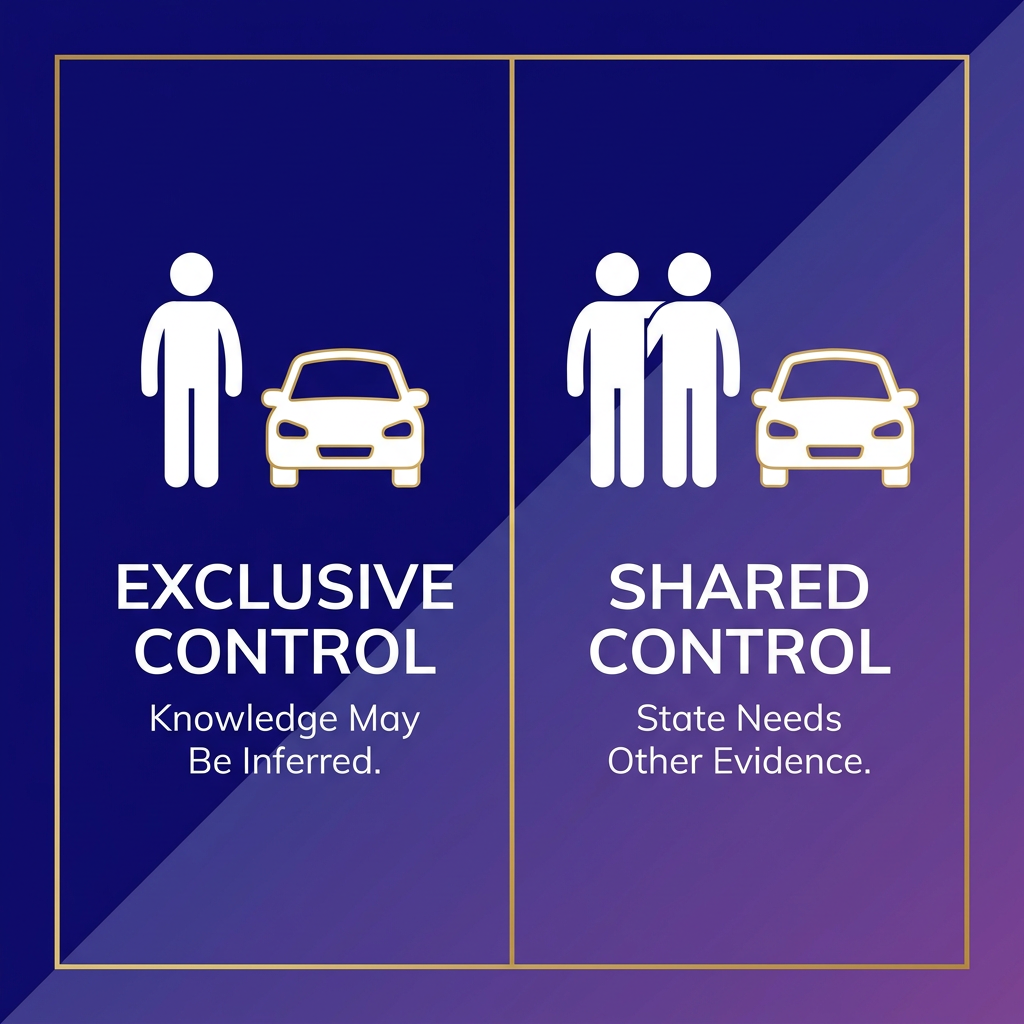
Whether anyone else used the place changes how the State proves knowledge. If you were the only person using the car or room, Florida’s jury instruction allows the jury to infer that you knew the drugs were there. If other people shared it, the jury is not allowed to make that inference, and the State has to prove your knowledge with other evidence. That evidence can be circumstantial evidence, meaning facts that point to your knowledge without directly proving it.
What Is the Difference Between Actual and Constructive Possession?
In actual possession, the drugs are on your body, so where they were found shows you possessed them. Drugs close enough for you to reach easily also count as actual possession, but only if they are under your control. The State still has to prove you knew about them. In constructive possession, the drugs are somewhere else, so the State has to prove both your knowledge and your control from the circumstances.
Constructive possession is not limited to drugs. Florida uses the same idea for other things that are illegal to possess, such as a firearm when the person charged is a convicted felon, or child sexual abuse material (CSAM) found on a shared computer. In each of these cases, the State has to show that you knew the item was there and could control it, and sharing the car, home or computer with other people makes that harder to prove.
| Factor | Actual possession | Constructive possession |
|---|---|---|
| Where the drugs are | In your hand, on your body, in a purse or other container you are holding or wearing, or close enough for you to reach easily and under your control | In a place you control, such as a car, room or bag, or in a place where you hid them |
| What the State has to show | You knew about the drugs | You knew about the drugs and could control them |
| Common examples | Pills in the pocket of a jacket you are wearing, or a small bag of powder in your hand | Drugs in a car’s center console, a bedroom dresser drawer or a suitcase in the trunk |
| How knowledge gets proven | When no one else had the drugs, a jury may infer you knew about drugs on your body | From the circumstances, such as who else used the place, where the drugs were and anything else that ties you to them |
Is Being Near Drugs Enough for a Possession Charge?
No, when the drugs are in a place someone else controls, being close to them does not prove you possessed them. Florida’s jury instruction tells jurors that closeness alone does not show control in that situation. For example, if you were visiting a friend’s apartment and police found drugs in your friend’s kitchen cabinet, being in the apartment would not prove you possessed those drugs. The State would need evidence that ties you to them.
What If the Drugs Were Found in a Shared Car or Home?
A place counts as shared when more than one person uses it. That includes the rooms everyone uses in a home you rent with a roommate, such as the kitchen and living room. It also includes your own car when other people are riding in it. Sharing a place does not clear you. Florida’s jury instruction says two or more people can possess the same drugs at the same time. This is called joint possession, and each of those people is considered to be in possession.
Sharing does change the evidence the State needs. In Brown v. State, the Florida Supreme Court held in 1983 that when a place is shared, both your knowledge of the drugs and your ability to control them “must be established by independent proof.” Independent proof means evidence other than your connection to the place, such as something you said or your fingerprints.
Brown also made one exception to the independent proof rule, for drugs in plain view. Plain view means the drugs were out in the open where anyone could see them. When drugs are in plain view in a shared place, and an owner or occupant of that place is present, the court held that those facts are enough to support that person’s conviction for constructive possession. An occupant is someone who lives in the place or shares control of it, such as a roommate who rents the apartment but does not own it.
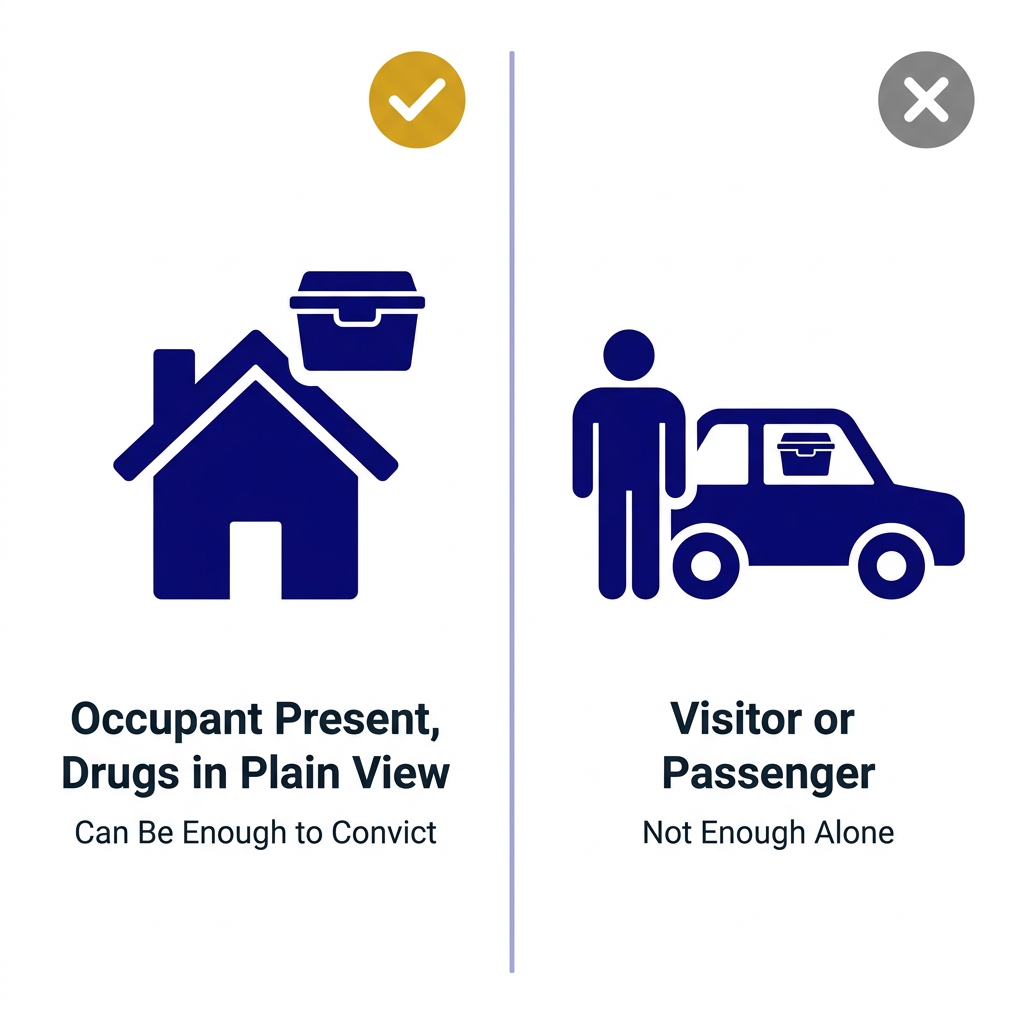
A passenger riding in someone else’s car and a guest visiting someone else’s home do not count as occupants under this rule. For them, drugs in plain view are not automatically enough for a conviction, and the State needs other evidence that ties them to the drugs. Two decisions from Florida’s Second District Court of Appeal show what happens when the State has no other evidence against a visitor or a passenger. That court hears appeals from Hillsborough, Pinellas and Pasco counties, so its decisions apply to cases there.
- In Sundin v. State, the court reversed the conviction of a man visiting a hotel room he had not rented, even though the drugs were within his reach.
- In Wynn v. State, the court reversed a passenger’s conviction for cocaine found in the driver’s-side door handle. The cocaine was not in plain view, and the State had no evidence connecting the passenger to it.
Can You Give Me an Example of Constructive Possession?
These four hypothetical situations show which facts tend to help the State and which tend to help the defense:
- Your own car, driving alone. Police find pills in the glove box of a car you own and no one else drives. Because you alone control the car, the jury may infer you knew about the pills. These facts favor the State.
- Your own car, with a friend riding along. Police find the same pills in the closed glove box while your friend sits in the passenger seat. The car is shared, so the jury cannot infer that you knew about the pills. Unless the State has other evidence tying you to them, these facts favor the defense.
- A friend’s car, with drugs in plain sight. You are a passenger, and a bag of powder is sitting on the center console. As a passenger, you are not an occupant under the plain view rule, so the bag being visible is not automatically enough for a conviction. Without other evidence tying you to the bag, these facts favor the defense.
- A shared apartment, with drugs on the coffee table. You rent an apartment with a roommate, and police find cocaine on the living room coffee table while you are home. You are an occupant, and the drugs were in plain view. These facts favor the State.
What Evidence Do Prosecutors Use to Prove Constructive Possession?
Florida courts have accepted these kinds of evidence as proof that ties a specific person to drugs found in a shared space:
- Your own statements. Telling police the drugs are yours, that you bought them, or that you use drugs can connect you to the drugs.
- Items found with the drugs that match what you told police. In Thompson v. State, a man told police he had bought methamphetamine and described how he used drugs. A straw found with the drugs fit that description, and the court held that his statements and the straw together were enough to tie him to the drugs.
- Fingerprints or DNA. Physical evidence can tie you to the drugs themselves.
Is Constructive Possession Punished Less Than Actual Possession?
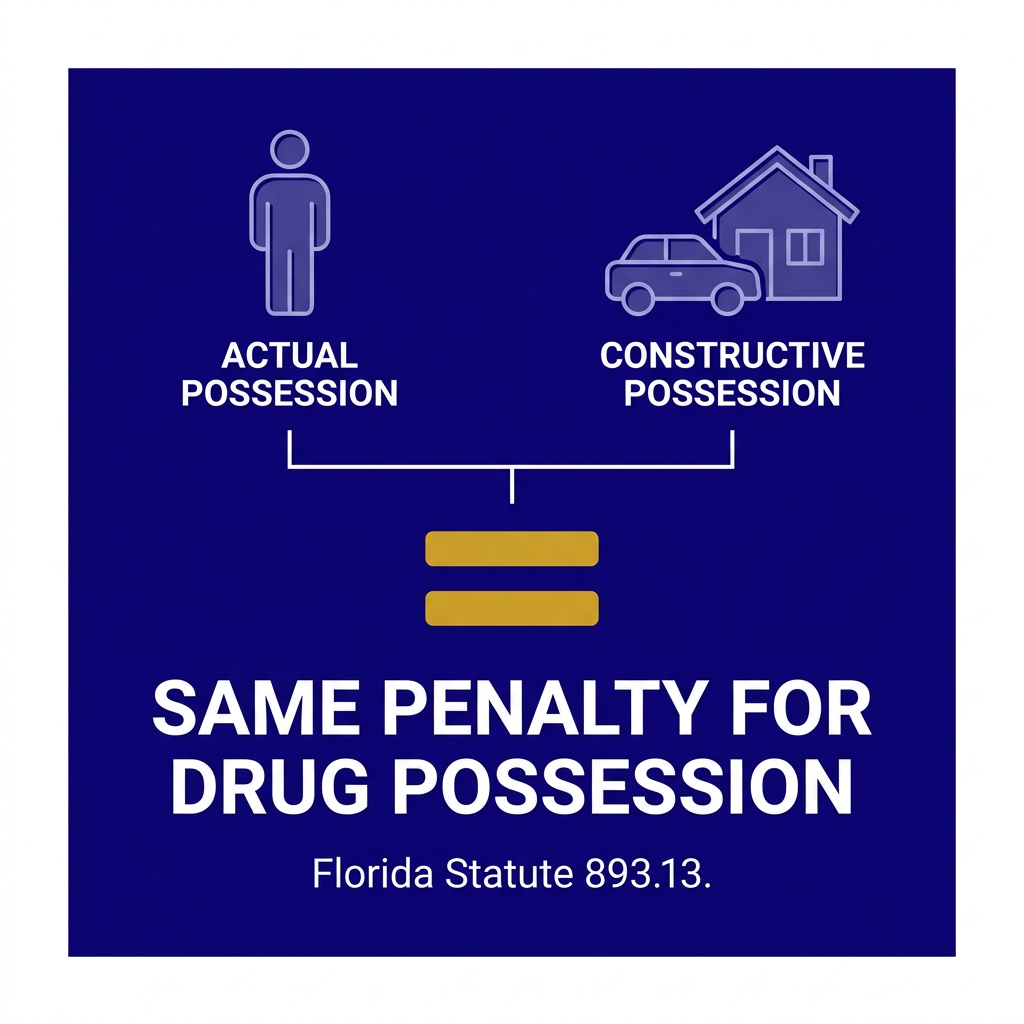
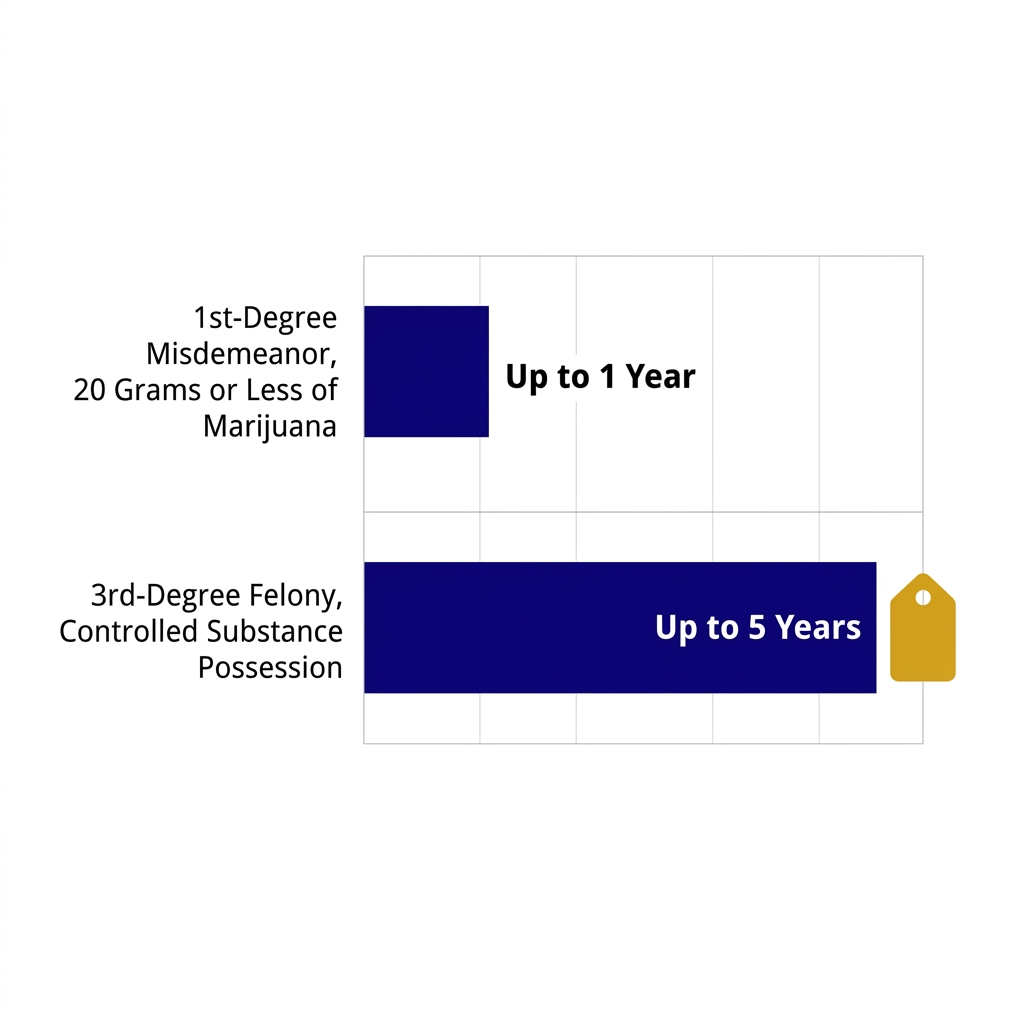
For drug charges, the penalties are the same, because Florida’s drug law treats actual and constructive possession as one offense. The penalty depends on the drug and the amount. Possessing a controlled substance is generally a third-degree felony, which carries up to five years in prison. Possessing 20 grams or less of marijuana is a first-degree misdemeanor, which carries a sentence of up to one year. Larger amounts of a drug can lead to a separate charge of drug trafficking. Our Tampa drug crimes defense page explains how the penalties change for other drugs and amounts.
That is not true of every possession charge. A convicted felon can be found guilty of possessing a firearm under section 790.23 of the Florida Statutes through either actual or constructive possession. But the three-year minimum mandatory prison sentence in section 775.087(2)(a)1 applies only when the felon actually possessed the firearm. If the State can prove only constructive possession, such as a gun found in a bedroom closet, that minimum mandatory does not apply.
How Do You Fight a Constructive Possession Charge?
These are the main defenses:
- You did not know the drugs were there. If someone else left the drugs in a car or room you use and you never knew about them, the State cannot prove you knew.
- The drugs were in a place someone else controlled. Drugs in another person’s bedroom, purse or backpack are in a place that person controls, and being near them does not prove you controlled them.
- Nothing ties you to drugs in a shared space. Without evidence such as your statements or your fingerprints, sharing the car or home where the drugs were found is not enough to prove you possessed them.
- You did not know the substance was an illegal drug. This defense applies when you knew the substance was there but did not know it was an illegal drug.
- The search was illegal. If police searched the car, home or bag without a legal basis, a motion to suppress can keep the State from using the drugs as evidence against you. If the drugs are kept out, the State may not have enough evidence left to continue the case.
- The evidence is too weak to go to trial. When the State’s evidence cannot show knowledge or control, a motion to dismiss asks the court to end the case before trial.
The defense of not knowing a substance was illegal comes from section 893.101 of the Florida Statutes. For example, it would apply if you knew a pill bottle was in your car but believed it held a legal medication. The State does not have to prove you knew a substance was illegal. Instead, your lack of knowledge is an affirmative defense, meaning a defense you raise yourself. It gives the jury a reason not to convict you even if the State proves the things it has to prove.
If you raise this defense, the jury is told that the law allows jurors to presume that a person who possessed a controlled substance knew the substance was illegal. The jury does not have to accept that presumption. If it believes you did not know the substance was illegal, it can find you not guilty. The defense does not help if your position is that you never knew the drugs were there, because that is a different question the State has to prove.
When a case involves a search, it helps to know how police are trained to conduct one. Our founder, Rocky Brancato, taught criminal procedure to officers as a police academy instructor. Our team uses that knowledge to compare what the officers in your case did with what they were taught to do. When the officers did not follow their training, we use that to challenge their testimony about the search.
In Florida, prosecutors decide after an arrest whether to file formal charges. The defense can present its arguments to prosecutors before they make that decision. When drugs are found in a shared car or shared luggage, we challenge whether the State can prove constructive possession. Luggage on a trip is a common example. When several people packed, carried or had access to the same suitcase, the State has to show which of them knew about the drugs and could control them. If the evidence cannot answer that, it is an argument we can raise with prosecutors before charges are filed.
Knowledge matters even when the drugs are found on your body. In a trial we describe in our case study It’s the Client’s Call, a client was charged after hospital staff found cocaine in his pants pocket while he was being treated for a medical emergency. No witness ever saw him conscious and in control of the drugs, and the jury found him not guilty. Each case is unique. Past results do not guarantee future outcomes.
Frequently Asked Questions About Constructive Possession in Florida
Should I talk to police about drugs found near me?
Talk to a criminal defense attorney before you say anything more to police about the drugs. In a shared car or home, your own words can be the evidence that ties you to drugs the State otherwise could not connect to you. Even saying “those belong to my roommate” can help the State, because it shows you knew the drugs were there.
Can I be convicted for drugs found in my roommate’s bedroom?
If you do not use your roommate’s bedroom, it is a place your roommate controls. Living in the same apartment does not prove you possessed drugs kept there. The State would need evidence tying you to those specific drugs, such as your fingerprints or something you said about them.
Does the State need fingerprints or DNA to prove constructive possession?
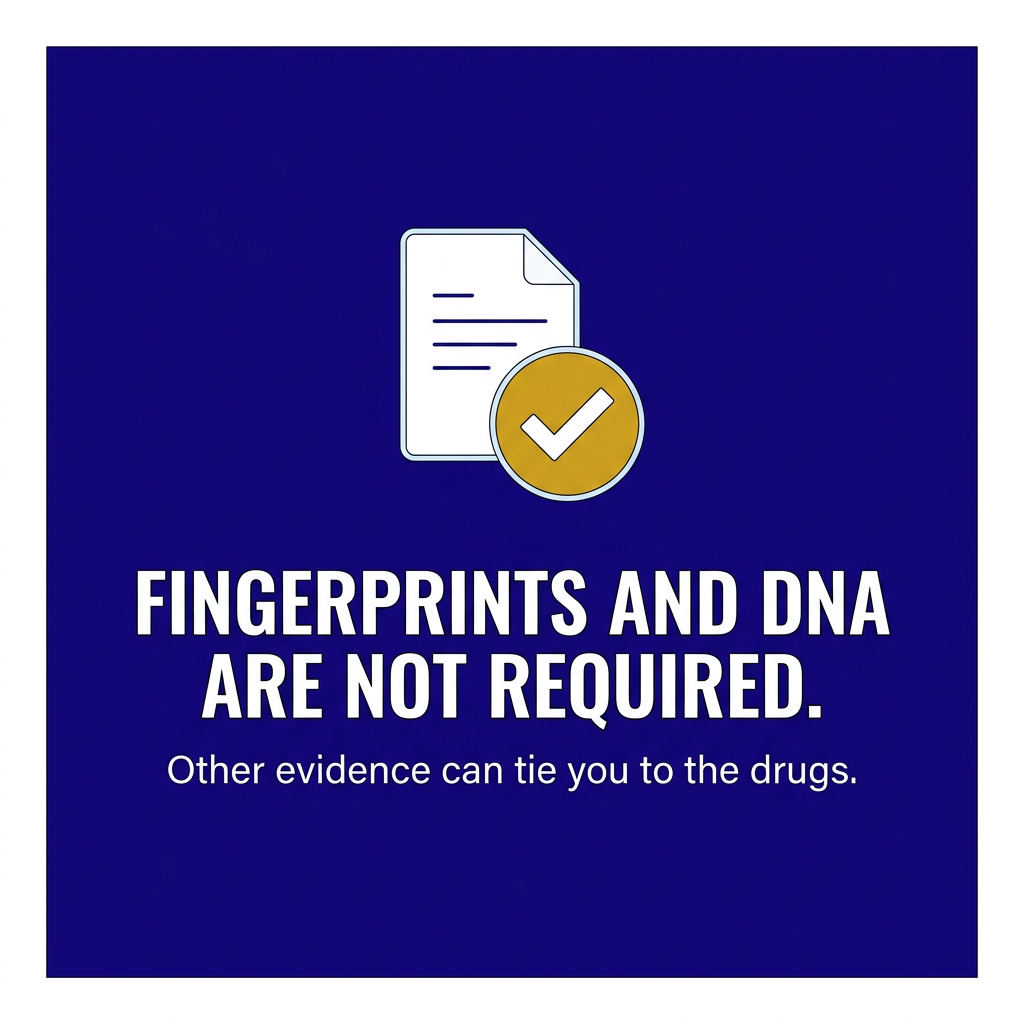
No, Florida does not require fingerprints or DNA to prove constructive possession. Other evidence, such as your own statements, can connect you to the drugs instead. The State still needs some evidence beyond the fact that you were near the drugs. In one Florida appeals case, two people could reach the drugs equally, and the State offered no fingerprints, DNA or other evidence tying the accused to them. The court reversed the conviction.
Talk to Us About a Constructive Possession Charge
A possession charge for drugs that were not on you is frightening, especially before you know what evidence the State has. If you or someone close to you has been charged with possession for drugs found in a car, home or bag, we can review the evidence the State has connecting you to those drugs and explain what it means for your case. Call The Brancato Law Firm at (813) 727-7159 for a free, confidential consultation. We are available 24/7 when someone has just been arrested. Our office is at 620 E. Twiggs Street, Suite 205, in downtown Tampa.
The Brancato Law Firm, P.A.
620 E. Twiggs Street, Suite 205, Tampa, FL 33602
(813) 727-7159
Serving Hillsborough, Pinellas, and Pasco Counties
The Brancato Law Firm, P.A. is a Tampa-based criminal defense practice. We are not affiliated with any other Brancato-named law firms.
Visit Us

Tampa, FL 33602

Contact Us Now
Free Legal Consultation (813) 727-7159
