
From First DUI to Death Penalty



How to Fight Resisting an Officer With Violence in Florida? (2026)


To fight a resisting an officer with violence charge in Florida, the defense attacks the element that makes it a felony: proof that the person offered or did violence to the officer, as opposed to pulling away, going limp, or running. Under section 843.01, resisting with violence is a third-degree felony punishable by up to 5 years in prison, and it qualifies for Prison Releasee Reoffender sentencing. The State must also prove the person knew the victim was an officer. When the violence element fails, the charge drops to resisting without violence, a first-degree misdemeanor. The 2026 Officer Jason Raynor Act changed the duty element for incidents on or after June 16, 2026.
As a former police academy instructor and the founder of The Brancato Law Firm, P.A., a Tampa criminal defense firm, I have seen the word “violence” stretched in arrest reports to cover a tensed arm or a twist away from an officer’s grip. I’m Rocky Brancato, and I have tried more than 150 jury trials to verdict in more than 25 years in Hillsborough County courtrooms. In resisting with violence cases, our attorneys go straight to the recordings, because the difference between a felony and a misdemeanor is often a few seconds of video.
What is resisting an officer with violence in Florida?
Resisting an officer with violence is knowingly and willfully resisting, obstructing, or opposing an officer by offering or doing violence to the officer. Section 843.01(1), Florida Statutes, makes it a third-degree felony to resist “any officer as defined in s. 943.10” or another legally authorized person who is executing legal process “or engaged in the performance of his or her official duties as described in s. 943.10, by offering or doing violence to the person of such officer.” The statute covers police officers, deputies, correctional and probation officers, and certain other officials. A separate subsection covers violence against a police dog or police horse.
The State must prove four things:
- The person knowingly and willfully resisted, obstructed, or opposed the officer.
- The victim was an officer or other legally authorized person, and the person knew it.
- The officer was executing legal process or performing official duties.
- The person offered violence (a threat) or did violence (actual force) to the officer.
Knowledge is a required element. In Polite v. State, 973 So. 2d 1107 (Fla. 2007), an undercover Miami-Dade officer in a plaid shirt tried to arrest a man for tampering with a parking meter, and the man pulled away, swung at him, and ran. The Florida Supreme Court held that “knowledge of the officer’s status is an essential element that is part of the State’s burden of proof,” and it ordered a new trial because the jury was never told that.
What changed for resisting with violence in 2026?
The Officer Jason Raynor Act, Chapter 2026-144, Laws of Florida, took effect on June 16, 2026, and rewrote the duty element of section 843.01. Before the Act, the statute required that the officer be “in the lawful execution of any legal duty.” The current statute requires that the officer be “engaged in the performance of his or her official duties as described in s. 943.10.” The Act also amended section 776.051, which now says force is not justified to resist “any arrest or detention” by a known officer acting in good faith, even if the arrest or detention is later found unlawful.
The Act did not amend section 843.02, the misdemeanor of resisting without violence, so the two charges now use different duty language. That matters because the lawfulness of the officer’s actions has long been a defense to the misdemeanor. In Nieves v. State, 277 So. 3d 745 (Fla. 2d DCA 2019), a Hillsborough County case, officers pulled a man out through a motel room window to arrest him for domestic battery without a warrant. The Second District held that the unlawful warrantless entry meant the State could not prove the lawful execution of a legal duty, and it reversed the finding that he resisted without violence. Our firm covers the misdemeanor in our post on resisting an officer without violence in Florida.
For incidents before June 16, 2026, the older wording of section 843.01 still applies, so the date of the arrest is one of the first facts our attorneys confirm.
What are the penalties for resisting an officer with violence in Florida?
Resisting an officer with violence is a third-degree felony punishable by up to 5 years in prison under section 775.082 and a $5,000 fine under section 775.083. The offense severity chart in section 921.0022 ranks it at Level 5, which scores 28 points. A person with no record usually scores below the prison threshold, but these charges often come with others from the same encounter, and the points add up.
Two rules make the charge more serious than its degree suggests. First, resisting with violence qualifies for Prison Releasee Reoffender sentencing. In Harris v. State, 5 So. 3d 750 (Fla. 1st DCA 2009), the First District held that offering violence “plainly involves” a threat of force and doing violence involves its use, aligning with the Second and Fifth Districts. Under section 775.082(9), that means a mandatory 5-year sentence, served in full, for an offense within 3 years of release from prison if the State seeks it, which our Prison Releasee Reoffender page explains. Second, a resisting with violence conviction is a listed prior that turns any later simple battery into a felony, which our firm explains in our post on how to fight a second battery charge in Florida.
The table compares resisting with violence to the charges it is most often filed with or reduced to.
| Charge | Statute | What makes it different | Degree and maximum |
|---|---|---|---|
| Resisting an officer with violence | s. 843.01 | Offering or doing violence to the officer | Third-degree felony, Level 5; 5 years, $5,000 |
| Resisting an officer without violence | s. 843.02 | Resisting, obstructing, or opposing with no violence; lawful execution of a legal duty still required | First-degree misdemeanor; 1 year, $1,000 |
| Battery on a law enforcement officer | s. 784.07(2)(b) | Any intentional unwanted touch or strike, even without resisting | Third-degree felony, Level 5; 5 years, $5,000 |
Battery on an officer and resisting with violence are separate crimes, so both can be charged from one incident. In Austin v. State, 852 So. 2d 898 (Fla. 5th DCA 2003), the Fifth District held that convictions for aggravated battery on an officer and resisting with violence from a single incident did not violate double jeopardy because each offense has an element the other lacks. Our post on how to fight battery on a law enforcement officer in Florida covers that charge.
What counts as offering or doing violence to an officer?
Doing violence means using physical force against the officer, such as punching, kicking, biting, or striking with an object. Offering violence means threatening force, which the First District described in Harris as conduct that “plainly involves” a threat of physical force, such as squaring off to fight or swinging and missing. Passive or defensive conduct is different. In our experience, arrest reports often describe tensing up, pulling an arm away, going limp, or running as “violent,” and those facts are the core of the argument that the charge should be resisting without violence.
Assaults on officers are a real concern nationally, which is part of why these charges are filed aggressively. The FBI’s 2024 special report on officers killed and assaulted, released in May 2025, reported 85,730 assaults on officers in 2024, a rate of 13.5 per 100 officers and the highest rate from 2015 through 2024. The same report found that officers who were assaulted and injured most often sustained minor injuries, which shows how much of this conduct sits at the low end of the force scale.
Florida courts sentence these cases every week. In fiscal year 2022-2023, resisting an officer with violence under section 843.01 was the statute on 1,229 felony sentencing scoresheets, or 1.59% of the 77,199 scoresheets the Florida Department of Corrections received, according to the department’s Criminal Punishment Code report for fiscal year 2022-2023.

How do our attorneys fight a resisting with violence charge?
Our attorneys fight these charges element by element, starting with the video. These are the defenses we raise most often.
1. Compare every recording to the arrest report
We request body camera, dash camera, surveillance, and bystander video, plus the jail booking footage. Recordings change behavior and outcomes: in a 12-month randomized trial in Rialto, California, published in the Journal of Quantitative Criminology in 2015, the likelihood of police use of force on shifts without cameras was roughly twice that on shifts with cameras. We look closely at what happened before the alleged violence, including who used force first.
2. Argue that the conduct was not violence
If the video shows pulling away, bracing, or running rather than striking or threatening, we move for a judgment of acquittal on the felony or ask the jury to return the lesser offense of resisting without violence. That single change removes the felony, the Level 5 score, and the Prison Releasee Reoffender exposure.
3. Contest knowledge of the officer’s status
Under Polite, the State must prove the person knew the victim was an officer. Plain clothes, darkness, a sudden grab from behind, or a medical crisis can all leave room for doubt about whether the person knew who was grabbing them.
4. Test the duty element and the date of the offense
For incidents before June 16, 2026, the State must prove the officer was in the lawful execution of a legal duty, and an unlawful stop or entry can defeat the charge. For later incidents, we examine whether the officer was actually performing official duties under section 943.10 and acting in good faith under the new section 776.051.
5. Challenge stacked charges from one continuous struggle
Prosecutors sometimes charge both resisting with and without violence for one encounter. In Swilley v. State, 845 So. 2d 930 (Fla. 5th DCA 2003), the Fifth District held that “a continuous resistance to the ongoing attempt to effect a defendant’s arrest constitutes a single instance of resisting,” and it vacated the misdemeanor conviction on double jeopardy grounds. We challenge duplicate counts before trial and at sentencing.
6. Raise self-defense against excessive force, and negotiate
Section 776.051 limits force used to resist a good-faith arrest or detention, but whether a person may defend against an officer’s excessive force depends on the facts, which our firm explains in our post on Stand Your Ground versus self-defense in Florida. When the video is mixed, we negotiate for a reduction to resisting without violence, and representation before charges are filed lets us put the video in front of the State Attorney before the filing decision.
What happens after a resisting with violence arrest in Hillsborough County?
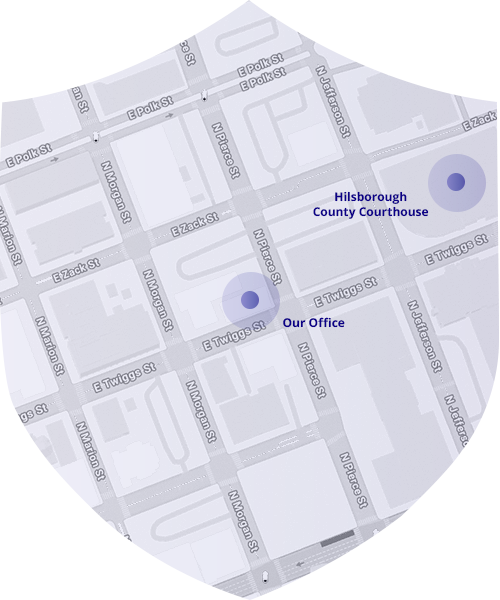
After a resisting with violence arrest in Hillsborough County, the person is booked into jail and sees a judge at first appearance within 24 hours under Florida Rule of Criminal Procedure 3.130. In Hillsborough, the judge sits downtown and the arrested person appears by video from the jail, and the judge sees an affidavit written by the officer involved in the struggle. Our post on Hillsborough County first appearance explains that hearing, our Hillsborough County criminal defense page covers the local courts, and our Florida criminal case process page walks through the steps from filing to trial.
What should you do after a resisting with violence arrest?
- Do not discuss the arrest on recorded jail calls, texts, or social media.
- Ask anyone who filmed the encounter to save the video and send it to your lawyer.
- Get medical care for any injuries and keep the records and photographs.
- Write down the time, place, and every officer and witness you remember.
- Call a defense lawyer before giving a statement or filing a complaint about the officers.
Frequently asked questions about resisting an officer with violence
Can resisting with violence be reduced to resisting without violence in Florida?
Yes, resisting with violence can be reduced to resisting without violence, a first-degree misdemeanor, when the evidence shows resistance but not violence. Our attorneys at The Brancato Law Firm build that argument from the recordings, and our violent crimes defense page explains how we approach these cases.
Is pulling away from a police officer resisting with violence?
Pulling away by itself is usually argued as resisting without violence, because the felony requires offering or doing violence to the officer. The Brancato Law Firm uses video to show exactly what the person’s arms and body were doing, since the officer’s description in the report is often the only thing calling it violence.
Is resisting with violence a forcible felony in Florida?
Resisting with violence is treated as a felony involving the use or threat of force, which is why the First District held in Harris that it qualifies for Prison Releasee Reoffender sentencing. Our team at The Brancato Law Firm checks a client’s release dates early to see whether that mandatory sentence could apply.
Can I be charged with both battery on an officer and resisting with violence?
Yes, both charges can be filed from one incident because each has an element the other lacks, as the Fifth District held in Austin. The Brancato Law Firm looks for overlapping counts that cannot both stand, such as resisting with and without violence for the same continuous struggle.
Does the 2026 law change apply to my case?
The Officer Jason Raynor Act applies to incidents on or after June 16, 2026; earlier incidents are generally judged under the statute in effect when they happened. Our attorneys at The Brancato Law Firm confirm the incident date first, because it can decide whether an unlawful stop is still a defense to the felony.
Can resisting with violence charges be dropped in Florida?
Yes, prosecutors can drop or reduce the charge when video contradicts the report, when the person did not know the victim was an officer, or when the conduct was not violent. The Brancato Law Firm uses pre-file advocacy to present that evidence before the State Attorney files the case.
For more about our defense strategies, visit our Violent Crimes page.
The first step is securing the recordings before they are overwritten, and our attorneys can start on that the same day you call. Reach The Brancato Law Firm, P.A., founded by Tampa Criminal Defense Attorney Rocky Brancato, at (813) 727-7159; call us at any hour. Our firm has Spanish-speaking staff, and attorney Jean-Luc Adrien speaks Spanish, Haitian Creole, and French.
The Brancato Law Firm, P.A.
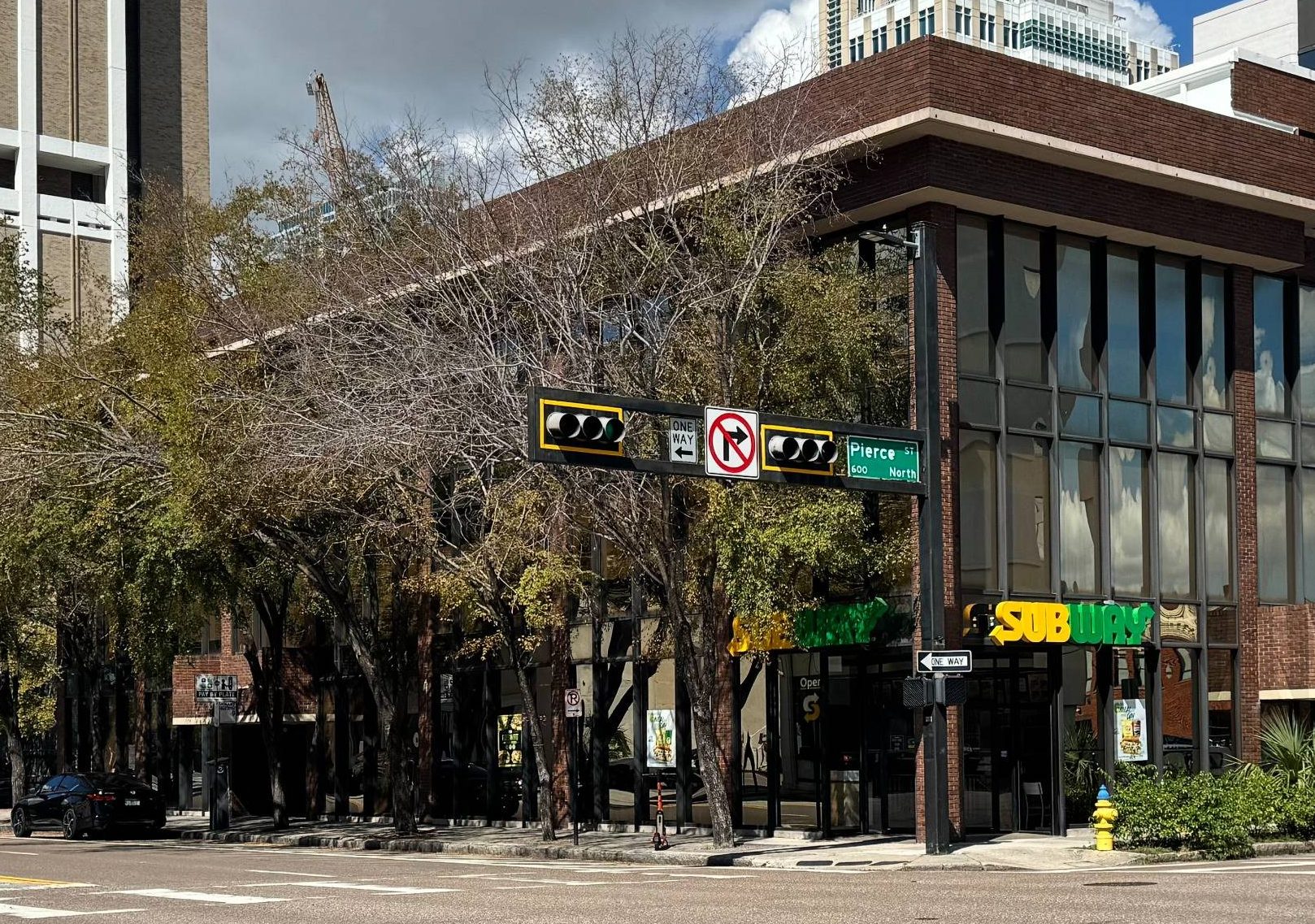
620 E. Twiggs Street, Suite 205, Tampa, FL 33602
(813) 727-7159
Serving Hillsborough, Pinellas, and Pasco Counties
The Brancato Law Firm, P.A. is a Tampa-based criminal defense practice. We are not affiliated with any other Brancato-named law firms.
Visit Us
Tampa, FL 33602
Contact Us Now
Free Legal Consultation (813) 727-7159