- Free Consultation 24/7: (813) 727-7159 Tap Here To Call Us




What Is Vehicular Homicide in Florida? Laws, Penalties, and Defense Options


Key Takeaway: Vehicular homicide under Florida Statute §782.071 occurs when a person operates a motor vehicle in a reckless manner likely to cause death or great bodily harm, and that operation kills another person or an unborn child. It is a second-degree felony carrying up to 15 years in prison. If the driver also left the scene, the charge becomes a first-degree felony with up to 30 years. Under Trenton’s Law (effective October 1, 2025), a second vehicular homicide conviction is now automatically a first-degree felony. These charges are defensible — causation and the legal definition of “reckless” are both subject to aggressive challenge.
I’m Tampa criminal defense attorney Rocky Brancato. With more than 25 years defending criminal cases in Hillsborough County, an AV Preeminent rating from Martindale-Hubbell, Super Lawyers recognition, and more than 150 jury trials to verdict, I bring the experience that vehicular homicide charges demand.
How Does Florida Define Vehicular Homicide?
Florida Statute §782.071 defines vehicular homicide as the killing of a human being, or the killing of an unborn child by injury to the mother, caused by the operation of a motor vehicle by another in a reckless manner likely to cause the death of, or great bodily harm to, another person. The statute does not require proof of impairment, intoxication, or any specific traffic violation. Instead, the State must prove that the defendant’s driving conduct was reckless — meaning the defendant consciously disregarded a substantial and unjustifiable risk that death or great bodily harm would result.
Because vehicular homicide focuses on reckless conduct rather than impairment, prosecutors can charge it even when the defendant was completely sober. Common scenarios include excessive speeding, aggressive driving, street racing, running red lights, and driving on the wrong side of the road. However, not every fatal crash involves reckless driving. An ordinary traffic violation that happens to cause a death — such as misjudging a turn or failing to see a stop sign — does not automatically satisfy the recklessness standard.
Florida Statute §782.071: Vehicular homicide is a second-degree felony punishable by up to 15 years in prison, 15 years of probation, and a $10,000 fine. If the defendant knew or should have known the crash occurred and failed to stop, give information, and render aid as required by §316.062, the charge becomes a first-degree felony carrying up to 30 years. Under Trenton’s Law (HB 687, effective October 1, 2025), a second conviction for vehicular homicide — or a prior conviction for DUI manslaughter (§316.193(3)(c)3), BUI manslaughter (§327.35(3)(c)3), or vessel homicide (§782.072) — also elevates the charge to a first-degree felony. At The Brancato Law Firm, P.A., we defend vehicular homicide charges throughout the 13th Judicial Circuit.
What Are the Penalties for Vehicular Homicide?
The penalties escalate based on whether the defendant left the scene and whether the defendant has prior convictions:
| Offense | Classification | Maximum Penalty |
|---|---|---|
| Vehicular homicide — §782.071(1)(a) | Second-degree felony | 15 years prison, $10,000 fine |
| Vehicular homicide + left the scene — §782.071(1)(b) | First-degree felony | 30 years prison |
| Second vehicular homicide conviction — §782.071(1)(c) (Trenton’s Law) | First-degree felony | 30 years prison |
In addition to prison time, the court may order the defendant to serve 120 hours of community service in a trauma center or hospital that regularly receives vehicle accident victims — supervised by a registered nurse, emergency room physician, or EMT. Furthermore, every vehicular homicide conviction triggers a mandatory 3-year driver’s license revocation under §322.28(4), and the court must order restitution to the victim’s family.
Warning: Prosecutors frequently file vehicular homicide alongside other charges arising from the same fatal crash. If the defendant was also impaired, the State typically charges both vehicular homicide under §782.071 and DUI manslaughter under §316.193(3). If the defendant left the scene, the State adds leaving the scene of a crash involving death under §316.027(2)(c). Each charge carries its own penalties, and consecutive sentences are possible. At The Brancato Law Firm, P.A., we build independent defenses for each count and fight to prevent sentence stacking.
What Must the State Prove to Convict You?
Vehicular homicide requires the State to prove three elements beyond a reasonable doubt. Each element presents a distinct opportunity for defense:
- Reckless operation of a motor vehicle. The State must prove the defendant operated a vehicle in a manner that was reckless and likely to cause death or great bodily harm. This is a high standard — negligence alone is not enough. The defendant must have consciously disregarded a known risk. Speeding alone, without additional aggravating factors, may not satisfy the recklessness requirement.
- Causation. The defendant’s reckless operation must have caused the death. If an independent intervening cause — such as the victim’s own reckless driving, a mechanical failure, or a road hazard — was the actual cause of the fatal crash, the defendant’s conduct did not cause the death.
- Death of a human being or unborn child. The State must prove the victim died from injuries sustained in the crash, established through medical examiner testimony, autopsy results, and medical records.
How Do We Defend Vehicular Homicide Charges?
At The Brancato Law Firm, P.A., we have successfully defended vehicular homicide cases in Hillsborough County. Our defense strategies target every element of the State’s case:
- Challenge the recklessness standard. The most common defense argues that the defendant’s driving, while potentially negligent, did not rise to recklessness. An ordinary traffic violation — even one that tragically caused a death — is not vehicular homicide. We present evidence showing the conduct fell below that threshold.
- Challenge causation with expert witnesses. An independent accident reconstruction expert analyzes vehicle damage patterns, skid marks, road geometry, and black box data to determine whether the defendant’s driving actually caused the crash. Furthermore, an ASE-certified mechanic can inspect the vehicle for mechanical defects — brake failure, tire blowouts, or steering malfunctions — that may have independently caused the collision. If the victim’s conduct, a road defect, or a vehicle malfunction contributed to the crash, causation fails.
- Present an independent intervening cause. If the victim ran a red light, crossed the center line, or engaged in reckless behavior that independently caused the crash, the defendant’s driving was not the legal cause of death.
- Challenge the leaving-the-scene enhancement. For the first-degree felony enhancement, the State must prove the defendant knew or should have known the crash occurred and failed to stop. If the defendant was unaware of the crash, this enhancement fails.
Case Study — Vehicular Homicide Reduced to Reckless Driving: We represented a client charged with vehicular homicide following a fatal single-vehicle crash in Tampa. Rocky retained an accident reconstruction expert and focused the defense on potential issues with the vehicle’s braking system. The result: the charge was reduced to reckless driving with serious bodily injury — 48 months probation, no prison. Past results do not guarantee future outcomes.
What Is Vessel Homicide?
Florida Statute §782.072 creates a parallel offense for boating deaths. Vessel homicide is the killing of a human being caused by the operation of a vessel in a reckless manner likely to cause death or great bodily harm. The penalty structure mirrors vehicular homicide: a second-degree felony for the base offense, a first-degree felony if the operator left the scene, and a first-degree felony for a second conviction under Trenton’s Law. Because Tampa Bay, Hillsborough River, and surrounding waterways see significant recreational boating traffic, vessel homicide charges arise in this jurisdiction more often than in many parts of the state.
The defenses for vessel homicide are similar to vehicular homicide — challenging recklessness, causation, and the leaving-the-scene enhancement. However, boating cases involve additional complexities including maritime navigation rules, wake and wave conditions, and the lack of lane markings on open water. At The Brancato Law Firm, P.A., we defend both vehicular and vessel homicide charges.
Frequently Asked Questions About Vehicular Homicide in Florida
Is vehicular homicide a felony in Florida?
Yes — vehicular homicide is always a felony. The base offense is a second-degree felony carrying up to 15 years in prison. If the defendant left the scene or has a prior qualifying conviction under Trenton’s Law, the charge becomes a first-degree felony carrying up to 30 years. The Brancato Law Firm, P.A. defends both second-degree and first-degree vehicular homicide charges.
What is the difference between vehicular homicide and DUI manslaughter?
Vehicular homicide under §782.071 requires proof of reckless driving but does not require proof of impairment. DUI manslaughter under §316.193(3) requires proof of impairment or an unlawful BAC but does not require proof of reckless driving — only that the impaired driving caused the death. Prosecutors frequently charge both offenses from the same fatal crash because the elements are different. Tampa criminal defense attorney Rocky Brancato builds independent defenses for each charge.
Defenses and Outcomes
Can vehicular homicide charges be reduced or dismissed?
Yes. If the State’s evidence of recklessness or causation is weak, the defense may negotiate a reduction to reckless driving, careless driving, or another lesser offense. In our practice, we have successfully reduced a vehicular homicide charge to reckless driving with probation and no prison time. However, every case depends on the specific facts — particularly the accident reconstruction evidence and the strength of the State’s proof of reckless conduct.
Does Trenton’s Law affect vehicular homicide cases?
Yes. Trenton’s Law (HB 687), effective October 1, 2025, added §782.071(1)(c), which makes a second vehicular homicide conviction a first-degree felony. The law also counts prior convictions for DUI manslaughter, BUI manslaughter, and vessel homicide as qualifying priors. As a result, a person with a prior DUI manslaughter conviction who is later charged with vehicular homicide faces first-degree felony exposure — up to 30 years in prison.
Hiring a Defense Attorney
Why is accident reconstruction important in vehicular homicide cases?
Causation and recklessness are the two most contested elements in vehicular homicide cases, and both turn on physical evidence from the crash scene. An accident reconstruction expert analyzes speed calculations, point of impact, vehicle damage, road conditions, and electronic data to determine what actually happened. Without an independent expert to challenge the State’s version, the prosecution’s narrative goes largely unchallenged. At The Brancato Law Firm, P.A., we retain qualified experts in every vehicular homicide case.
How much does it cost to defend a vehicular homicide charge?
Vehicular homicide defense typically requires accident reconstruction experts, potentially toxicology consultants, and extensive investigation. Fees reflect the seriousness and complexity of the case. The Brancato Law Firm, P.A. offers free, confidential consultations. Call (813) 727-7159 to discuss your case.
You Are Reading This for a Reason — Let Us Help
Vehicular homicide carries up to 15 years in prison — or 30 years if you left the scene or have a prior conviction. These are among the most serious charges in Florida criminal law. However, the State must prove recklessness beyond a reasonable doubt, and causation is frequently the weakest link in the prosecution’s case. With the right accident reconstruction evidence and an experienced defense attorney, these charges are defensible.
Every hour counts. The earlier Tampa criminal defense attorney Rocky Brancato gets involved, the more crash scene evidence we can preserve and the more defense options remain available.
Call The Brancato Law Firm, P.A. today at (813) 727-7159 for a free, confidential consultation. We are available 24/7 and serve clients throughout Hillsborough, Pinellas, and Pasco Counties.
For more about how we defend traffic-related charges, visit our DUI Defense practice page. You may also find our guides on What Is DUI Manslaughter in Florida?, What Is Reckless Driving in Florida?, and What Is Leaving the Scene of an Accident in Florida? helpful — these charges frequently arise together, and understanding each one is critical to a comprehensive defense.
The Brancato Law Firm, P.A. is a Tampa-based criminal defense practice serving clients exclusively in Hillsborough, Pinellas, and Pasco Counties. We are not affiliated with any other Brancato-named law firms.
This page is for informational purposes only and does not constitute legal advice. Each case is unique, and outcomes depend on the individual facts and circumstances involved. Past results do not guarantee future outcomes.
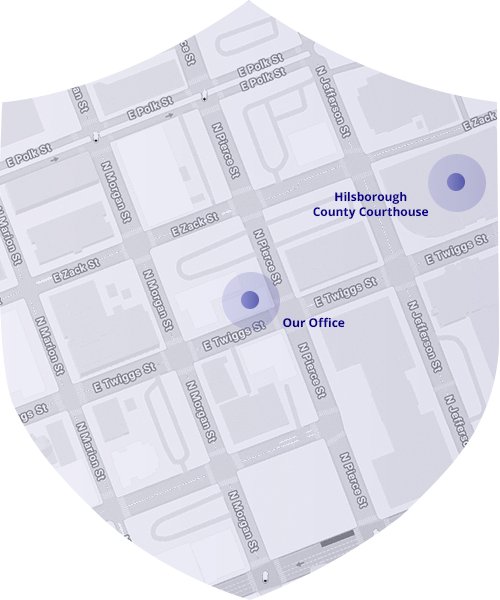
Visit Us
Suite #205
Tampa, FL 33602
Contact Us Now
Free Legal Consultation (813) 727-7159