- Free Consultation 24/7: (813) 727-7159 Tap Here To Call Us


From First DUI to Death Penalty



What Is Reckless Driving in Florida?


Completely rewritten and updated September 1, 2026. Originally published February 22, 2026.
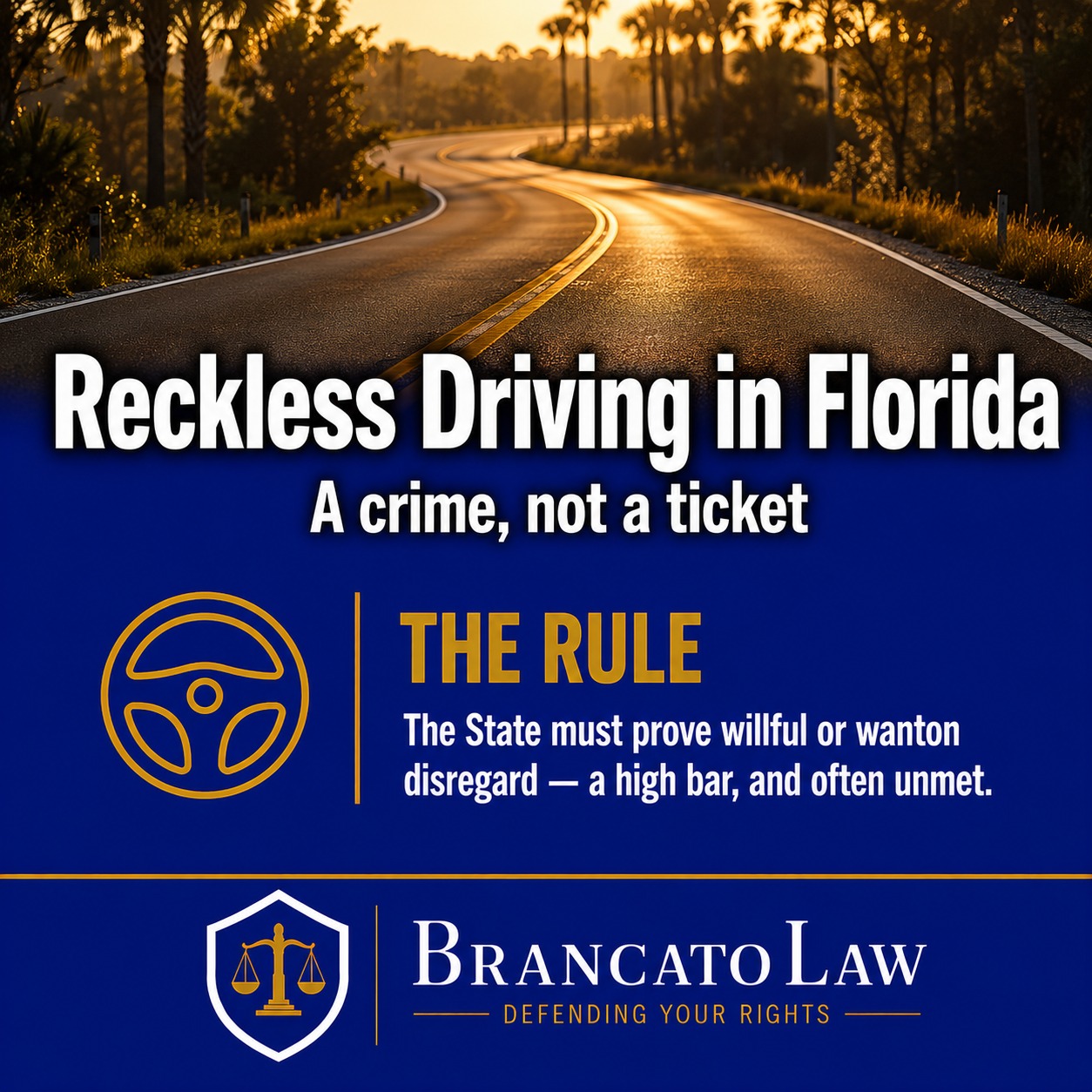
| Key Takeaway: Reckless driving under section 316.192, Florida Statutes, is driving with willful or wanton disregard for the safety of persons or property — a criminal charge, not a ticket. A first conviction carries up to 90 days in jail; causing property damage or minor injury makes it a first-degree misdemeanor; causing serious bodily injury makes it a third-degree felony punishable by five years. Fleeing a law enforcement officer is reckless driving per se. And because “willful or wanton” is a high bar, these charges are among the most defensible in traffic court. |
I’m Rocky Brancato, founder of The Brancato Law Firm, P.A., a Tampa criminal defense firm. I taught traffic and criminal law at the police academy, and our attorneys handle reckless driving from both directions — beating the charge when it never should have been criminal, and negotiating into it when it is the soft landing a bigger case needs.
How Does Florida Define Reckless Driving?
Section 316.192, Florida Statutes defines reckless driving as driving any vehicle in willful or wanton disregard for the safety of persons or property. Those two words are the entire case. “Willful” means intentional and purposeful; “wanton” means with conscious and intentional indifference to consequences, knowing damage is likely. That is a state of mind the State must prove — not a driving grade.
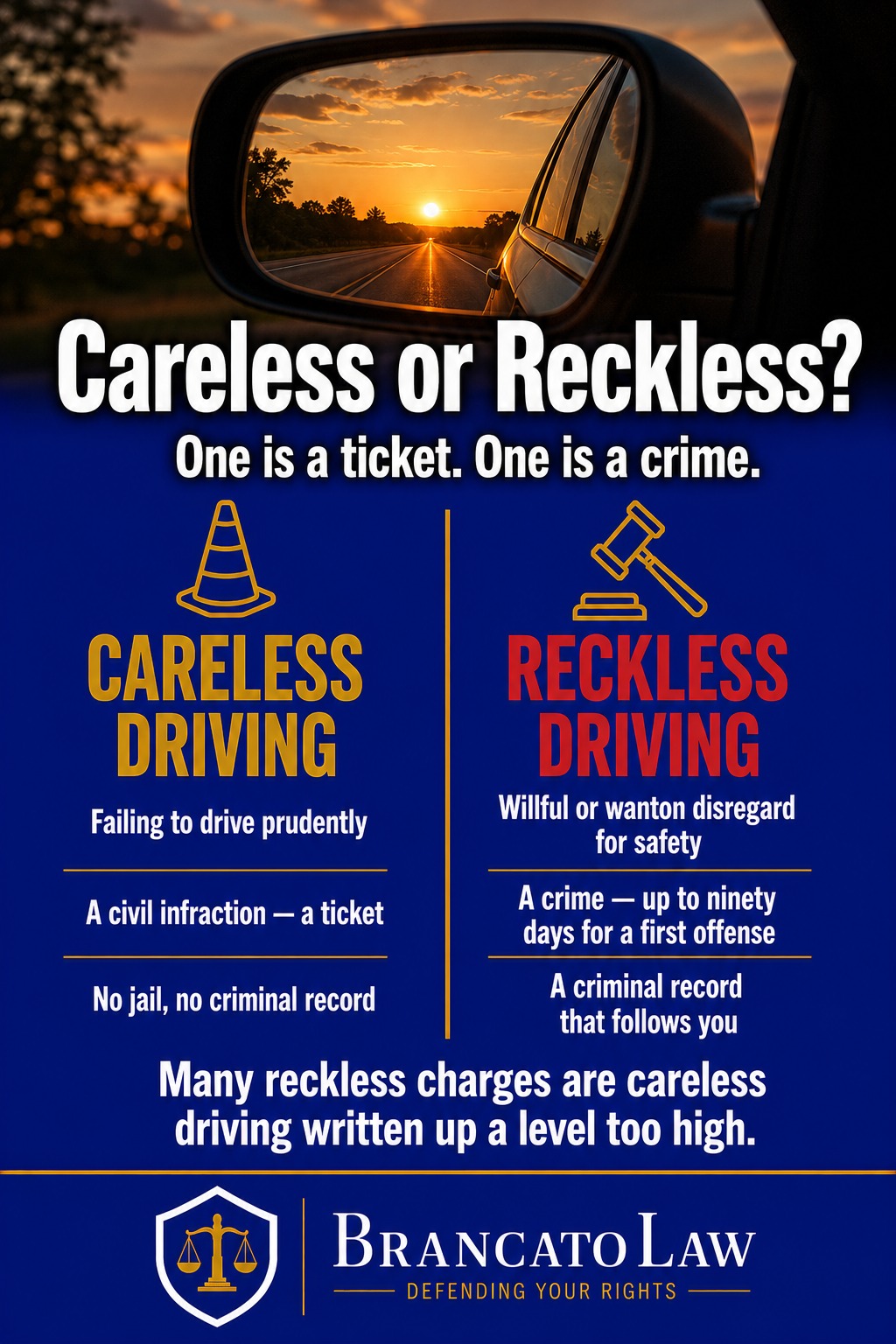
The distinction that matters most: careless is not reckless. Florida has a separate, noncriminal careless driving infraction for failing to drive prudently. Weaving once, misjudging a gap, drifting in the rain, even causing an accident — none of that is criminal recklessness by itself. In our firm’s experience, a large share of reckless driving charges in Tampa Bay are careless driving cases that got written up a level too high, often because the driving annoyed the officer or ended in a crash. Those cases can be beaten or reduced, because the mental-state element is missing.
One shortcut in the statute: fleeing a law enforcement officer is reckless driving per se — no separate proof of willful or wanton driving needed. If your case involves an alleged failure to stop, that per se rule (and its overlap with the felony fleeing and eluding statute) needs a lawyer’s eyes immediately.
What Are the Penalties for Reckless Driving in Florida?
| Offense | Classification | Penalty |
|---|---|---|
| Reckless driving, first conviction — § 316.192(2)(a) | Criminal offense (second-degree misdemeanor level) | Up to 90 days jail, $25–$500 fine |
| Reckless driving, second or subsequent conviction — § 316.192(2)(b) | Criminal offense | Up to 6 months jail, $50–$1,000 fine |
| Reckless driving causing damage to property or person — § 316.192(3)(c)1. | First-degree misdemeanor | Up to 1 year jail, $1,000 fine |
| Reckless driving causing serious bodily injury — § 316.192(3)(c)2. | Third-degree felony | Up to 5 years prison, $5,000 fine |
“Serious bodily injury” has a specific statutory meaning — a condition creating substantial risk of death, serious personal disfigurement, or protracted loss or impairment of a bodily member or organ — and whether an injury actually meets it is a genuine, medical-records-driven fight that can be the difference between a felony and a misdemeanor. Two more consequences ride along: reckless driving adds points to your driving record for license purposes, and if the court has reasonable cause to believe alcohol or drugs contributed, it must order DUI school and evaluation even though the conviction is not a DUI.
When Does Speeding Become Reckless Driving?
Ordinary speeding is a ticket. But Florida’s appellate courts have made clear that grossly excessive speed, all by itself, can be reckless — the rule they now phrase as “speed alone is not enough, except when it is.” That line comes from Luzardo v. State, 147 So. 3d 1083 (Fla. 3d DCA 2014), and in August 2026 the Sixth District reaffirmed it in Audinot Lugo v. State, No. 6D2025-1884 (Fla. 6th DCA Aug. 14, 2026), a vehicular homicide affirmance built on that principle. Racing is treated the same way: evidence that a driver was racing at the time of a crash is itself a sufficient basis to find reckless operation (Ruiz v. State, 286 So. 3d 338 (Fla. 5th DCA 2019)).
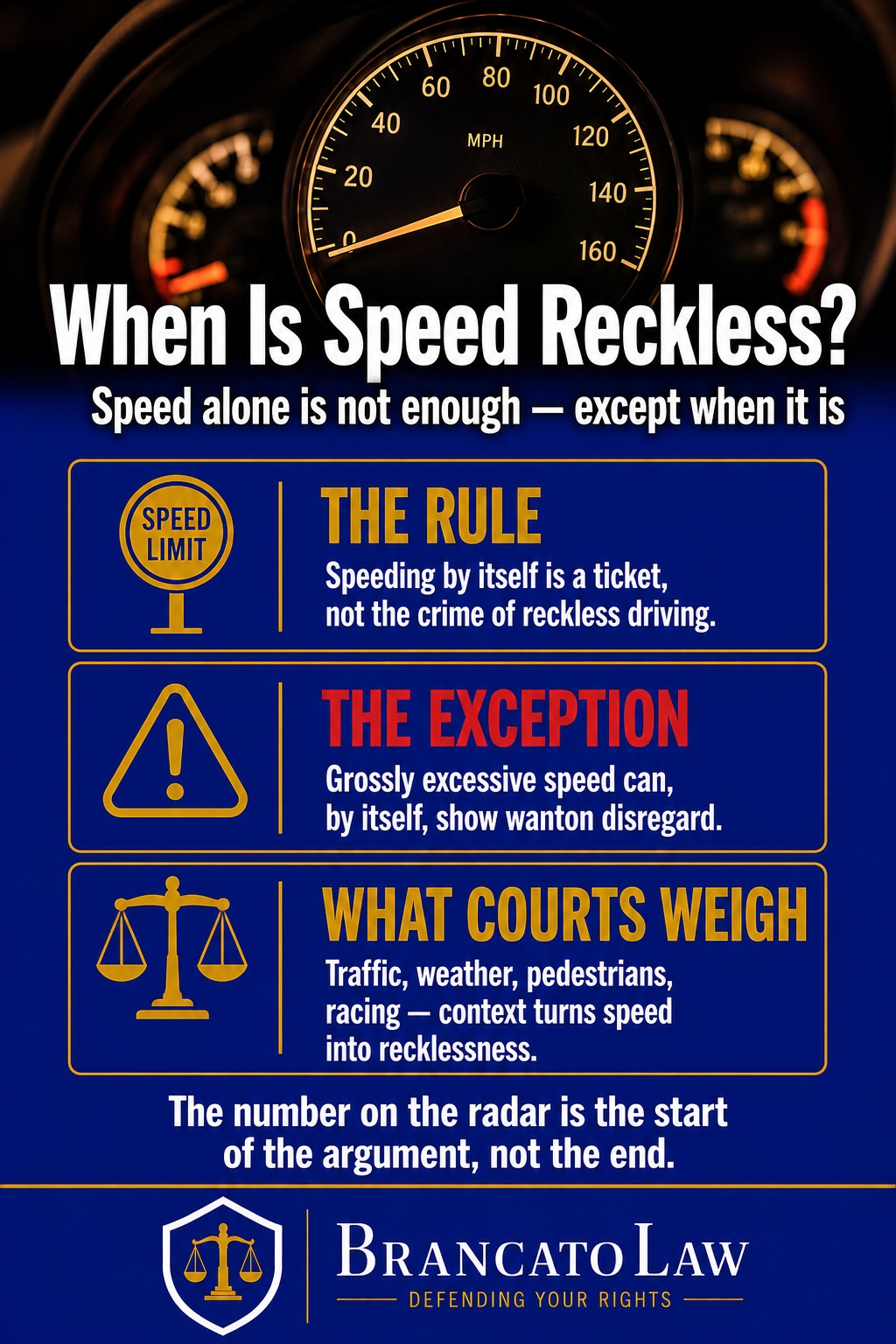
Why does that matter on a page about a misdemeanor? Because recklessness is the doorway to Florida’s worst traffic charges. The same “willful or wanton” element defines vehicular homicide when someone dies — and the Legislature has now added a separate crime of dangerous excessive speeding. If your reckless driving charge involves triple-digit speed, treat it as the serious case it is: today’s misdemeanor fact pattern is tomorrow’s felony evidence if anything goes wrong on the road.
| Why this charge cuts both ways: reckless driving is the charge prosecutors OVERUSE against drivers who were merely careless — and, at the same time, the reduction every DUI defendant wants. Knowing which side of that line your case sits on is the whole game. |
Why Is Reckless Driving the Most Wanted Plea in DUI Court?
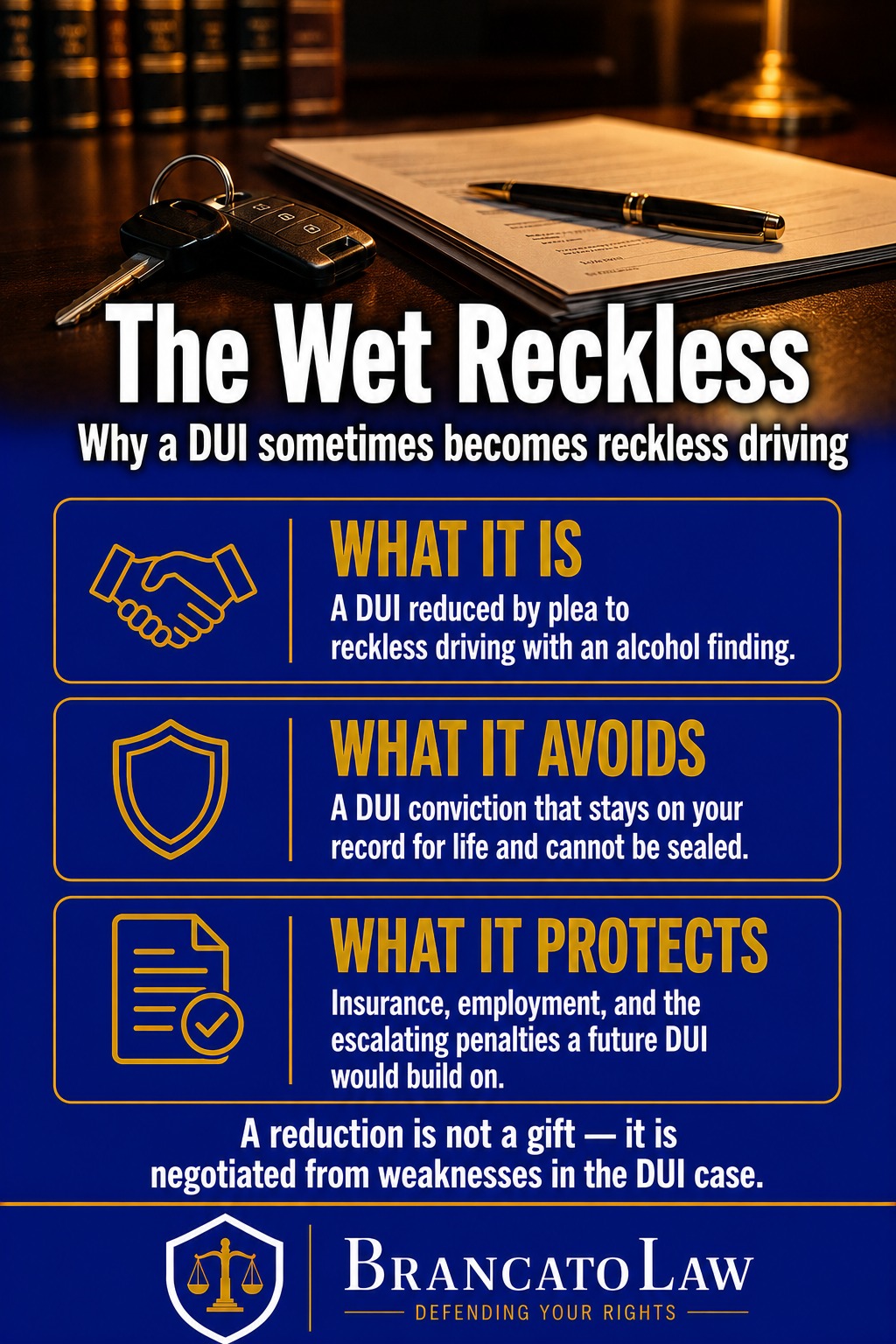
Because a “wet reckless” — a DUI reduced to reckless driving with an alcohol-related finding — avoids the mandatory consequences a DUI conviction drags with it: the DUI conviction on your record for life (Florida DUIs cannot be sealed after conviction), mandatory adjudication, insurance consequences, and the escalating penalties any future DUI would build on. Prosecutors agree to it when the State’s DUI proof has problems — a shaky stop, a contestable breath test, weak impairment evidence. That is why the same charge our attorneys fight in one courtroom is the outcome we negotiate for in another: it all depends on which side of the evidence your case sits. If you were offered a reckless reduction in a DUI case, that is usually a signal the State sees weakness — sometimes the right move is taking it, and sometimes it is pushing further.
What Happens in Court — and Can First Offenders Avoid a Record?
A reckless driving charge is prosecuted in criminal court — in Hillsborough County, that means the county courthouse downtown, an arraignment, and a prosecutor from the State Attorney’s Office, not a traffic hearing officer. For qualifying first offenders, that is actually good news, because criminal court comes with resolution tools a traffic ticket never gets. Diversion programs for eligible misdemeanor defendants can end the case with a dismissal after completing conditions — driving school, community service hours — leaving a far cleaner record than any plea. And where diversion is not on the table, Florida judges can withhold adjudication, which avoids a formal conviction and, for many first offenders, preserves eligibility to later seal the record.
Which door is available depends on the county, the prosecutor, your history, and the facts — and the doors close fast once pleas are entered. This is the concrete reason not to resolve a reckless driving case at your first appearance: the difference between “adjudicated guilty” and “dismissed after diversion” lasts the rest of your life, and it is often decided in the first two weeks. Our attorneys know which outcomes are realistically available in Hillsborough, Pinellas, and Pasco courtrooms and push the case toward the best one before any plea is on the record.
How Do We Defend Reckless Driving Charges?
We attack the mental-state element first: the State must prove willful or wanton disregard, and most driving — even bad driving — is merely careless. We use the video: cruiser and body-camera footage frequently shows ordinary imperfect driving narrated in dramatic report language, and the gap between the two is reasonable doubt. We litigate “serious bodily injury” with medical records when a felony is charged, because prosecutors routinely stretch that definition. We scrutinize speed evidence — pacing, radar, laser calibration, and the officer’s training — before conceding any number. And when the smarter play is resolution, we negotiate from the statute’s own structure: careless driving, a civil disposition, or terms that protect your record and license. First offenders with clean histories often have far better outcomes available than the arrest suggested.
What Should You Do If You Are Charged with Reckless Driving?
Treat it as the criminal case it is — do not just pay it or walk into court alone. A reckless driving conviction is a permanent criminal record, points on your license, and the first rung on a ladder Florida law climbs quickly. Before your court date: write down everything about the stop while it is fresh, note any dashcam or doorbell footage along the route, and do not discuss the driving with the officer, the other driver, or an insurance adjuster beyond what your policy requires. Then get counsel involved early — in Hillsborough County these cases are often decided in the first conversations with the State Attorney’s Office, where the difference between “willful and wanton” and “careless” is an argument, not a checkbox.
For defense strategies, read our guide on how to fight a reckless driving charge in Hillsborough County.
Frequently Asked Questions About Reckless Driving in Florida
Is reckless driving a criminal offense in Florida?
Yes — unlike careless driving (a civil infraction), reckless driving is a crime. A first conviction carries up to 90 days in jail, a second up to six months, and versions involving damage, injury, or serious bodily injury climb to a first-degree misdemeanor and then a third-degree felony. Our attorneys treat every reckless charge as a criminal defense case, because that is exactly what it is.
What is the difference between careless and reckless driving?
State of mind. Careless driving is failing to drive in a careful and prudent manner — a ticket. Reckless driving requires willful or wanton disregard for safety — a conscious indifference to consequences. The facts of many charged “reckless” cases only support carelessness, and arguing that distinction is the most common way these charges get reduced or dismissed.
Is going 100 mph automatically reckless driving?
Not automatically — but Florida’s courts hold that grossly excessive speed alone can support recklessness (“speed alone is not enough, except when it is”), and racing is sufficient by itself. Context matters: the road, traffic, weather, and time of day. Triple-digit-speed cases deserve a serious defense, both for the charge itself and because of where recklessness findings can lead if there is ever a crash.
What is a “wet reckless” in Florida?
A DUI reduced by plea to reckless driving, usually with an alcohol-related finding and DUI-school conditions. It avoids a DUI conviction’s mandatory penalties and lifetime record consequences, which is why it is the most sought-after resolution in DUI court. Whether the State offers it depends on the strength of its DUI evidence — which is where the defense work happens. See our full guide to DUI in Florida.
Is reckless driving a felony if someone gets hurt?
It becomes a first-degree misdemeanor if the driving causes damage or minor injury, and a third-degree felony — up to five years — only if it causes “serious bodily injury”: substantial risk of death, serious disfigurement, or protracted loss or impairment of a body part or organ. Whether an injury meets that definition is a litigable medical question, and our firm has contested it with records and experts.
Can a reckless driving charge be reduced or dismissed?
Frequently. The willful-or-wanton element fails on ordinary bad driving, video often contradicts report language, and clean-record first offenders have real leverage. The Brancato Law Firm, P.A. defends these cases across Hillsborough, Pinellas, and Pasco Counties — call (813) 727-7159 before you pay anything or enter a plea.
For more about our defense strategies, visit our Hillsborough County Criminal Defense Attorney page.
Related reading: What Is DUI in Florida? · What Is Vehicular Homicide in Florida? · Florida’s New Dangerous Excessive Speeding Crime · What Is Fleeing and Eluding in Florida? · What Is Driving While License Suspended in Florida?
A “Driving Charge” That Follows You Like a Crime — Because It Is One
If you have been cited or arrested for reckless driving in Hillsborough, Pinellas, or Pasco County, you are one signature away from a permanent criminal record over conduct that may have been nothing more than careless. Call the attorneys of The Brancato Law Firm, P.A. — founded by Tampa Criminal Defense Attorney Rocky Brancato — at (813) 727-7159 before your court date. The difference between a crime and a ticket is one legal argument — make sure someone is there to make it.
The Brancato Law Firm, P.A.
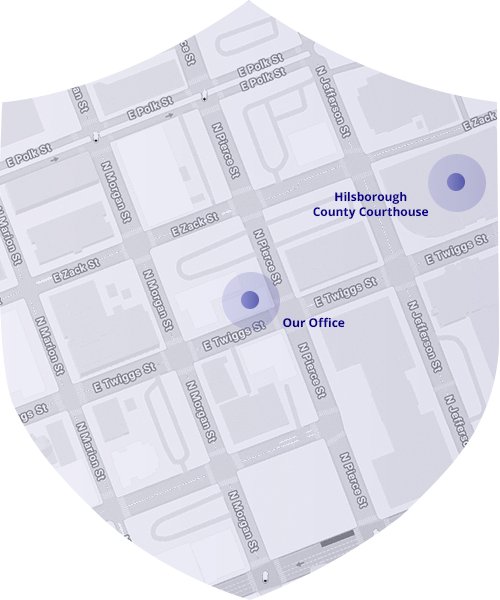
620 E. Twiggs Street, Suite 205, Tampa, FL 33602
(813) 727-7159
Serving Hillsborough, Pinellas, and Pasco Counties
The Brancato Law Firm, P.A. is a Tampa-based criminal defense practice. We are not affiliated with any other Brancato-named law firms.
Visit Us

Tampa, FL 33602
Contact Us Now
Free Legal Consultation (813) 727-7159