- Free Consultation 24/7: (813) 727-7159 Tap Here To Call Us


From First DUI to Death Penalty



Do You Need a Lawyer Before Charges Are Filed in Tampa?



Updated November 17, 2026
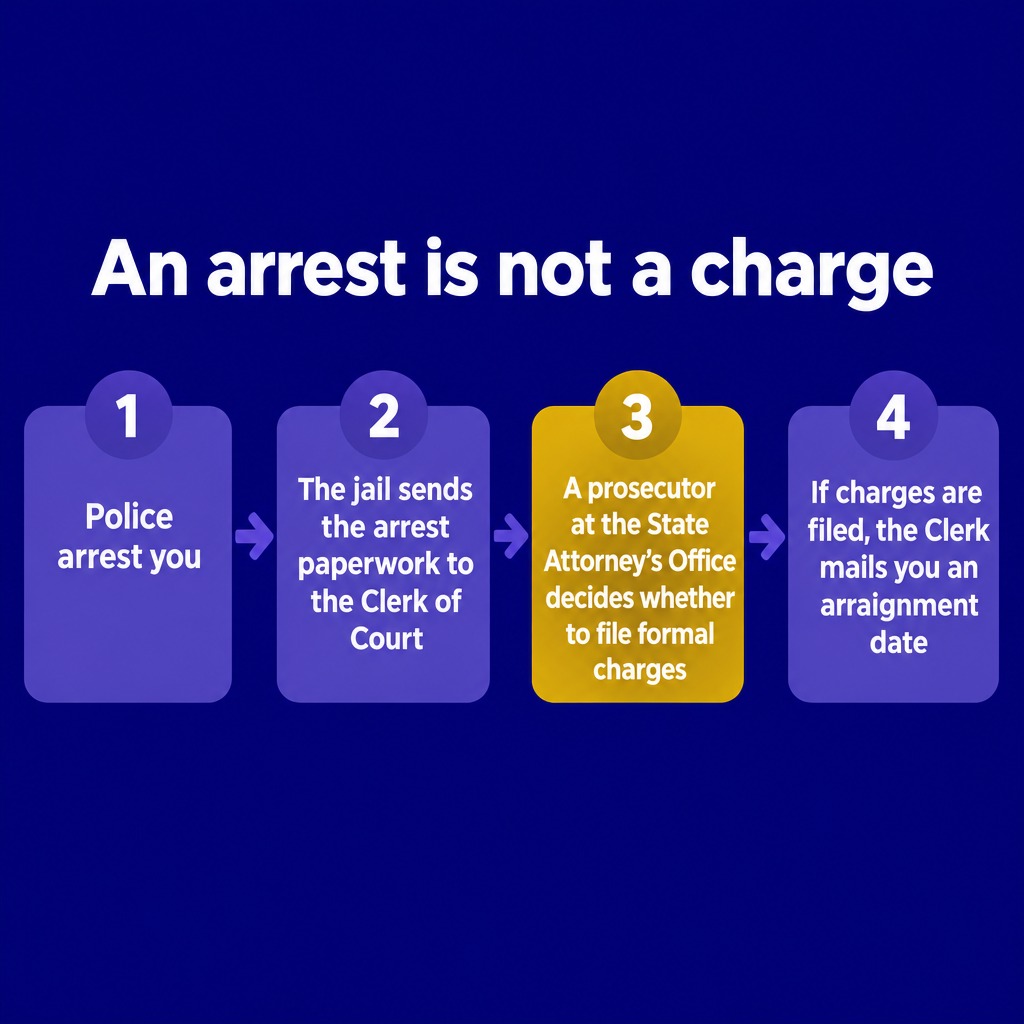
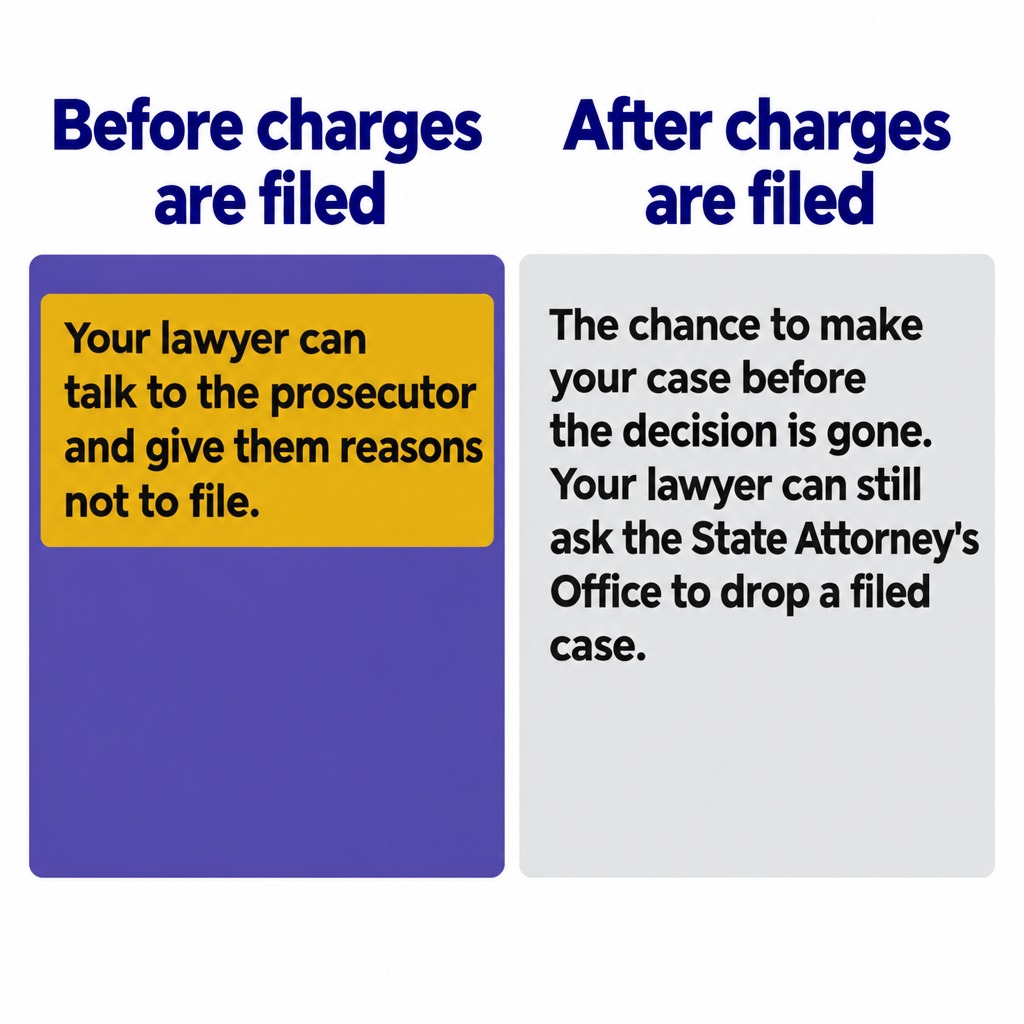
Yes, in most cases you need a defense lawyer before charges are filed in Tampa. If police have contacted you, or you were arrested and released, the time to call one is now. An arrest is not a charge, and neither is a call from a detective. A prosecutor at the Hillsborough County State Attorney’s Office decides later whether to file formal charges. Until that decision is made, your lawyer can talk to the prosecutor and give them reasons not to file. Once charges are filed, the chance to make your case before the decision is gone. Your lawyer can still ask the State Attorney’s Office to drop a filed case, but that is harder than persuading the prosecutor not to file in the first place.
Talk to a lawyer before you answer any police questions, too. What you tell police becomes part of what the prosecutor reviews when deciding whether to charge you.
The Brancato Law Firm represents people in Tampa at this stage, before the State Attorney’s Office decides whether to file charges.
What is the difference between being arrested and being charged?
Being arrested and being charged are two separate steps, handled by two different offices. Police investigate and make arrests. To charge you, a prosecutor files a document with the court that states the charge. Until the prosecutor files that document, you have usually not been formally charged, even if you were arrested. The exception is a notice to appear for some misdemeanors, explained below. Our step-by-step guide to the Florida criminal case process shows where this charging decision falls.
You may be at this stage if:
- you were arrested, booked at the jail and released on bond
- an officer gave you a notice to appear in court instead of booking you at the jail
- a detective called you or left a card at your door
- someone accused you or named you in a complaint
If you are not sure whether you are being investigated at all, our post on signs you are being investigated for a crime in Florida covers what to look for.
Who decides whether to file charges in Hillsborough County?
A prosecutor at the State Attorney’s Office decides whether charges are filed, not the police and not the person who made the accusation. After an arrest, the jail sends the arrest paperwork to the Clerk of Court. The Clerk’s Office describes what happens next: “The State Attorney then reviews the case and makes the determination on whether or not to file formal charges.”
An alleged victim can tell prosecutors what they want, but cannot drop the case. The Hillsborough County Public Defender’s Office explains that even when the victim does not want to prosecute, “the decision of whether to prosecute is still up to the state attorney.”
How will I find out if charges are filed?
How you find out depends on how your case started:
| Your situation | How you find out charges were filed |
|---|---|
| Arrested and booked at the Hillsborough County Jail | The Clerk mails you an arraignment date once formal charges are filed. The arraignment is the hearing where you are told the formal charges. The notice goes to the address you gave at your arrest, so if you move, you have to give the Clerk your new address. |
| Released by police with a notice to appear, without being booked | Your arraignment date is already on your notice to appear. For some misdemeanors, Florida’s court rules let the case go forward on the notice to appear itself, so treat that date as a real court date and talk to a lawyer before it. |
| Never arrested | After the charge is filed, the court issues either a summons ordering you to appear or a capias, which is an order for your arrest. You find out when the summons reaches you or when police arrest you. |
If you were arrested and released and are waiting to hear, our post on what to do after being arrested in Tampa covers the steps that follow.
What can a lawyer do before charges are filed?
Before charges are filed, a lawyer can talk to the prosecutor for you, deal with the detective so you don’t have to, preserve evidence that helps you, and ask about diversion, a program that lets a person complete set requirements in place of a standard prosecution. We call this work pre-file advocacy.
Talking to the prosecutor matters most. Before the charging decision, an experienced lawyer can sometimes meet with prosecutors and show them the problems in the case. The goal is for the prosecutors to decide not to file charges at all. Once a prosecutor files, the case takes on a life of its own.
This works best when the lawyer knows how the State Attorney’s Office evaluates cases. Our founder, Rocky Brancato, spent about 24 years at the Hillsborough County Public Defender’s Office. He served as its Misdemeanor, Juvenile and Intake Bureau Chief, and later as Chief Operations Officer, where he oversaw a staff of over 100 attorneys. As Chief Operations Officer, he worked directly with chief judges, the sheriff and other leaders on the policies that shape how cases in Hillsborough County are charged, prosecuted and resolved. We draw on that knowledge of the local system when we present a case to a prosecutor before the charging decision.
Depending on the case, pre-file advocacy can include:
- Talking to the prosecutor. We show the prosecutor evidence the police report leaves out, explain the context of what happened, and point out weaknesses in the case. Where the facts support it, we ask the prosecutor not to file charges, or to file a lesser charge.
- Dealing with the detective. We tell the detective that you have a lawyer, so questions come to us instead of to you. That applies whether the contact was a card in your door or a notice from Google or another account provider saying your data was given to law enforcement. We can also give the detective evidence or witness statements that support you, so the detective hears your side without you answering questions yourself. We do this in some sex crime investigations, for example.
- Preserving evidence. Video can be recorded over, and witnesses become harder to find as time passes. Starting before charges are filed gives us a chance to find and keep evidence that helps you.
- Asking about diversion. We find out whether your case could qualify for a diversion program and, if it does, ask the prosecutor to offer it before charges are filed.
Diversion is worth asking about early. You may have heard of Adult Pre-Arrest Diversion. That program is run by the Hillsborough County Sheriff’s Office, and the deputy decides at the scene whether to offer it instead of making an arrest. If you were arrested, or the deputy did not offer it, you missed that chance. You have not missed every chance. A lawyer can still ask the State Attorney’s Office for one of its own diversion programs, and most of them can be worked out with the prosecutor before charges are filed:
- Misdemeanor Intervention Program. A diversion program for first-time offenders accused of a misdemeanor. The prosecutor must agree to it. When the person completes it, the State does not go forward with the charge.
- Drug Education and Treatment Reducing Recidivism (DETRR). A program for drug possession cases, including some felony possession charges. The charge is dismissed if the person stays arrest-free for six months and meets the program’s other conditions, which can include drug education or treatment.
- Reducing Impaired Driving Recidivism (RIDR). A program for first-time misdemeanor DUI cases. It does not end in a dismissal. The case ends with a plea to reckless driving instead of DUI. Our post on how to fight a DUI charge in Hillsborough County explains who qualifies.
- Pretrial intervention. A program that may be available for certain first-time felony cases. When the person completes it, the charge is dismissed.
Not every case qualifies for these programs. Whether one fits depends on the charge, your record and where your case stands, and a lawyer can find out whether yours might and what it would require. The best time to ask is before the prosecutor makes a charging decision.
You can read more about how we handle these cases on our page for a Tampa attorney before charges are filed.
Should I talk to police if they say they just want to clear something up?
You should not answer a detective’s questions about an investigation until you have talked to a lawyer, even when the detective sounds friendly. Officers often ask to hear “your side of the story” or to “clear something up.” Rocky’s short video, What Does It Mean When Police Say They Just Need To Clear Something Up, makes the point that officers who say they have just a few details to clear up are often gathering statements that can later strengthen a case against you.
Going in for the interview is generally your choice. When you are not in custody, you are free to leave, and you are under no legal obligation to speak to police. Police also do not have to read you your Miranda rights in a voluntary interview. The Miranda warnings are required only when police question someone in custody, which means the person is under arrest or held so that a reasonable person would not feel free to leave. What you say in a voluntary interview can still be used against you, even though no one read you your rights.
Some detectives say you need to come in or a warrant will follow. An arrest requires probable cause, meaning facts that would lead a reasonable person to believe a crime was committed. If the detective already has probable cause, you may be arrested whether or not you talk, so talking gains you nothing. If the detective does not have probable cause yet, your own words may supply it.
Staying silent may not protect you in a voluntary interview unless you say out loud that you are using your right to remain silent. In Salinas v. Texas (2013), a man who was not in custody was answering police questions voluntarily and went silent on one question, and prosecutors used that silence against him at trial. Three of the U.S. Supreme Court’s justices said a person does not claim the right to remain silent “by simply standing mute.” That was not a majority of the Court, but it shows why saying the words out loud matters.
So whether a detective calls, leaves a card or asks you to come in, the safest move is the same: say that you will not answer questions without a lawyer, and have your lawyer call the detective back.
How long does the State have to file charges in Florida?
The State has a set number of years to file most charges, and the time limit depends on how serious the offense is. Under section 775.15, Florida Statutes, the general time limits are:
| Offense level | Time the State has to start the prosecution |
|---|---|
| Capital felony, life felony, or a felony that resulted in a death | No time limit |
| First-degree felony | 4 years |
| Any other felony | 3 years |
| First-degree misdemeanor | 2 years |
| Second-degree misdemeanor or noncriminal violation | 1 year |
The time starts to run on the day after the offense. The deadline is for filing the charge, and the summons or arrest warrant that follows must be served without unreasonable delay.
Some offenses have different limits, including certain sex offenses, offenses against children and some cases where DNA identifies the suspect. A lawyer can tell you which limit applies to what you are being investigated for. Our post on the Florida statute of limitations explains these rules in more detail.
In practice, the State does not have to decide quickly. Some DUI cases, most often crashes that caused serious injury or a death, are not charged at the scene. The arrest can come weeks or months later, after the blood results and the crash investigation are complete.
Florida’s speedy trial rule, which sets deadlines for bringing a charged person to trial, does not start counting until a formal charge is filed. Our post on Florida’s speedy trial rule changes explains how that rule works.
When might you not need a lawyer yet?
You may not need a lawyer yet if you are only a witness with nothing at stake, such as someone who saw a crash or a fight and had no part in it. The hard part is knowing whether you are only a witness or also a suspect. A detective may not tell you which one you are.
You also cannot see the evidence the detective already has. You do not know what you do not know. If anything about the situation could involve you, a short call with a lawyer before the interview tells you where you stand.
Will hiring a lawyer make me look guilty?
Hiring a lawyer should not make you look guilty. A lawyer’s job at this stage is to make sure the prosecutor sees all of the evidence, including the evidence that helps you. People who have done nothing wrong hire lawyers at this stage too. Our post on whether you need a lawyer if you are innocent explains why.
If you did make a mistake, the time before charges are filed still matters. That is when a lawyer can ask the prosecutor for diversion or a lesser charge.
What you tell a lawyer also stays private. As The Florida Bar explains, “Strict rules prohibit the lawyer from repeating to anyone what you say, unless you admit any ongoing or planned criminal activity.”
How much does a lawyer cost before charges are filed?
We usually charge a lower fee for pre-file work than for a case where charges have been filed, and if charges are filed anyway, that fee is applied toward the total fee quoted for the case. That total is one flat fee for the whole case, including trial, with no separate trial fee.
We quote the fee on the facts of your case, usually after a short call. When we need more information first, we may review the police report or speak with the prosecutor before giving a quote. Half of the fee is usually due when you hire us, and the balance can be paid on a payment plan while the case is pending. Fees vary because every firm and every case is different, so judge any quote by the work it covers and the experience of the lawyer doing it. We aim to keep the fee realistic for the work and fair to the client. We are not the most expensive firm in Tampa, and we are not the least expensive.
What if I can’t afford a lawyer before charges are filed?
If you can’t afford a private lawyer, the public defender is the right choice, but not always right away. The Hillsborough County Public Defender’s Office explains that its attorneys “cannot represent you until the Clerk or the judge appoints our office to your case.” Until then, the most important thing you can do on your own is not answer police questions. If you are charged later, our post on choosing between a public defender and a private attorney in Tampa can help you decide.
Talk to us before the State Attorney decides
If a detective has contacted you, or you were arrested and are waiting to find out whether charges will be filed, call us at (813) 727-7159 for a free, confidential consultation. We will tell you plainly whether your situation calls for a lawyer now, and if it does, what we can do before the State Attorney makes its decision. We answer around the clock for arrest emergencies.
The Brancato Law Firm, P.A.
620 E. Twiggs Street, Suite 205, Tampa, FL 33602
(813) 727-7159
Serving Hillsborough, Pinellas, and Pasco Counties
The Brancato Law Firm, P.A. is a Tampa-based criminal defense practice. We are not affiliated with any other Brancato-named law firms.
Visit Us

Tampa, FL 33602

Contact Us Now
Free Legal Consultation (813) 727-7159
