- Free Consultation 24/7: (813) 727-7159 Tap Here To Call Us


From First DUI to Death Penalty



Can the State Get Your Medical Records in a Florida DUI Case?



| Key Takeaway: Only by clearing real legal hurdles. Your hospital records are protected by Florida’s constitutional right of privacy, and prosecutors cannot subpoena them without a court’s approval, proper notice to you, and a demonstrated connection — a “nexus” — between the records and the investigation. Florida’s appellate courts have quashed subpoenas where the State showed up with argument instead of evidence, and an August 2026 decision shows the fight over what the State must prove is very much alive. The notice requirement means you can challenge the subpoena before your records ever leave the hospital — if you act quickly. |
I’m Rocky Brancato, founder of The Brancato Law Firm, P.A., a Tampa criminal defense firm. I am a member of the National College for DUI Defense, and after a crash that sends a driver to the hospital, the fight over the medical file — and the blood-alcohol result inside it — is often the fight over the entire case. Our attorneys litigate these subpoenas before the records are ever produced.
Are Medical Records Private in Florida?
Yes — and the protection is stronger than most people realize, because it is constitutional. Florida courts have long recognized that individuals enjoy a right of privacy in their medical records under article I, section 23 of the Florida Constitution. That right is not absolute, but it yields only to a compelling governmental interest, and in a criminal investigation the State establishes that interest only by showing a clear connection between suspected illegal activity and the person whose privacy it wants to invade.
On top of the constitutional right sit two statutes. Section 395.3025, Florida Statutes, makes hospital patient records confidential and forbids disclosure without your consent — with a narrow exception in subsection (4)(d) allowing disclosure in a civil or criminal action “upon the issuance of a subpoena from a court of competent jurisdiction and proper notice by the party seeking such records to the patient or his or her legal representative.” Section 401.30, Florida Statutes, gives similar confidentiality to emergency medical services and ambulance records. The State cannot simply ask the hospital for your file; it must go through a judge, and it must tell you first.
What Must the State Prove to Subpoena Your Records?
The State must show a nexus between the records it wants and a material issue in the investigation — and Florida’s Second District, whose decisions govern Hillsborough, Pinellas, and Pasco Counties, has broken that burden into two parts. In Leka v. State, 283 So. 3d 853 (Fla. 2d DCA 2019), a driver was hospitalized after a crash and prosecutors sought his hospital records before any charge had even been filed; the court held the State must (1) identify a theory that reasonably makes the records relevant and (2) produce some evidence making it reasonable to expect the records will support that theory. Because the State offered only vague testimony, never introduced the accident report, and never even identified which records it wanted, the Second District quashed the subpoena order.
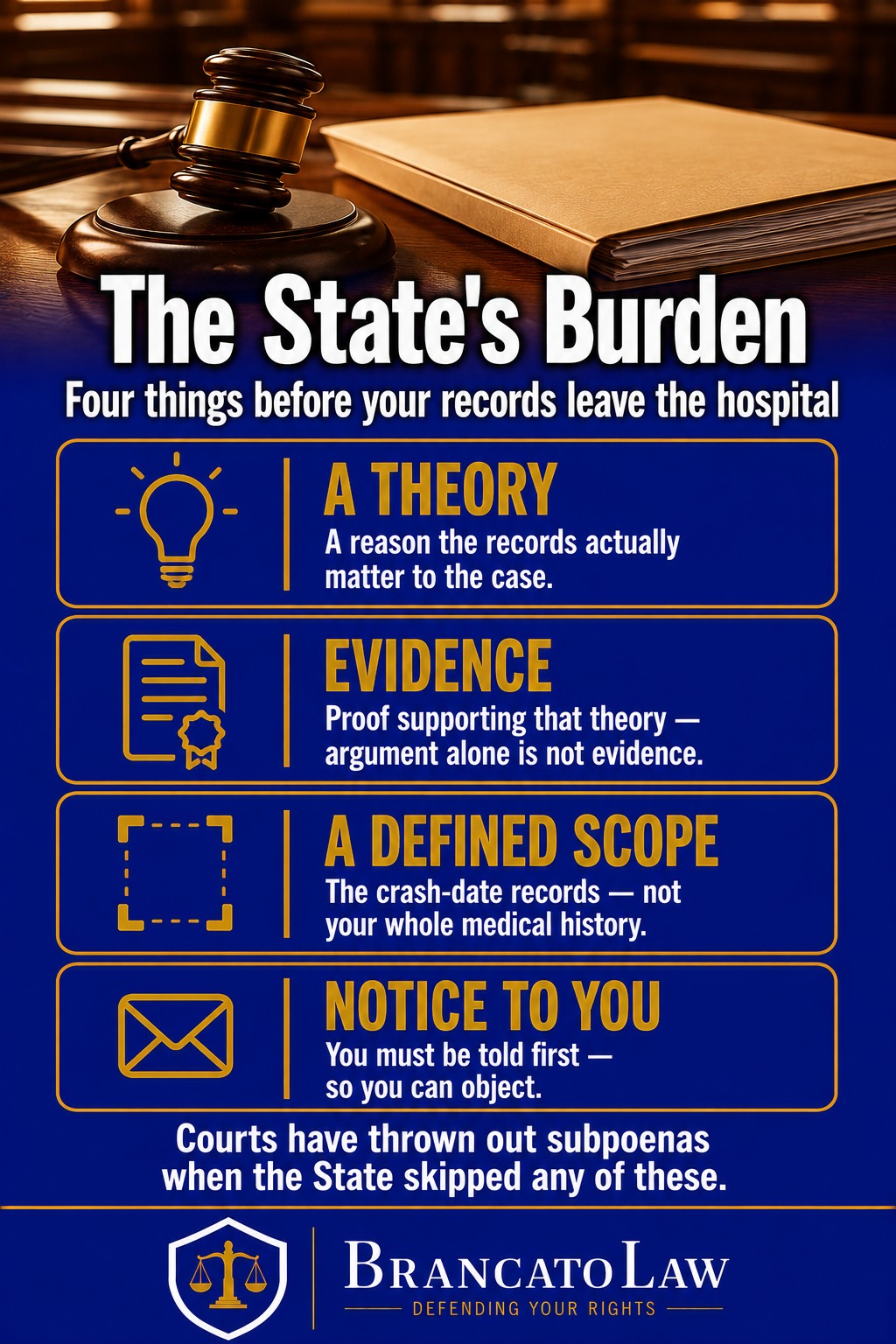
Leka also teaches what the State can rely on when it does its homework: the court acknowledged that a judge may look to the State’s argument together with the accident report or the probable cause affidavit to establish relevance. The difference between a subpoena that survives and one that gets quashed is usually whether the State actually put that supporting material in front of the judge — and whether anyone was there holding it to that burden.
| The State’s burden | What satisfies it | What does not |
|---|---|---|
| A theory of relevance | Crash + impairment indicators documented by police | “We think there might be something useful” |
| Evidence supporting the theory | Accident report, probable cause affidavit, sworn testimony | Vague hearsay; an unsworn motion and its attachments |
| A defined scope | Records from the crash-date treatment | “All medical records” with no limits |
| Proper notice | Notice to the patient or legal representative | Records quietly obtained without notice |
What Did the Roberts and Savage Decisions Say?
The Sixth District’s decision in Roberts v. State, 405 So. 3d 383 (Fla. 6th DCA 2023) is the sharpest statement of the State’s burden. Scott Roberts was under DUI investigation, and at the hearing on the State’s motion to subpoena his medical records, the prosecutor presented no evidence at all — just argument referring to the motion itself, which was unsworn, and attachments that were unsigned and unsworn. The court held that argument referring to unsworn paperwork is not evidence, granted certiorari, and quashed the subpoena order — adding that improper disclosure of records protected by sections 395.3025 and 401.30 is an injury that can never be undone on appeal.
Then, on August 3, 2026, the same court decided Savage v. State, No. 6D26-1612 (Fla. 6th DCA Aug. 3, 2026), a certiorari petition challenging a medical-records subpoena order out of Collier County. The court denied the petition in a single line — but the authorities it lined up against each other tell the real story. On one side, its own Roberts decision, requiring actual evidence of the nexus; on the other, McKnight v. State, 335 So. 3d 190 (Fla. 5th DCA 2022), and State v. Tavenese, 321 So. 3d 252 (Fla. 4th DCA 2021), both stating that a court may rely on the State’s argument and the accident report or probable cause affidavit. How much proof the State must actually bring to the hearing remains contested ground across Florida’s districts — which means these hearings are winnable, and worth fighting, right now.
Do You Get Notified Before the State Takes Your Records?
Yes — notice is a statutory requirement, and it is your opening to fight back. Section 395.3025(4)(d) conditions disclosure on “proper notice by the party seeking such records to the patient or his or her legal representative.” That notice exists so you can object before the hospital hands anything over: through counsel, you can contest the State’s showing at the hearing, and if the trial court gets it wrong, seek immediate review by petition for writ of certiorari — the route taken in Leka, Roberts, and Savage. Appellate courts accept these petitions precisely because, as Roberts put it, once private medical information is disclosed, the harm cannot be remedied later.
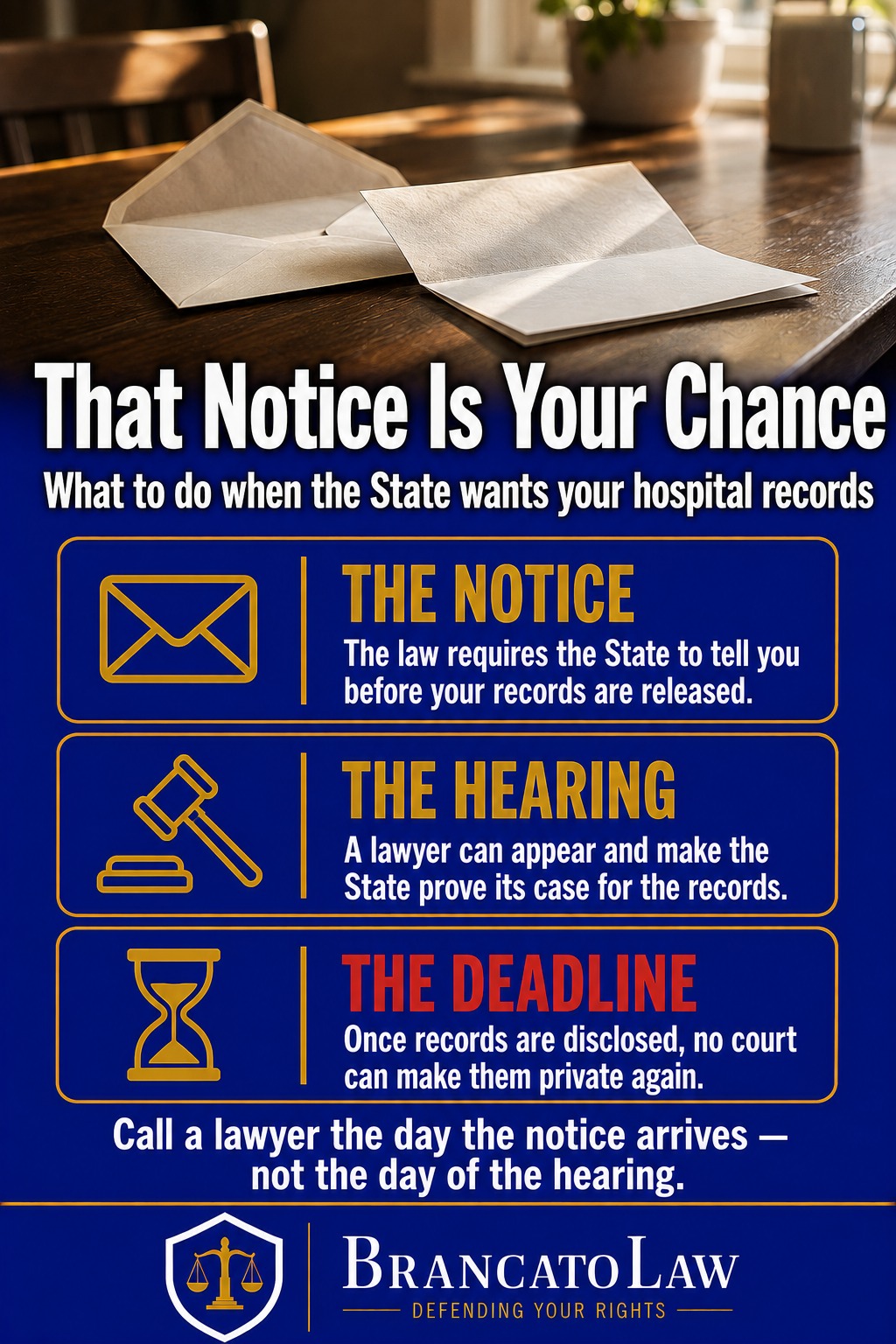
That is also why speed matters more here than almost anywhere else in a DUI case. The window to object runs from notice to the hearing date. A driver who waits until arraignment to hire counsel has usually let the single best suppression opportunity in the case pass unopposed.
How Is a Records Subpoena Different From a Blood Draw?
September 2026 update: The blood-draw side of this comparison has just been clarified. In State v. Marlin, No. 4D2025-1448 (Fla. 4th DCA Sept. 2, 2026), the Fourth District affirmed suppression of a forced blood draw in a fatal Turnpike crash, held that the natural dissipation of alcohol is never a per se exigency, and receded from the “probable cause” language in State v. Acevedo that prosecutors had been treating as an exception to the warrant requirement. Absent actual consent or case-specific exigent circumstances, a warrant is required — regardless of Florida’s implied consent law. Our full analysis is in can police take your blood without a warrant in Florida.
They are entirely different legal events, governed by different rules — and defending a hospital-crash DUI means fighting both. A law-enforcement blood draw is taken by or at the direction of police under Florida’s implied-consent framework, and it is attacked through the Fourth Amendment: warrant, consent, or true exigency. Medical blood is different: the hospital drew it for treatment, the results sit in your patient file, and the State’s only lawful path to them is the subpoena process described on this page. We cover the law-enforcement draw — and the recent appellate scrutiny it has received — in our guides to DUI manslaughter in Florida and how DUI manslaughter cases are defended.
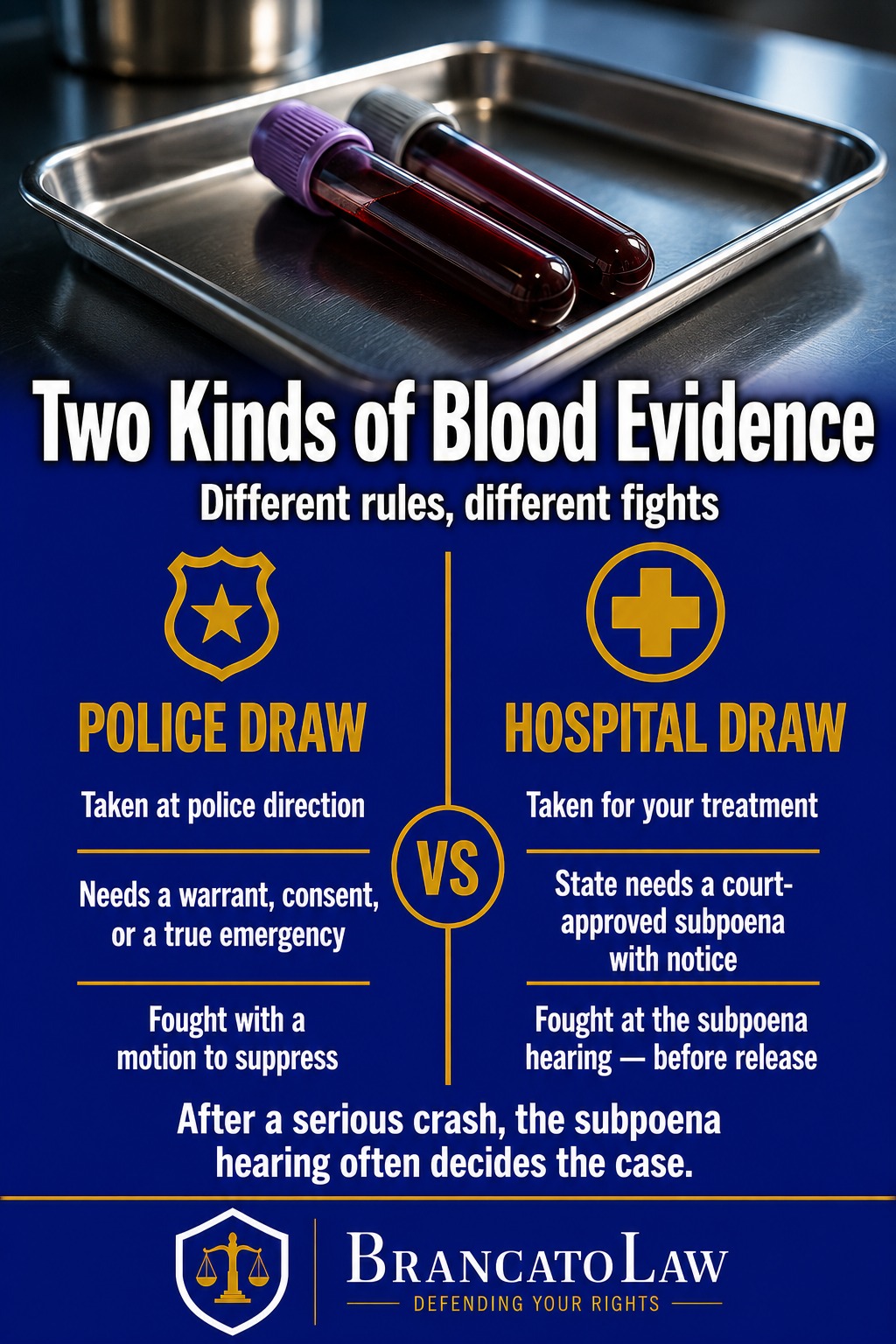
The practical consequence: after a serious crash, the State often has no admissible blood evidence unless it wins the subpoena hearing. That hearing — held while you are still recovering, often before charges are filed — can decide whether the most damaging number in the case ever reaches a jury.
| Who, What, How | Law-enforcement blood draw | Hospital (medical) blood |
|---|---|---|
| Who takes it | Police direct the draw | Hospital, for treatment |
| Governing rules | Fourth Amendment; implied-consent statutes | Art. I, § 23; § 395.3025; § 401.30 |
| How the State gets it | Warrant, consent, or exigency | Court-approved subpoena with notice |
| How we fight it | Motion to suppress | Objection at the subpoena hearing; certiorari |
When Does This Fight Happen — Before or After Charges?
Usually before. In crash cases with injuries, the State frequently seeks hospital records during the investigation, weeks or months before any charging decision — Leka involved a subpoena sought before a single citation had been issued. That timing creates a trap: many drivers assume that because they have not been charged, they do not need a lawyer yet. In reality, the pre-charge window is when the decisive privacy fight happens, and it is also when defense counsel can engage prosecutors before momentum builds — the same early-intervention approach our attorneys use across serious traffic cases like vehicular homicide.
How Do We Defend Against a Medical Records Subpoena?
We litigate the State’s burden element by element. Is there a genuine theory of relevance, or boilerplate? Did the State bring evidence — an accident report, a sworn affidavit, testimony — or just argument, which Roberts holds is not enough? Is the requested scope limited to the crash, or a fishing expedition through your medical history? Was the statutory notice proper? And if the trial court signs off anyway, we evaluate immediate certiorari review, where the standard — a departure from the essential requirements of the law causing irreparable harm — is exactly what these cases involve. If records were already produced, the fight shifts to excluding them and everything derived from them.
Because I am an NCDD member and our attorneys handle hospital-crash DUI cases across Tampa Bay, we also read the medical file the State wants with a defense eye: trauma-room blood results are measured on serum, not whole blood, and the difference — along with chain-of-custody and conversion disputes — gives a second layer of defense even when records come in.
Frequently Asked Questions About Medical Records in Florida DUI Cases
Can police just ask the hospital for my blood results?
No. Hospital records are confidential under section 395.3025, Florida Statutes, and protected by Florida’s constitutional right of privacy, so the State needs a court-issued subpoena and proper notice to you before the hospital may disclose them in a criminal matter. A disclosure outside that process is itself a ground for relief. Our attorneys check exactly how the State obtained every medical record in the file.
Does a DUI crash automatically give the State access to my records?
No. A crash plus a hospital visit is not, by itself, a nexus. Under Leka v. State, 283 So. 3d 853 (Fla. 2d DCA 2019) — the controlling decision in the Tampa Bay area — the State must offer a theory of relevance and evidence supporting it, such as documented impairment indicators, and the court must consider the scope of what is requested.
What happens at the subpoena hearing?
The State presents its justification, and the defense can contest it — that is where cases like Roberts are won, because argument alone is not evidence. If the judge grants the subpoena anyway, the ruling can be challenged immediately by petition for writ of certiorari rather than waiting for a trial. The Brancato Law Firm, P.A. treats this hearing as the first suppression battle of the case.
I got a notice that the State wants my hospital records. How long do I have?
Act immediately — your opportunity to object runs from the notice to the hearing, and once records are disclosed the harm cannot be undone, which is exactly why appellate courts allow emergency review in these cases. Call (813) 727-7159 as soon as the notice arrives, before the hearing date, so counsel can appear and put the State to its burden.
Can the State get records from before the crash?
The scope of the subpoena is part of the State’s burden. Courts evaluating these requests consider whether the records sought are connected to the issues in the investigation, and Leka faulted the State for never even identifying which records it wanted. Overbroad requests reaching into unrelated medical history are a primary target when we contest these subpoenas.
What if my records were already turned over?
The fight is not over. Improperly obtained records can be challenged through certiorari and suppression litigation, and how the blood was analyzed — hospital serum values versus legal whole-blood standards — remains contestable even for records that come in. The Brancato Law Firm, P.A. reviews both the legality of the disclosure and the science inside the file; call (813) 727-7159 for a free, confidential review.
For more about our defense strategies, visit our Hillsborough County Criminal Defense Attorney page.
Related reading: What Is DUI in Florida? · What Is DUI Manslaughter in Florida? · How DUI Manslaughter Cases Are Defended in Florida · What Is Vehicular Homicide in Florida?
The Most Important Hearing in Your DUI Case May Happen Before You’re Charged
If you were hospitalized after a crash in Hillsborough, Pinellas, or Pasco County and the State wants your medical records, the hearing on that subpoena may decide your case before a charge is ever filed. Call the attorneys of The Brancato Law Firm, P.A. — founded by Tampa Criminal Defense Attorney Rocky Brancato — at (813) 727-7159 the day the notice arrives, because once your records are disclosed, no court can make them private again.
The Brancato Law Firm, P.A.
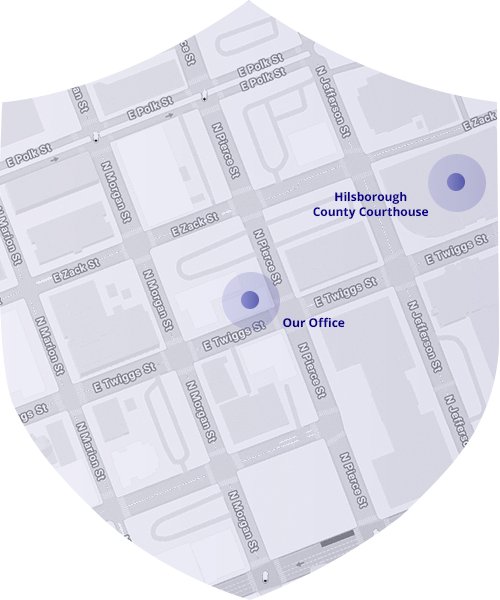
620 E. Twiggs Street, Suite 205, Tampa, FL 33602
(813) 727-7159
Serving Hillsborough, Pinellas, and Pasco Counties
The Brancato Law Firm, P.A. is a Tampa-based criminal defense practice. We are not affiliated with any other Brancato-named law firms.
Visit Us
Tampa, FL 33602
Contact Us Now
Free Legal Consultation (813) 727-7159