- Free Consultation 24/7: (813) 727-7159 Tap Here To Call Us




What Is Driving Without a License in Florida? Charges, Penalties, and Defense Options


Key Takeaway: Driving without a valid license under Florida Statute §322.03 is a criminal offense — not just a traffic ticket. A first offense is a second-degree misdemeanor carrying up to 60 days in jail. A second offense is a first-degree misdemeanor with up to 1 year in jail. A third or subsequent conviction carries a mandatory minimum of 10 days in jail. However, Florida provides a powerful escape valve: if you obtain a valid license before your court date, the clerk can dismiss the charge entirely under §322.03(7). The right attorney can help you take advantage of this opportunity.
I’m Tampa criminal defense attorney Rocky Brancato. With more than 25 years defending criminal cases in Hillsborough County, an AV Preeminent rating from Martindale-Hubbell, Super Lawyers recognition, and more than 150 jury trials to verdict, I have defended hundreds of license-related charges — from simple no-valid-license misdemeanors to complex cases involving immigration-related licensing barriers.
How Does Florida Define Driving Without a License?
Florida Statute §322.03(1)(a) establishes a straightforward rule: a person may not drive any motor vehicle upon a highway in this state unless that person holds a valid driver license issued under Chapter 322. Unlike driving while license suspended (DWLS) under §322.34, this statute does not require knowledge as an element. If you drive without ever having obtained a Florida license — or if your license expired more than 6 months ago under §322.03(6) — you violate this statute.
The distinction between “no valid license” and “suspended license” matters enormously. Because DWLS under §322.34 requires proof that the defendant once held a license that the State then suspended or revoked, a person who never obtained a Florida license cannot face DWLS charges. In fact, the Second District Court of Appeal confirmed this principle in Woodbury v. State (2020), holding that a defendant who never held a Florida license could only face charges under §322.03 — not the more serious §322.34.
Florida Statute §322.03: Driving without a valid license is a second-degree misdemeanor on a first offense, a first-degree misdemeanor on a second offense, and a first-degree misdemeanor with a mandatory minimum of 10 days in jail on a third or subsequent offense. However, §322.03(7) allows the clerk to dismiss the charge if the defendant obtains a valid license before the court date. At The Brancato Law Firm, P.A., we help clients navigate the licensing process and fight to get charges dismissed throughout the 13th Judicial Circuit.
What Are the Penalties for Driving Without a License?
The penalties escalate with each conviction:
| Offense | Classification | Maximum Penalty |
|---|---|---|
| First offense — §322.03(1)(b)1 | Second-degree misdemeanor | 60 days jail, $500 fine |
| Second offense — §322.03(1)(b)2 | First-degree misdemeanor | 1 year jail, $1,000 fine |
| Third or subsequent offense — §322.03(1)(b)3 | First-degree misdemeanor | 1 year jail, $1,000 fine + mandatory 10 days jail |
| Expired CDL (30 days or less) — §322.03(4)(c) | Nonmoving violation | Fine only |
In addition to these criminal penalties, a conviction creates a permanent criminal record. Because the charge involves driving, insurance companies frequently raise premiums or cancel policies after a conviction. Furthermore, repeat offenses can complicate future efforts to obtain a valid license — the DHSMV may impose additional requirements before issuing one.
Warning — Commercial Drivers Face Additional Consequences: Florida Statute §322.53 requires every person who drives a commercial motor vehicle in Florida to hold a valid commercial driver license (CDL). A Florida resident who holds only a Class E license cannot legally operate a commercial vehicle — even if the Class E is valid. Similarly, §322.03(4)(b) makes it a first-degree misdemeanor for a Florida resident with a CDL requirement to drive a commercial vehicle without one. Commercial drivers who lose their CDL face immediate loss of livelihood, disqualification periods under §322.61, and federal reporting consequences. At The Brancato Law Firm, P.A., we understand the career-ending stakes commercial drivers face and fight aggressively to protect their licenses.
What Vehicles Require a License?
Florida’s licensing requirement applies broadly. Under §322.01, a “motor vehicle” includes any self-propelled vehicle — not operated upon rails or guideway — except wheelchairs and certain electric personal assistive mobility devices. Because of this broad definition, the licensing requirement extends to vehicles many people assume do not require a license.
In State v. Erway (2022), the Second District Court of Appeal held that a gasoline-powered bicycle qualified as a motor vehicle under §322.01(27), meaning the rider needed a valid license. Similarly, in State v. Manchado (2007), the Fourth District confirmed that a mini-motorcycle required a license. In Soto v. State (1998), the same court held that moped operators need a license under §322.16. As a result, officers in Hillsborough County routinely stop riders of mopeds, motorized scooters, and electric bikes and charge them under §322.03 if they lack a valid license.
However, certain exemptions exist. Military personnel driving vehicles for military purposes do not need a Florida CDL under §322.53(2)(b). Farmers transporting agricultural products within 150 miles of their farms enjoy an exemption under §322.53(2)(c). Recreational vehicle drivers also hold an exemption under §322.53(2)(d). These exemptions apply only to the CDL requirement — a valid Class E license remains necessary.
How Is Driving Without a License Different from DWLS?
This distinction creates critical defense opportunities. Driving without a license under §322.03 applies to a person who never obtained a valid Florida license or whose license expired. DWLS under §322.34 applies to a person who once held a valid license that the State then suspended, revoked, or canceled. The charges carry different penalties, different elements, and different defense strategies.
Most importantly, §322.03 does not require the State to prove knowledge. If you drive without a valid license, the violation exists regardless of whether you knew your license was invalid. In contrast, criminal DWLS under §322.34(2) requires the State to prove the defendant knew about the suspension. Because of this, prosecutors sometimes charge §322.03 when they cannot establish the knowledge element for DWLS.
The Roedel v. State (2000) decision from the Fifth District Court of Appeal established that §322.03(1) is a lesser included offense of §322.34(2). As a result, prosecutors cannot convict a defendant of both charges from the same traffic stop — doing so violates double jeopardy protections under §775.021(4)(b). At The Brancato Law Firm, P.A., we use this principle to protect clients facing stacked charges.
How Do We Defend No Valid License Charges?
At The Brancato Law Firm, P.A., we defend no-valid-license charges using strategies that target both the legal elements and the practical resolution:
- Obtain a valid license before the court date. This is the most powerful defense tool available. Under §322.03(7), the clerk of court can dismiss the charge if the defendant produces a valid license — issued before the arrest — at or before the court appearance. Even when subsection (7) does not technically apply, prosecutors in the 13th Judicial Circuit routinely dismiss charges when the defendant obtains a valid license and demonstrates compliance.
- Challenge the definition of “motor vehicle.” If the vehicle does not meet the statutory definition under §322.01 — for example, certain electric bicycles or mobility devices — the licensing requirement does not apply. We examine the specific vehicle involved and determine whether it falls within the statutory definition.
- Assert a statutory exemption. Military personnel, farmers within 150 miles, recreational vehicle operators, and other exempt categories under §322.53(2) do not need a CDL. If our client falls within an exemption, the charge fails.
- Challenge the “highway” element. Section 322.03 prohibits driving on a “highway” without a license. If our client drove on private property — a parking lot, a private road, or private land — the statute does not apply.
What Should You Do If Charged with No Valid License?
If you face a no-valid-license charge, take these steps immediately:
- Determine why you do not have a valid license. The reason matters for the defense strategy. If your license expired, you may simply need to renew it. If you never obtained a Florida license, you need to apply through the DHSMV. If an outstanding obligation — such as unpaid fines, a child support delinquency, or an insurance lapse — prevents you from getting a license, you must resolve that issue first.
- Obtain a valid license as quickly as possible. Under §322.03(7), the clerk can dismiss the charge if you produce a valid license before or at your court appearance. This single step can eliminate the criminal charge entirely.
- Contact a defense attorney before your court date. Tampa criminal defense attorney Rocky Brancato can evaluate whether you qualify for a clerk dismissal, identify any obstacles to obtaining a license, and negotiate with prosecutors to achieve the best possible outcome. In many cases, we resolve these charges without a criminal conviction on your record.
Frequently Asked Questions About Driving Without a License in Florida
Is driving without a license a criminal offense in Florida?
Yes. Unlike a simple traffic infraction, driving without a valid license under §322.03 is a misdemeanor criminal offense. A first conviction is a second-degree misdemeanor, a second is a first-degree misdemeanor, and a third carries a mandatory minimum of 10 days in jail. A conviction creates a permanent criminal record. The Brancato Law Firm, P.A. defends no-valid-license charges throughout Hillsborough, Pinellas, and Pasco Counties.
Can a no-valid-license charge be dismissed?
Yes — and dismissals happen frequently. Section 322.03(7) allows the clerk to dismiss the charge if the defendant produces a valid license before or at the court appearance. Even when this provision does not technically apply, prosecutors in Hillsborough County routinely agree to dismiss when the defendant demonstrates compliance by obtaining a valid license. Call The Brancato Law Firm, P.A. at (813) 727-7159 for a free consultation.
Special Situations
What if I have a valid license from another state?
Florida generally recognizes valid out-of-state licenses for visitors. However, if you become a Florida resident — which Florida law defines broadly — you must obtain a Florida license within 30 days. If you hold an out-of-state license but have established residency in Florida, officers may charge you under §322.03. We examine residency status and license reciprocity to determine whether the charge is valid.
Do I need a license to ride a moped or motorized scooter in Florida?
Yes. Florida courts have consistently held that mopeds and motorized scooters qualify as motor vehicles requiring a license. In Soto v. State (1998), the Fourth District confirmed that moped operators need a license under §322.16. Similarly, in State v. Erway (2022), the Second District held that a gasoline-powered bicycle required a license. Officers in Tampa frequently enforce this requirement during routine traffic stops.
Hiring a Defense Attorney
What is the difference between driving without a license and DWLS?
Driving without a license under §322.03 applies when a person never obtained a valid license or let it expire. DWLS under §322.34 applies when a person once held a valid license that the State suspended or revoked. DWLS carries heavier penalties — including potential felony charges — and requires proof of knowledge. At The Brancato Law Firm, P.A., we analyze the specific facts to ensure you face only the appropriate charge.
You Are Reading This for a Reason — Let Us Help
A no-valid-license conviction — even a first offense — creates a permanent criminal record. A third conviction carries mandatory jail time. However, these charges offer one of the clearest paths to dismissal in Florida criminal law: obtain a valid license before your court date, and the charge often goes away. The key is acting quickly and having an experienced attorney guide the process.
The earlier Tampa criminal defense attorney Rocky Brancato gets involved, the more options you have — especially when resolving licensing barriers before the court date can change the entire outcome.
Call The Brancato Law Firm, P.A. today at (813) 727-7159 for a free, confidential consultation. We are available 24/7 and serve clients throughout Hillsborough, Pinellas, and Pasco Counties.
For more about how we defend traffic-related charges, visit our DUI Defense practice page. You may also find our guides on What Is Driving While License Suspended in Florida? and What Is Fleeing and Eluding in Florida? helpful — license-related charges often overlap, and understanding the distinctions is critical to building the right defense.
The Brancato Law Firm, P.A. is a Tampa-based criminal defense practice serving clients exclusively in Hillsborough, Pinellas, and Pasco Counties. We are not affiliated with any other Brancato-named law firms.
This page is for informational purposes only and does not constitute legal advice. Each case is unique, and outcomes depend on the individual facts and circumstances involved. Past results do not guarantee future outcomes.
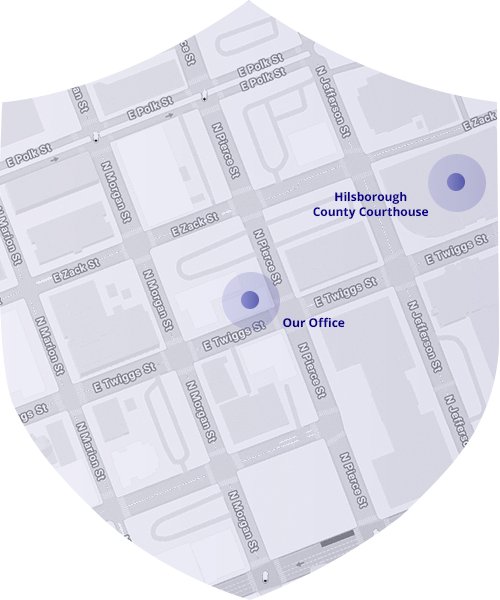
Visit Us
Suite #205
Tampa, FL 33602
Contact Us Now
Free Legal Consultation (813) 727-7159