- Free Consultation 24/7: (813) 727-7159 Tap Here To Call Us




Supreme Court Defines Fourth Amendment Standard for Emergency Welfare Checks: Case v. Montana


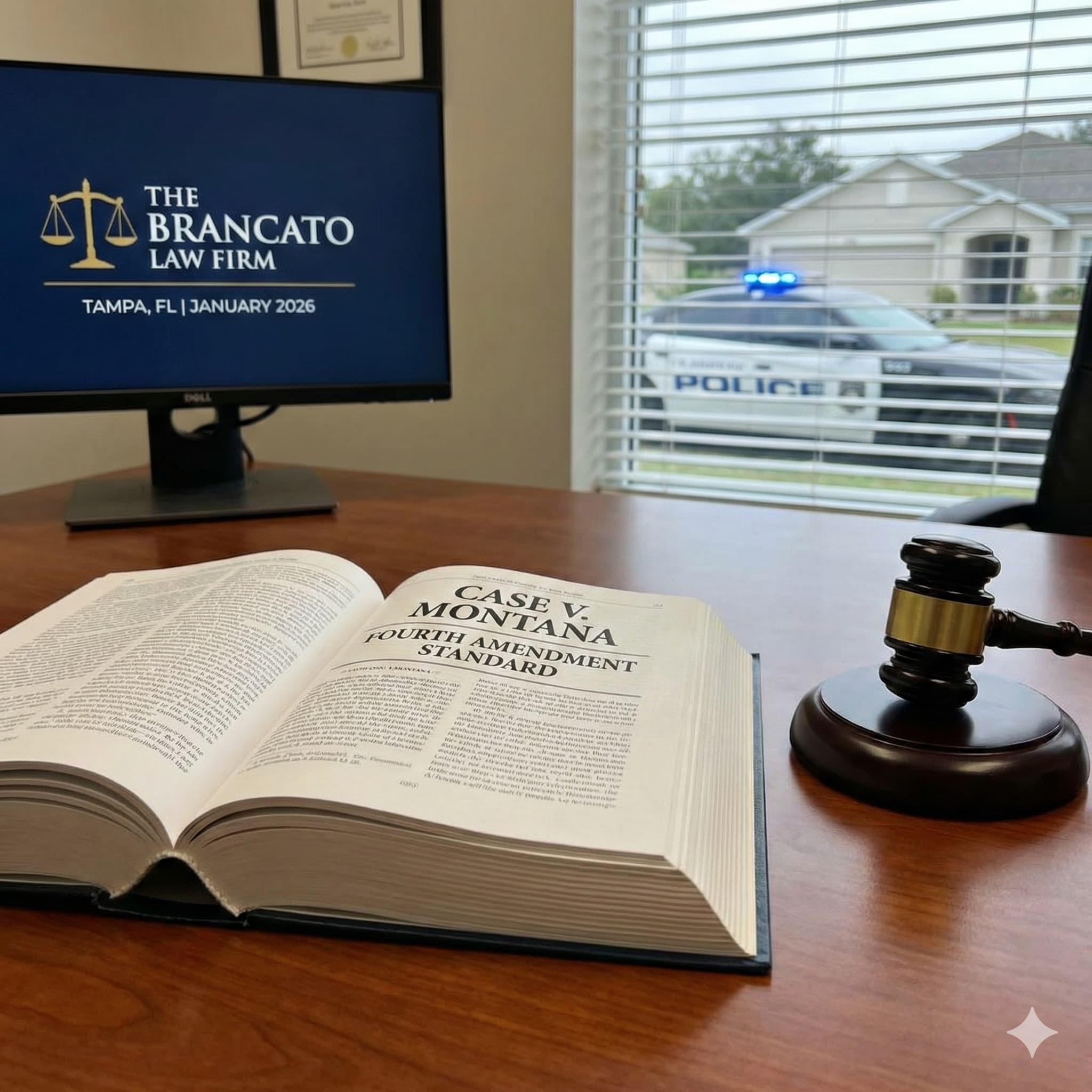
The Brancato Law Firm, P.A. | January 2026
The U.S. Supreme Court’s unanimous decision in Case v. Montana, 607 U.S. ___ (2026), establishes the definitive Fourth Amendment standard for warrantless home entries during mental health welfare checks. For Tampa criminal defense attorneys and defendants throughout Florida, this ruling directly impacts suppression motions in cases where police entered homes without warrants to check on individuals reported as suicidal or in crisis. The Brancato Law Firm, P.A. analyzes how this decision affects criminal cases in Hillsborough, Pinellas, and Pasco Counties.
| Key Takeaway: In Case v. Montana, the Supreme Court unanimously held that police may enter a home without a warrant to render emergency aid if they have an “objectively reasonable basis for believing” that an occupant is seriously injured or faces imminent serious harm. The Court rejected both a higher “probable cause” standard and a lower “reasonable suspicion” standard, reaffirming the test from Brigham City v. Stuart (2006). |
What Happened in Case v. Montana
The case began when William Case called his ex-girlfriend and told her he was going to kill himself. During the call, she heard what sounded like a gun being cocked, then a “pop,” followed by silence. She called 911, and police officers were dispatched to Case’s home for a welfare check.
When officers arrived, they knew Case had a history of mental health issues, alcohol abuse, and had previously attempted “suicide-by-cop.” They circled the house, knocked on doors, and yelled into an open window—but got no response. Through the windows, they could see empty beer cans, an empty handgun holster, and what appeared to be a suicide note. After approximately 40 minutes of deliberation and preparation, the officers entered the home without a warrant.
Case was hiding in a bedroom closet. When an officer approached, Case threw open the closet curtain while holding what appeared to be a gun. The officer, fearing for his life, shot Case. Consequently, Case was charged with assaulting a police officer and moved to suppress all evidence obtained from the warrantless entry.
| Case Citation Case v. Montana, 607 U.S. ___, No. 24-624 (Jan. 14, 2026) Opinion by: Justice Kagan (unanimous Court) Concurrences: Justice Sotomayor, Justice Gorsuch Holding: “Objectively reasonable basis for believing” standard applies—not probable cause, not reasonable suspicion |
The Supreme Court’s Holding: “Objectively Reasonable Basis”
The central question before the Court was what standard applies when police enter a home without a warrant to provide emergency aid. Three possible standards were at issue:
| Standard | Origin | Court’s Decision |
| Probable Cause | Defendant’s argument | Rejected—”peculiarly related to criminal investigations” |
| Reasonable Suspicion | Montana Supreme Court’s approach | Rejected—too easily met for home entries |
| Objectively Reasonable Basis | Brigham City v. Stuart (2006) | Affirmed as the correct standard |
Writing for a unanimous Court, Justice Kagan explained that the probable cause standard “is peculiarly related to criminal investigations” and would “fit awkwardly, if at all, in the non-criminal, non-investigatory setting” of emergency welfare checks. Therefore, the Court declined to “transplant” probable cause analysis to emergency aid situations.
At the same time, the Court made clear that Montana’s “reasonable suspicion” approach—requiring only “specific and articulable facts” from which an officer could “suspect” someone needs help—was also incorrect. That standard, borrowed from Terry v. Ohio street stops, is too low for the serious intrusion of entering someone’s home.
| The Emergency Aid Standard Police may enter a home without a warrant if they have “an objectively reasonable basis for believing that an occupant is seriously injured or imminently threatened with such injury.” Brigham City v. Stuart, 547 U.S. 398, 400 (2006), reaffirmed in Case v. Montana (2026). This standard is assessed based on the “totality of the circumstances” known to officers at the time of entry. |
Justice Sotomayor’s Concurrence: Caution in Mental Health Crisis Responses
Justice Sotomayor joined the Court’s opinion but wrote separately to emphasize the “unique considerations” that apply when police respond to mental health crises. Her concurrence contains significant observations that defense attorneys should note:
| Critical Statistics from Justice Sotomayor’s Concurrence: • Individuals with serious mental health conditions are 7 times more likely to be killed during police interactions • Over a 2-year period, “calls for help resulted in law enforcement officers shooting and killing the very people they were called on to assist” in 178 cases • Police shootings involving behavioral health concerns are 2.1 times more likely to result in fatal injury • Individuals with mental illness are 2.8 times more likely to be killed in their own homes |
Justice Sotomayor observed that “the presence of law enforcement at times can escalate the situation rather than ameliorate it.” Consequently, she suggested that in some circumstances, “it may be more reasonable for officers to try different means of de-escalation before entering the home”—such as speaking with the occupant from a distance, contacting family members, calling specialized crisis units, or working with mental health professionals.
Importantly, Justice Sotomayor emphasized that even when entry is justified, “the ‘manner’ of the officers’ entry and their subsequent conduct inside must also be ‘reasonable.'” This creates an additional avenue for suppression challenges based on how officers executed the entry, not just whether they were justified in entering at all.
What This Means for Tampa Criminal Cases
The Case v. Montana decision has immediate implications for criminal defense in Florida. Welfare check entries are common, and the evidence obtained often forms the basis for serious charges—from drug possession to weapons offenses to assault.
Grounds for Challenging Warrantless Welfare Check Entries
Based on Case v. Montana and its precedents, defense attorneys can challenge warrantless entries on several grounds:
- Insufficient basis for entry: Did officers have an “objectively reasonable basis” for believing someone was seriously injured or faced imminent harm? Vague reports or stale information may not suffice.
- Entry created the danger: As Case argued, if the primary risk arose from the officers’ entry itself (suicide-by-cop scenario), the entry may not have been justified to prevent harm.
- Unreasonable manner of entry: Per Justice Sotomayor, even a justified entry can become unconstitutional if officers act unreasonably once inside.
- Scope exceeded the emergency: The Court emphasized that emergency aid entries provide “no basis to search the premises beyond what is reasonably needed to deal with the emergency.”
- Alternative de-escalation ignored: Justice Sotomayor’s concurrence suggests officers should consider alternatives before entry—failure to do so may undermine reasonableness.
Why Police Training Standards Matter in These Cases
From the Courtroom: “As a former police academy instructor in criminal procedure and courtroom testimony, I taught officers the constitutional requirements they must follow—including when they can and cannot enter a home without a warrant. When I cross-examine an officer about a welfare check entry, I’m not guessing what training they received on Fourth Amendment standards. I delivered that training. I know what they were taught about the emergency aid exception, and I know when their actions deviate from proper constitutional standards.” — Rocky Brancato
The Case v. Montana decision clarifies the legal standard, but officers still must apply it correctly in the field. Furthermore, as Justice Sotomayor noted, officers responding to mental health crises should consider de-escalation alternatives. When officers rush to enter without adequate basis or without considering alternatives, the resulting evidence may be subject to suppression.
Key Precedents on Emergency Aid Home Entries
The Court’s decision in Case v. Montana builds on established Fourth Amendment precedent. Understanding these cases helps identify when suppression challenges may succeed:
- Brigham City v. Stuart, 547 U.S. 398 (2006): Established the “objectively reasonable basis for believing” standard for emergency aid entries. Officers witnessed a fight through a window with someone being struck and bleeding.
- Michigan v. Fisher, 558 U.S. 45 (2009): Applied Brigham City where officers found broken windows, blood on doors, and a man screaming and throwing things inside.
- Caniglia v. Strom, 593 U.S. 194 (2021): Rejected a broad “community caretaking” exception for home entries. Officers must have a specific emergency—general welfare concerns are insufficient.
Circuit Split Resolved by Case v. Montana
| Circuit | Previous Position | Now Superseded |
| Second Circuit | Required probable cause | Overruled by Case v. Montana |
| Eleventh Circuit | Required probable cause | Overruled by Case v. Montana |
| D.C. Circuit | Required probable cause | Overruled by Case v. Montana |
| First Circuit | Did not require probable cause | Affirmed by Case v. Montana |
| Eighth Circuit | Did not require probable cause | Affirmed by Case v. Montana |
| Tenth Circuit | Did not require probable cause | Affirmed by Case v. Montana |
For Florida practitioners, the Eleventh Circuit had previously required probable cause for emergency aid entries. That position is now overruled. However, this doesn’t mean all welfare check entries are automatically valid—the “objectively reasonable basis” standard still demands meaningful factual support, and Justice Sotomayor’s concurrence provides additional arguments for challenging entries in mental health crisis situations.
| The Case v. Montana Outcome The Supreme Court affirmed William Case’s conviction, finding the officers had an objectively reasonable basis for entry. The ex-girlfriend’s account of the phone call—including what sounded like a gun cocking and firing, followed by silence—combined with Case’s known history and the visual evidence at the scene (empty holster, apparent suicide note, no response to calls) supported the officers’ belief that Case may have shot himself or was about to do so. Result: Conviction Affirmed. Standard Clarified for Future Cases. |
Frequently Asked Questions About Warrantless Welfare Check Entries
Questions About the Legal Standard
Under Case v. Montana (2026), police must have an “objectively reasonable basis for believing” that someone inside is seriously injured or faces imminent serious harm. This is higher than “reasonable suspicion” but does not require “probable cause.” The assessment is based on the totality of circumstances known to officers at the time of entry.
No. The Supreme Court emphasized that emergency aid entries provide “no basis to search the premises beyond what is reasonably needed to deal with the emergency while maintaining the officers’ safety.” If officers exceed the scope of the emergency, evidence found may be subject to suppression. Consequently, any search beyond locating the person in need of aid requires separate justification.
Questions About Challenging Evidence
Yes. A motion to suppress can challenge whether officers had an objectively reasonable basis for entry, whether the manner of entry was reasonable, and whether officers exceeded the scope of the emergency. Additionally, Justice Sotomayor’s concurrence suggests arguments based on officers’ failure to consider de-escalation alternatives before entry.
The standard is “objectively reasonable”—meaning the analysis focuses on what officers reasonably believed based on available information, not whether the emergency actually existed. However, if officers had reason to doubt the report’s reliability, or if the circumstances at the scene contradicted the reported emergency, suppression arguments become stronger.
Questions About Mental Health Crisis Responses
Justice Sotomayor’s concurrence emphasizes that mental health crisis situations present “unique considerations.” She noted that police entry can escalate rather than ameliorate these situations, and suggested officers should consider de-escalation alternatives before entry—such as speaking to the occupant from a distance, contacting family, or calling specialized crisis units. These observations provide additional grounds for challenging entries in mental health cases.
An occupant’s statement that they don’t need help is a factor officers must consider. Justice Sotomayor cited cases where officers entered despite occupants disclaiming any intention to harm themselves. However, officers may conclude that other circumstances—such as third-party reports, visible evidence, or known history—outweigh the occupant’s assurances. The analysis remains fact-specific.
Protect Your Rights — Challenge Unlawful Entries
If you’ve been charged with a crime based on evidence discovered during a welfare check or emergency entry, your Fourth Amendment rights may have been violated. The Case v. Montana decision clarifies the standard—but officers don’t always meet it. An experienced criminal defense attorney can analyze whether the entry was constitutionally justified and whether the evidence should be suppressed.
Contact Tampa Criminal Defense Attorney Rocky Brancato Today
Call (813) 727-7159 for a Confidential Consultation
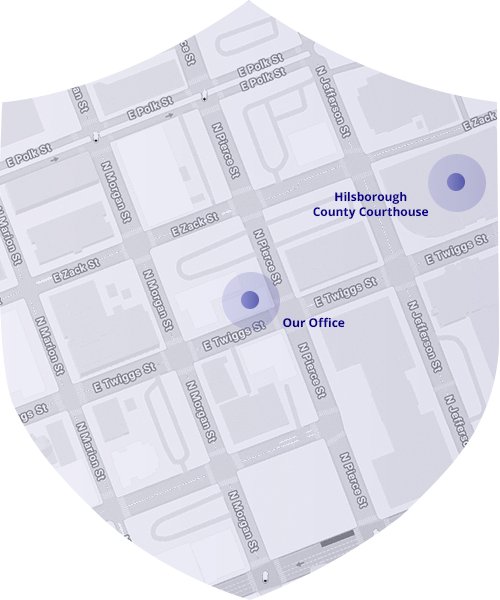
620 E. Twiggs Street, Suite 205, Tampa, FL 33602
Serving Hillsborough, Pinellas, and Pasco Counties
25+ Years of Criminal Defense Experience | Former Chief Operations Officer, Hillsborough County Public Defender’s Office | Former Police Academy Instructor in Criminal Procedure
Related: Learn More About Search and Seizure Defense
Visit Us
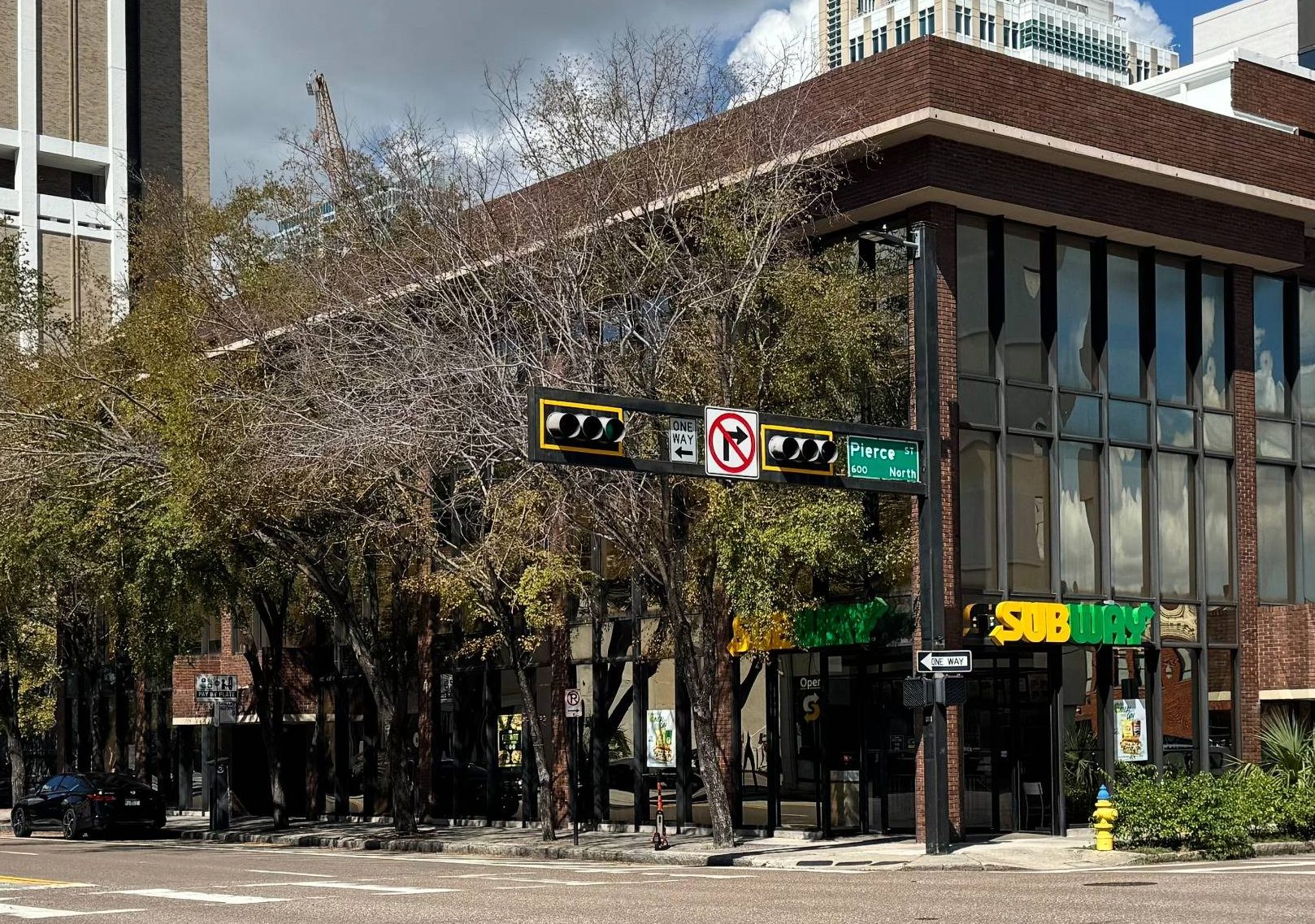
Suite #205
Tampa, FL 33602
Contact Us Now
Free Legal Consultation (813) 727-7159