- Free Consultation 24/7: (813) 727-7159 Tap Here To Call Us


From First DUI to Death Penalty



Florida Self-Defense Laws and Stand Your Ground



Understanding Your Rights Under Florida Statutes 776.012, 776.013, 776.031, and 776.032 — And How to Protect Them
| Key Takeaway: Florida’s Self-Defense Protections Florida law allows you to stand your ground and use force—including deadly force—without retreating when you reasonably believe it is necessary to prevent imminent death, great bodily harm, or a forcible felony. Moreover, if your use of force was lawful, you may be entitled to complete immunity from arrest, prosecution, and civil liability under Florida Statute 776.032. |
Florida’s self-defense laws offer some of the strongest protections in the country. However, how those protections apply in real cases varies widely based on the facts and how police, prosecutors, and judges interpret the evidence. For defendants in Tampa, Hillsborough County, and across the Tampa Bay region, understanding these laws is essential—especially when the stakes involve immunity from arrest, prosecution, or civil liability.
At The Brancato Law Firm, P.A., Tampa Criminal Defense Attorney Rocky Brancato brings more than 25 years of self-defense litigation experience to every case. This guide breaks down the core statutes and explains how they operate in real-world situations.
For a deeper understanding of how trauma affects perception of threat, see our related post on PTSD and Self-Defense.
Florida’s Stand Your Ground Law (Statute 776.012)
Florida’s Stand Your Ground law removes any duty to retreat. Consequently, you may use force—even deadly force—when you reasonably believe it is necessary to stop imminent harm, great bodily injury, or a forcible felony.
| Florida Statute 776.012 — When Force Is Justified A person is legally justified in using force when: • They use non-deadly force to stop unlawful force against themselves or another • They use deadly force to stop imminent death, great bodily harm, or a forcible felony • They are legally present and not engaged in criminal activity |
Example: If a person threatens you with a weapon in downtown Tampa, Florida law allows you to defend yourself without retreating. You do not have to run—you can stand your ground.
How Florida Courts Evaluate Self-Defense Claims
The Dual-Standard Analysis
Courts analyze two elements when evaluating a self-defense claim. First, did you subjectively believe you were facing imminent harm? Second, would a reasonable person in your position have believed the same thing?
| Standard | Question Asked | Case Authority |
| Subjective | Did YOU believe you faced imminent harm? | Analyzed in all self-defense cases |
| Objective | Would a REASONABLE PERSON have believed the same? | Oquendo v. State, 357 So. 3d 214 (Fla. 2d DCA 2023) |
| Critical Case Law: The Threat Does Not Have to Be Real Pollok v. State, 818 So. 2d 654 (Fla. 3d DCA 2002) confirms that the danger does not have to be actual—only reasonably perceived. This principle is especially important for individuals experiencing trauma responses, PTSD, or dissociative episodes during a confrontation. |
Self-Defense Against Animal Attacks
Florida law also allows force—even deadly force—against an animal when the threat is immediate. In Gabriel v. State, 396 So. 3d 17 (Fla. 4th DCA 2024), the court confirmed that force may be used to stop an imminent animal attack. Therefore, you are not limited to defending against human threats.
Florida’s Castle Doctrine (Statute 776.013)
Under the Castle Doctrine, the law presumes you act with reasonable fear when an intruder unlawfully and forcibly enters an occupied dwelling or vehicle. As a result, this presumption can significantly strengthen your self-defense claim.
| Location | Protection Level | Key Requirement |
| Occupied Dwelling | Presumption of reasonable fear | Unlawful and forcible entry |
| Occupied Vehicle | Presumption of reasonable fear | Unlawful and forcible entry |
| Attached Porch/Patio | Presumption of reasonable fear | Part of dwelling curtilage |
| Public Place | No presumption (use 776.012) | Must prove reasonable belief |
| Warning: When the Castle Doctrine Presumption Does NOT Apply The presumption of reasonable fear does not apply when: • The intruder has a legal right to be in the dwelling or vehicle • The person using force is engaged in criminal activity • The intruder is a law enforcement officer performing official duties • The person against whom force is used is a child or grandchild of the owner |
Defending Property in Florida (Statute 776.031)
Florida law allows non-deadly force to protect real or personal property. Additionally, deadly force may apply if you reasonably believe you are stopping a forcible felony—not merely a property crime.
| Key Principles for Property Defense • No duty to retreat when defending property — State v. Smiley, 927 So. 2d 1000 (Fla. 4th DCA 2006) • No requirement of a physical threat for non-deadly force — Paese v. State, 381 So. 3d 4 (Fla. 4th DCA 2024) • Deadly force requires reasonable belief of a forcible felony in progress • Deadly force cannot be used to protect property alone without a forcible felony |
Immunity Under Florida’s Self-Defense Laws (Statute 776.032)
Florida offers immunity from criminal prosecution and civil lawsuits when force is used lawfully. This protection is broader than simply winning at trial—it can prevent you from ever being prosecuted in the first place.
| Protection Type | What It Covers | Burden of Proof |
| Criminal Immunity | Immunity from arrest and prosecution | Defense shows justification by preponderance |
| Civil Immunity | Immunity from lawsuits and damages | Same standard as criminal immunity |
| Attorney’s Fees | Recovery of legal costs if immunity granted | Available under 776.032 |
| The Immunity Hearing Process — Bretherick v. State Under Bretherick v. State, 170 So. 3d 766 (Fla. 2015), the defense must show justification by a preponderance of the evidence. If met, the burden shifts to the State, which must disprove self-defense by clear and convincing evidence. Furthermore, if immunity is denied, your attorney may seek review through a writ of prohibition, as recognized in Morris v. State, 325 So. 3d 1009 (Fla. 1st DCA 2021). |
When Self-Defense Protections May Not Apply
Florida’s self-defense protections can weaken or disappear entirely under certain circumstances. Therefore, understanding these limitations is critical before asserting a self-defense claim.
| Circumstances That May Defeat a Self-Defense Claim • You were committing a crime at the time of the incident • Your use of force was excessive under the circumstances • You used deadly force to defend property alone, without a forcible felony in progress • You were the initial aggressor (unless you withdrew and communicated that withdrawal) • You provoked the confrontation with intent to use force |
Because outcomes depend heavily on how facts are interpreted, experienced legal representation is critical. What looks like a clear self-defense case to you may be viewed very differently by a prosecutor.
Strategic Considerations for Immunity Hearings
Defendants often have two opportunities to assert self-defense: a Stand Your Ground immunity hearing and trial. In some cases, a third opportunity arises through a writ of prohibition if immunity is denied.
| Critical Strategy Warning: Cruz v. State An experienced attorney may recommend skipping the immunity hearing entirely. Why? Because testimony given at the immunity hearing can be used as substantive evidence at trial under Cruz v. State. Consequently, testifying at the hearing may expose you to damaging cross-examination that the prosecution can replay for the jury. |
This strategic evaluation is unique to each case. Factors include the strength of your evidence, the credibility of witnesses, whether you need to testify to establish self-defense, and the risks of early exposure to prosecutorial cross-examination.
Why Attorney Selection Matters in Self-Defense Cases
Self-defense cases move fast, and early decisions can shape the entire outcome. Whether you should testify at an immunity hearing, pursue Stand Your Ground protections, or preserve your testimony for trial depends on a careful, fact-driven strategy.
Tampa Criminal Defense Attorney Rocky Brancato brings more than 25 years of experience in major felony and self-defense cases. As former Chief Operations Officer of the Hillsborough County Public Defender’s Office, he led and mentored a staff of over 100 attorneys handling serious criminal cases. He evaluates every angle—from immunity to trial posture—to protect your rights and strengthen your defense.
| Cross-Examination Advantage: Police Academy Instructor As a former police academy instructor, Attorney Brancato trained officers on criminal procedure and courtroom testimony. In self-defense cases, police observations and testimony often shape how prosecutors interpret the evidence. Because Rocky knows exactly what officers are trained to document, observe, and testify about, he can effectively cross-examine law enforcement witnesses and expose gaps between their training and their actual investigation. |
Frequently Asked Questions About Florida Self-Defense Laws
Questions about Self-Defense Standards
Stand Your Ground applies anywhere you are lawfully present. The Castle Doctrine applies inside your home, residence, or occupied vehicle. Both remove the duty to retreat, but the Castle Doctrine includes a presumption of reasonable fear during a forcible entry.
No. The threat does not need to be real. Florida courts focus on whether your belief in the threat was reasonable. This conclusion aligns with Pollok v. State and is discussed further in our firm’s post on PTSD and Self-Defense.
Yes. Florida courts recognize self-defense against animal attacks when the threat is immediate, as held in Gabriel v. State.
Immunity applies when your use of force is lawful under Florida Statutes 776.012, 776.013, or 776.031. If proven, immunity protects you from arrest, prosecution, and civil lawsuits.
Yes. Florida courts allow immunity hearing testimony to be used as substantive evidence. This rule can influence whether a defendant chooses to pursue an immunity hearing.
Yes. Law enforcement may still arrest or charge you if they believe your use of force was unlawful. An experienced self-defense attorney can challenge those decisions through motions, Stand Your Ground hearings, or pretrial litigation.
Questions About Working With an Attorney
No. Invoke your right to remain silent and request an attorney immediately. Anything you say can be used against you. Even innocent explanations can be twisted by prosecutors. Let your attorney handle all communication with law enforcement.
Immediately. Evidence disappears, witnesses forget, and the prosecution begins building its case from day one. Early attorney involvement can preserve critical evidence, prevent damaging statements, and position your case for the best possible outcome.
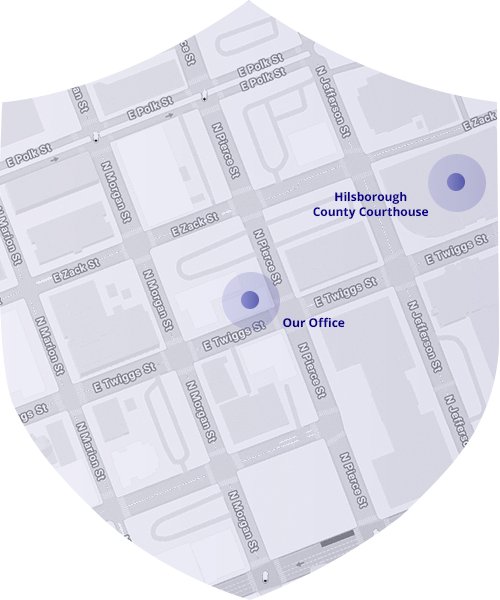
| You Defended Yourself—Now Let Us Defend You The State has already begun building its case. Evidence disappears. Witnesses forget. Every day you wait is a day the prosecution gets stronger. Tampa Criminal Defense Attorney Rocky Brancato has defended self-defense cases throughout Hillsborough, Pinellas, and Pasco Counties for over 25 years. He knows how to fight for Stand Your Ground immunity—and how to win at trial if immunity is denied. Call (813) 727-7159 for a Confidential Consultation The Brancato Law Firm, P.A. 620 E Twiggs Street, Suite 205, Tampa, FL 33602 Serving Hillsborough, Pinellas, and Pasco Counties |

Related Articles
Visit Us
Tampa, FL 33602
Contact Us Now
Free Legal Consultation (813) 727-7159