- Free Consultation 24/7: (813) 727-7159 Tap Here To Call Us




What is Loitering and Prowling in Florida?


| KEY TAKEAWAY Bottom Line: Loitering and prowling under Florida Statute § 856.021 requires the State to prove TWO elements: (1) you were in a place, at a time, or in a manner not usual for law-abiding people, AND (2) your conduct created justifiable alarm for the safety of persons or property. Critically, both elements must occur in the officer’s presence—consequently, arrests based solely on witness reports often result in dismissed charges or suppressed evidence. |
I’m Tampa Criminal Defense Attorney Rocky Brancato. For over 25 years, I’ve defended clients against loitering and prowling charges in Hillsborough County—and I’ve seen firsthand how often police misuse this statute.
Why Courts Call Loitering and Prowling a ‘Catchall’ Charge
Florida courts have repeatedly warned that the loitering statute “reaches the outer limits of constitutionality” and therefore “must be applied with special care.” Mills v. State, 58 So. 3d 936, 939 (Fla. 2d DCA 2011).
Additionally, the Second District Court of Appeal has stated bluntly that loitering and prowling “is not to be used as a ‘catchall’ provision whereby police may arrest citizens where there is no other basis which would justify their detention.” Id.
In our experience at The Brancato Law Firm, P.A., however, this is exactly how police misuse the charge. When officers lack enough evidence for a burglary arrest, trespass, or drug charge, they often fall back on loitering and prowling—frequently without legal justification.
| FLORIDA STATUTE § 856.021 – LOITERING OR PROWLING “It is unlawful for any person to loiter or prowl in a place, at a time or in a manner not usual for law-abiding individuals, under circumstances that warrant a justifiable and reasonable alarm or immediate concern for the safety of persons or property in the vicinity.” Classification: Second-degree misdemeanor Maximum Penalty: 60 days in jail, $500 fine |
Why a Misdemeanor Charge Can Lead to Felony Consequences
The Search Incident to Arrest
Although loitering and prowling is only a second-degree misdemeanor, the real danger lies in what happens after the arrest. Specifically, when police arrest someone for loitering and prowling, they gain the authority to conduct a search incident to arrest.
As a result, these searches often turn up evidence of far more serious crimes—including felony drug possession, concealed weapons, stolen property, or outstanding warrants.
Challenging the Underlying Arrest
This is precisely why challenging the legality of the initial arrest is so critical. If the loitering and prowling arrest lacked probable cause, then any evidence discovered during the subsequent search becomes “fruit of the poisonous tree.” Consequently, the court must suppress that evidence.
I have obtained dismissals of felony drug charges by successfully arguing that the underlying loitering arrest lacked probable cause. Therefore, even if you face additional charges stemming from the arrest, fighting the loitering charge may eliminate the State’s evidence entirely.
The Two Elements Police Must Prove
To sustain a loitering and prowling conviction, the State must prove both elements beyond a reasonable doubt.
Element 1: Unusual Conduct
First, the State must show that you loitered or prowled in a place, at a time, or in a manner not usual for law-abiding individuals. Importantly, this requires more than a “vaguely suspicious presence.” Instead, it must be conduct that “comes close to, but falls short of, the actual commission or attempted commission of a substantive crime.” W.D. v. State, 132 So. 3d 871, 873 (Fla. 2d DCA 2014).
Element 2: Justifiable Alarm
Second, the loitering must occur under circumstances that warrant “a justifiable and reasonable alarm or immediate concern for the safety of persons or property in the vicinity.” In other words, the arresting officer must articulate specific facts showing an imminent breach of the peace or threat to public safety.
Because I taught criminal procedure at the police academy, I know officers receive training that “mere suspicion” isn’t enough. Nevertheless, we regularly see arrests that fail this basic standard.
| WARNING: Both Elements Must Occur in the Officer’s Presence This is the rule police violate most often: “Both elements must occur in the officer’s presence and be complete before the officer takes action.” Fields v. State, 292 So. 3d 889, 895 (Fla. 2d DCA 2020). Therefore, if a neighbor calls 911 to report suspicious behavior, but the officer only sees you walking down the street when they arrive—the officer cannot arrest you for loitering and prowling based on what the neighbor reported. |
What Conduct Does NOT Support a Loitering Charge
Florida courts have consistently found the following conduct insufficient for loitering and prowling charges:
| Conduct | Court Ruling |
| Walking alone on a public street at night | Not unusual for law-abiding citizens (Fields v. State) |
| Being in a “high crime area” | Standing or walking in a high crime area does not, by itself, create reasonable concern (Coleman v. State) |
| Walking behind a closed business at 12:30 a.m. | “Vaguely suspicious presence” insufficient (Mills v. State) |
| Sitting in a parked car in a parking lot | Mere presence insufficient to raise immediate concern (Stephens v. State) |
| Juveniles on bicycles at end of driveway | Consistent with entirely innocent behavior (K.W. v. State) |
| Being out after teen curfew | Does not raise presumption of alarm without more (K.R.R. v. State) |
The Brancato Law Firm has successfully challenged arrests in each of these scenarios. If your conduct matches any of these patterns, call (813) 727-7159 immediately.
How Rocky Brancato Has Won Loitering and Prowling Cases
| CASE STUDY #1: Motion to Suppress Granted The Situation: A client walked through an apartment complex parking lot at 2:00 a.m. carrying a backpack. Police approached because they suspected he was attempting to burglarize vehicles. When asked, the client stated he was simply out for a walk and refused to consent to a search of his backpack. Officers then arrested him for loitering and prowling, searched his backpack incident to arrest, and found cocaine. Rocky Brancato’s Defense: I filed a motion to suppress, arguing the arrest lacked probable cause. Walking through a parking lot—even at 2:00 a.m. with a backpack—does not constitute conduct that “comes close to the actual commission or attempted commission of a substantive crime.” Moreover, the client didn’t flee, didn’t try to enter any vehicles, and provided a reasonable explanation for his presence. The Result: The court granted the motion to suppress. Consequently, the court suppressed the cocaine as fruit of an unlawful arrest, and the State dismissed the loitering and prowling charge. |
| CASE STUDY #2: Motion to Dismiss Granted The Situation: Police received a call from neighbors reporting a “suspicious person” walking through their neighborhood who “didn’t belong there” and was allegedly checking door handles. When officers arrived, they encountered the client walking away from the neighborhood. However, officers did not personally observe him checking any door handles or engaging in any suspicious conduct—they only saw him walking. Rocky Brancato’s Defense: I filed a motion to dismiss, arguing the State failed to establish the elements of loitering and prowling. Under Florida law, both elements must occur in the officer’s presence before any arrest. Fields v. State, 292 So. 3d at 895. Therefore, the officers could not rely on the neighbors’ reports to establish the elements—they had to personally observe the conduct. The Result: The court granted the motion to dismiss. The court found that conduct reported by neighbors could not substitute for the officer’s own observations. Additionally, the court noted that walking down a street is not unusual for law-abiding citizens. |
Past results do not guarantee future outcomes.
Your Right to Refuse Search and Remain Silent
What the Statute Requires
Under § 856.021(2), police may request that you identify yourself and explain your presence. However, Florida courts have made clear that significant limitations apply to this requirement.
Your Constitutional Protections
First, police cannot compel you to explain your presence without Miranda warnings
Second, your failure to provide an explanation is not an element of the crime
Third, if you provide identification and a reasonable explanation, “the charge under this statute can no longer properly be made”
At The Brancato Law Firm, we advise clients accordingly: you should provide your identification if lawfully detained. However, you are not required to consent to searches or make statements that could incriminate you.
| BUILT-IN DEFENSES UNDER § 856.021(2) You cannot receive a conviction for loitering and prowling if: 1. The officer failed to give you an opportunity to identify yourself and explain your presence before arresting you, OR 2. Your explanation was true and would have dispelled the officer’s alarm if believed at the time These statutory defenses provide powerful tools for your defense. Indeed, we have obtained dismissals by demonstrating that police failed to follow the required procedures before making an arrest. |
What Many Attorneys Miss in Loitering Cases
| Issue | Why It Matters | The Brancato Law Firm Approach |
| Officer’s personal observations | Both elements must occur in officer’s presence | We scrutinize reports to identify what officers actually saw vs. what others reported to them |
| “Vaguely suspicious” vs. “incipient criminal behavior” | Courts require more than mere suspicion | We cite controlling case law showing the conduct failed to meet the legal standard |
| Flight after seeing police | Courts cannot use this retroactively to justify the stop | We argue post-pursuit conduct cannot establish pre-existing probable cause |
| High crime area | This factor alone is insufficient | We challenge “high crime” designations and demand specificity from the State |
| Opportunity to dispel alarm | The statute specifically requires this | We identify when officers failed to give the client an opportunity to explain |
Call The Brancato Law Firm at (813) 727-7159 to discuss how these issues apply to your case.
Frequently Asked Questions
Loitering and prowling under Florida Statute § 856.021 is a second-degree misdemeanor. To convict, the State must prove you were in a place, time, or manner not usual for law-abiding people AND that your conduct created justifiable alarm for safety of persons or property. Importantly, the State must prove both elements beyond a reasonable doubt, and both must occur in the arresting officer’s presence.
No. Florida courts have consistently held that “standing or walking in a high crime area does not, by itself, create a reasonable concern for the safety of persons or property.” Coleman v. State, 707 So. 2d 767 (Fla. 2d DCA 1998). Therefore, police need more than your presence in a particular area to justify an arrest.
The 911 call alone cannot establish the elements of loitering and prowling. Under Fields v. State, “both elements must occur in the officer’s presence.” Consequently, the officer must personally observe the alarming conduct—not just rely on what a caller reported.
You should provide identification if lawfully detained. However, police cannot compel you to explain your presence without Miranda warnings. Additionally, your failure to explain is not an element of the crime, and the State cannot use your silence against you at trial.
Yes. Courts frequently dismiss loitering charges when defense counsel demonstrates that (1) the officer didn’t personally observe the required elements, (2) the conduct was merely “vaguely suspicious” rather than indicative of imminent criminal activity, or (3) police failed to give the defendant an opportunity to explain before arresting.
Because I taught criminal procedure at the police academy, I know exactly how officers receive training to justify these arrests—and where their justifications fall short. I have successfully obtained dismissals and suppression of evidence in loitering cases throughout Hillsborough County. Moreover, a misdemeanor conviction still creates a criminal record that can affect employment, housing, and your future.
Super Lawyers recognizes the top 5% of attorneys through peer nomination and independent research—you cannot purchase this recognition. Similarly, AV Preeminent is Martindale-Hubbell’s highest rating for legal ability and ethics, based on peer reviews from judges and other attorneys. Together, these third-party recognitions reflect 25+ years of proven results.
For more about our approach to challenging unlawful arrests and searches, visit our Tampa Criminal Defense page.
Arrested for Loitering and Prowling? Call Now.
If you face loitering and prowling charges in Tampa, Hillsborough County, Pinellas County, or Pasco County, the evidence against you may be weaker than police want you to believe. In fact, many of these arrests stem from officer speculation rather than observed conduct—and that’s a defense we know how to win.
Every day you wait is a day the prosecution builds its case.
Contact Tampa Criminal Defense Attorney Rocky Brancato and The Brancato Law Firm, P.A. today at (813) 727-7159 for a consultation.
_______________________________________________
The Brancato Law Firm, P.A. is a Tampa-based criminal defense practice serving Hillsborough, Pinellas, and Pasco Counties. We are not affiliated with any other Brancato-named law firms.
Related Links
Visit Us
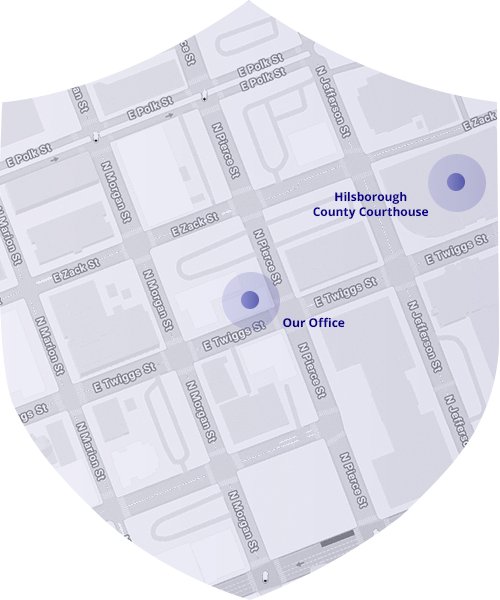
Suite #205
Tampa, FL 33602
Contact Us Now
Free Legal Consultation (813) 727-7159