- Free Consultation 24/7: (813) 727-7159 Tap Here To Call Us




What Is Dealing in Stolen Property in Florida? Penalties, Defenses, and What You Need to Know


Key Takeaway: Dealing in stolen property under Florida Statute §812.019 is a second-degree felony carrying up to 15 years in prison. If you organized or directed the theft, it becomes a first-degree felony with up to 30 years. The State must prove you knew or should have known the property was stolen — and that “knowledge” element is where most of these cases are won or lost.
I’m Tampa criminal defense attorney Rocky Brancato. As the former Chief Operations Officer and Chief Assistant Public Defender of the Hillsborough County Public Defender’s Office, I have defended stolen property cases for more than 25 years — including cases where clients were wrongly accused simply because they purchased or possessed property that turned out to be stolen. I hold an AV Preeminent rating from Martindale-Hubbell and Super Lawyers recognition.
How Does Florida Law Define Dealing in Stolen Property?
Under §812.019(1), dealing in stolen property means trafficking in — or attempting to traffic in — property that you know or should know was stolen. The word “traffics” is the key. Under Florida law, trafficking in stolen property means selling, transferring, distributing, or otherwise disposing of stolen property to another person. It also includes buying stolen property with the intent to resell or distribute it.
Florida Statute §812.019: The State must prove two things: (1) that you trafficked in or attempted to traffic in stolen property, and (2) that you knew or should have known the property was stolen. If you had no reason to believe the property was stolen — for instance, you bought it at a reasonable price through a normal transaction — the charge fails. The Brancato Law Firm, P.A. focuses the defense on this knowledge element.
It is important to understand that simply possessing stolen property is not the same as dealing in it. Possession of stolen property is charged under §812.014 as theft. Dealing in stolen property under §812.019 requires proof that you were trafficking — meaning selling, transferring, or distributing the property. However, prosecutors sometimes charge dealing in stolen property when the facts really only support a possession charge. At The Brancato Law Firm, P.A., we challenge these overcharged cases.
What Are the Penalties for Dealing in Stolen Property?
The penalties for dealing in stolen property are severe — far more serious than many people expect:
| Offense | Classification | Maximum Penalty |
|---|---|---|
| Dealing in stolen property (§812.019(1)) | 2nd-degree felony | 15 years prison, $10,000 fine |
| Organizing or directing the theft and trafficking (§812.019(2)) | 1st-degree felony | 30 years prison, $10,000 fine |
Warning: A dealing in stolen property conviction is a second-degree felony — the same severity as armed robbery. Furthermore, this charge is often filed alongside other charges such as grand theft, organized retail theft, or burglary, which means the potential prison time adds up quickly. If the State can prove you organized or directed the theft operation, the charge jumps to a first-degree felony with up to 30 years in prison. A conviction at this level can also trigger habitual offender enhancements under §775.084.
What Does “Knew or Should Have Known” Mean?
The “knew or should have known” element is the most important — and most contested — part of any dealing in stolen property case. The State does not have to prove you knew for certain that the property was stolen. Instead, the State can argue you “should have known” based on the circumstances. Prosecutors typically point to factors such as:
- The price was significantly below market value
- The seller could not provide proof of ownership, a receipt, or documentation
- The transaction was conducted in an unusual manner — cash only, no paperwork, in a parking lot or other informal setting
- Serial numbers were removed or altered
- The seller was evasive about where the property came from
- You had prior dealings with the same person involving other stolen goods
However, the “should have known” standard is not the same as “did know.” If you purchased property at a reasonable price, through normal channels, with no red flags — the State will have difficulty proving you should have known it was stolen. At The Brancato Law Firm, P.A., we build the defense around the specific circumstances of your transaction to show that your conduct was consistent with a legitimate purchase, not a criminal one.
How Do Police Investigate Dealing in Stolen Property Cases?
Law enforcement uses several investigative techniques to build dealing in stolen property cases. Understanding these methods is essential to mounting an effective defense:
- Undercover sting operations. Detectives pose as thieves and offer stolen goods to targets. These operations are common in pawn shop and fencing investigations. The State records the transaction and uses the suspect’s statements as evidence of knowledge.
- Pawn shop monitoring. Florida law requires pawn shops to report all transactions to the statewide database (LeadsOnline). Law enforcement uses this database to flag items matching stolen property reports.
- Surveillance and informants. In organized theft rings, law enforcement often uses confidential informants who are cooperating in exchange for reduced charges on their own cases.
- Digital evidence. Text messages, social media marketplace posts, and online sales records are all used to prove knowledge and intent.
Each of these methods has vulnerabilities. Sting operations can cross the line into entrapment. Informants have credibility problems. Digital evidence can be taken out of context. At The Brancato Law Firm, P.A., we examine every piece of the State’s investigation for weaknesses.
What Are the Best Defenses to Dealing in Stolen Property?
Because I managed over 100 attorneys as Chief Operations Officer of the Hillsborough County Public Defender’s Office, I know how prosecutors in the 13th Judicial Circuit build stolen property cases — and where those cases fall apart. Here are the primary defenses we use at The Brancato Law Firm, P.A.:
- Lack of knowledge. If you did not know and had no reason to know the property was stolen, the charge fails. We demonstrate that the transaction was normal, the price was reasonable, and there were no red flags.
- No trafficking. Dealing in stolen property requires proof of trafficking — selling, transferring, or distributing. If you merely possessed the property without any intent to sell or transfer it, the charge should be theft, not dealing.
- Entrapment. If law enforcement induced you to commit a crime you would not otherwise have committed, entrapment is a complete defense. This applies in sting operations where detectives used pressure or persuasion.
- Insufficient evidence of stolen status. The State must prove the property was actually stolen. If the chain of ownership is unclear or the original theft report is unreliable, we challenge the foundation of the entire case.
- Suppress illegally obtained evidence. If the evidence was obtained through an illegal search, an unlawful stop, or a Miranda violation, we file motions to suppress it.
What Is the Difference Between Dealing in Stolen Property and Theft?
This is a common question — and the distinction matters significantly. Theft under §812.014 involves taking someone’s property with the intent to deprive them of it. Dealing in stolen property under §812.019 involves trafficking in property that someone else already stole. In other words, the thief commits theft, and the person who buys and resells the stolen goods commits dealing in stolen property.
The practical difference is enormous. A theft charge for property worth $1,000 is a third-degree felony with up to 5 years in prison. But dealing in stolen property — even for the same $1,000 in goods — is a second-degree felony with up to 15 years. This means the person who buys and sells the stolen goods can face a harsher penalty than the person who actually stole them. If you are facing a dealing charge when the facts really only support theft, The Brancato Law Firm, P.A. fights to get the charge reduced.
Frequently Asked Questions About Dealing in Stolen Property in Florida
Is dealing in stolen property a felony in Florida?
Yes. Dealing in stolen property under §812.019(1) is a second-degree felony carrying up to 15 years in prison and a $10,000 fine. If you organized or directed the theft operation, the charge increases to a first-degree felony with up to 30 years. The Brancato Law Firm, P.A. defends clients facing both levels of this charge in Hillsborough, Pinellas, and Pasco Counties.
Can I be charged with dealing in stolen property if I did not know the property was stolen?
Yes — the statute uses a “knew or should have known” standard. The State does not have to prove you actually knew the property was stolen. Instead, prosecutors can argue the circumstances should have put you on notice. However, if you purchased the property at a fair price through a normal transaction with no red flags, that defense can defeat the charge. Tampa criminal defense attorney Rocky Brancato evaluates every case for this knowledge defense.
What is the difference between dealing in stolen property and receiving stolen property?
In Florida, there is no separate “receiving stolen property” statute. Dealing in stolen property under §812.019 covers both buying and selling. If you received stolen property without intent to resell it, the appropriate charge may be theft by possession rather than dealing. This distinction can mean the difference between a second-degree felony and a much less serious charge.
More Questions About Stolen Property Defense
Can dealing in stolen property charges be dropped?
Yes. If the State cannot prove you knew or should have known the property was stolen, or if the evidence was obtained through an illegal search, the charges can be dismissed. In addition, pre-file advocacy — contacting the prosecutor before formal charges are filed — can sometimes prevent the charge from being filed at all. The Brancato Law Firm, P.A. pursues every available path to dismissal or reduction.
What if I bought something online and it turned out to be stolen?
Buying stolen property online — through Facebook Marketplace, OfferUp, Craigslist, or similar platforms — does not automatically make you a criminal. The State still has to prove you knew or should have known the item was stolen. If the listing looked normal, the price was reasonable, and the seller provided no indication the item was stolen, you may have a strong defense.
Hiring a Stolen Property Defense Attorney
Why should I hire The Brancato Law Firm for a dealing in stolen property charge?
Rocky Brancato’s experience as Chief Operations Officer and Chief Assistant Public Defender — managing over 100 attorneys across every division — means he understands how prosecutors in the 13th Judicial Circuit build these cases and where they are vulnerable. With more than 150 jury trials to verdict, an AV Preeminent rating, and Super Lawyers recognition, The Brancato Law Firm, P.A. brings senior-level experience to every stolen property defense.
How much does a stolen property defense lawyer cost in Tampa?
Fees depend on the complexity of the case, the amount of property involved, and whether additional charges are filed alongside the dealing charge. The Brancato Law Firm, P.A. offers free, confidential consultations. Call (813) 727-7159 to discuss your situation.
You Are Reading This for a Reason — Let Us Help
If you are facing a dealing in stolen property charge, you are looking at a second-degree felony that carries up to 15 years in prison. This charge requires proof that you knew or should have known the property was stolen — and that knowledge element is where these cases are won. We have spent more than 25 years defending property crime cases in Hillsborough County, and we know how to challenge the State’s evidence at every level.
Every day you wait is a day the prosecution builds its case. The earlier Tampa criminal defense attorney Rocky Brancato gets involved, the more options you have.
Call The Brancato Law Firm, P.A. today at (813) 727-7159 for a free, confidential consultation. We are available 24/7 and serve clients throughout Hillsborough, Pinellas, and Pasco Counties.
For more about how we defend property crime charges, visit our Violent Crimes practice page. You can also read our guides on What Is Theft in Florida? and What Is Burglary in Florida? — dealing in stolen property charges often overlap with theft and burglary, and the defense strategies share common ground.
The Brancato Law Firm, P.A. is a Tampa-based criminal defense practice serving clients exclusively in Hillsborough, Pinellas, and Pasco Counties. We are not affiliated with any other Brancato-named law firms.
This page is for informational purposes only and does not constitute legal advice. Each case is unique, and outcomes depend on the individual facts and circumstances involved. Past results do not guarantee future outcomes.
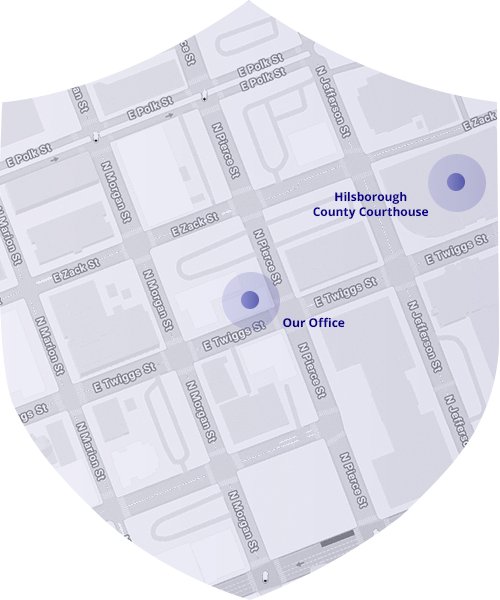
Visit Us

Suite #205
Tampa, FL 33602
Contact Us Now
Free Legal Consultation (813) 727-7159