- Free Consultation 24/7: (813) 727-7159 Tap Here To Call Us




Your BAC at the Station Is Not Your BAC Behind the Wheel


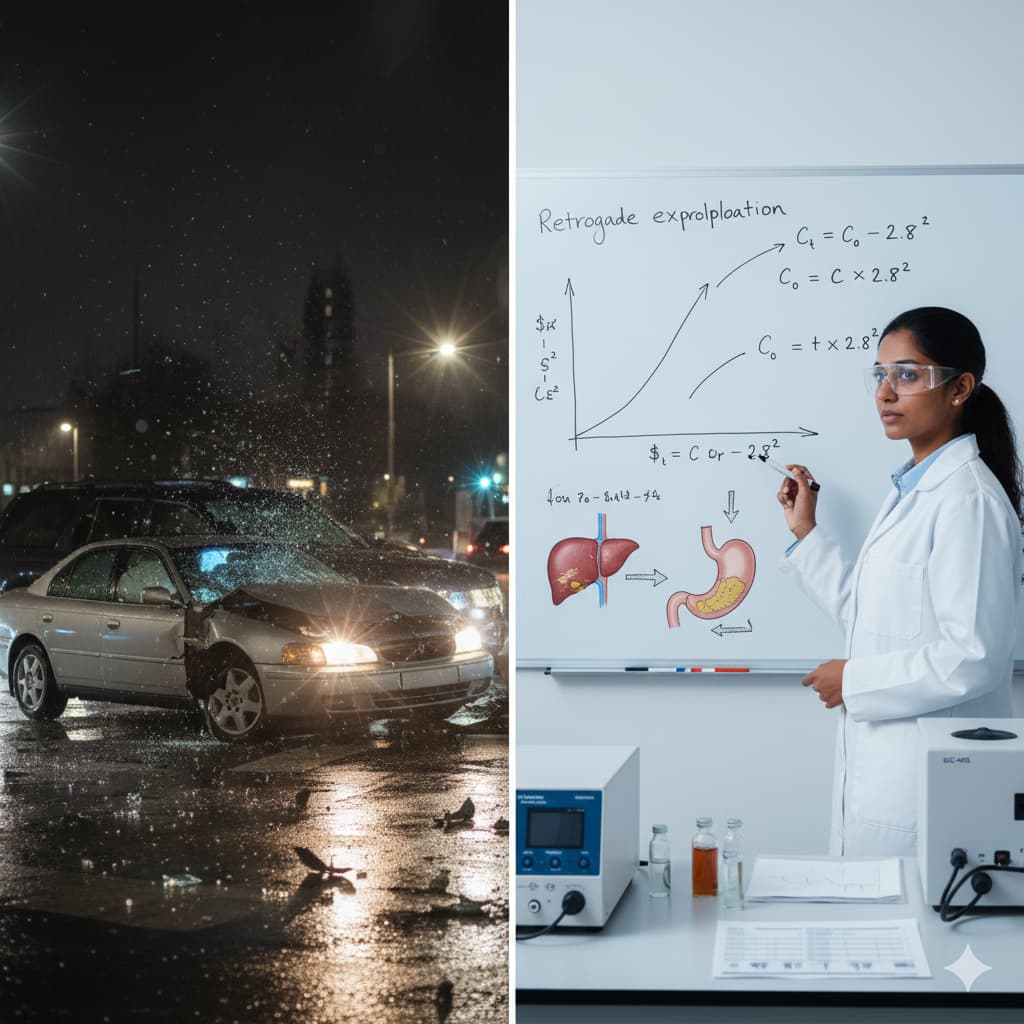
How Forensic Toxicology and Retrograde Extrapolation Won a DUI Manslaughter Case
When someone is arrested for DUI, the blood alcohol concentration (BAC) measured at the police station or hospital is not necessarily the same as their BAC when they were actually driving.
Alcohol takes time to absorb into the bloodstream. Depending on when the person had their last drink, what they ate, and their individual physiology, their BAC at the time of driving could have been significantly lower—or even below the legal limit.
This is not a technicality. It is science. And in this DUI manslaughter case, a forensic toxicologist used that science to prove our client was not unlawfully impaired at the time of the crash. I am Tampa Criminal Defense Attorney Rocky Brancato. This post is part of our forensic series put out by the Brancato Law Firm, P.A., your Tampa criminal forensic evidence law firm.
| What Is Retrograde Extrapolation? Retrograde extrapolation is a forensic toxicology technique used to estimate a person’s blood alcohol concentration (BAC) at an earlier point in time based on a later measurement. By analyzing factors such as when the person last consumed alcohol, what they ate, their body weight, and the rate of alcohol absorption and elimination, a toxicologist can calculate whether the BAC at the time of driving was higher, lower, or the same as the BAC measured later. |
The Case: A Tragic Crash and a Grieving Mother
Our client was involved in a fatal crash at an intersection. She was making a left-hand turn when another vehicle T-boned her car. Tragically, her own child died in the collision.
When her BAC was measured after the crash, it was above the legal limit of 0.08. Based on that number, she was charged with DUI manslaughter—a first-degree felony under Florida Statute 316.193, punishable by up to 15 years in prison.
But the BAC number alone did not tell the whole story. And the crash itself raised serious questions about who was really at fault.
The Video: Evidence of the Other Driver’s Speed
Video footage of the crash revealed something critical: the other driver was traveling at nearly twice the posted speed limit when he entered the intersection.
Our client was making a left turn—a maneuver that requires judging the distance and speed of oncoming traffic. But how can anyone accurately judge an oncoming vehicle that is traveling far faster than any reasonable driver would expect?
This raised the first major defense issue: causation. Even if our client had alcohol in her system, was her driving actually the cause of the crash? Or was the crash caused by the other driver’s reckless speed?
Expert #1: The Accident Reconstructionist
To address the causation question, we retained an accident reconstructionist—a former Captain with the Florida Highway Patrol who had investigated hundreds of fatal crashes during his career.
He analyzed the video footage, the physical evidence, and the dynamics of the collision. His conclusion: based on the speed the other driver was traveling, our client would not have been able to anticipate that her left-hand turn would result in a collision.
In his expert opinion, her decision to turn was not at fault. The other driver’s excessive speed was the cause of the crash.
However, the accident reconstructionist could not render an opinion on our client’s BAC. That was a different question requiring a different expert.
Expert #2: The Forensic Toxicologist
The prosecution’s case rested heavily on the BAC measurement taken after the crash. They assumed that if our client’s BAC was above 0.08 at the station, it must have been above 0.08 when she was driving.
But that assumption ignores the science of alcohol absorption.
We retained a forensic toxicologist to analyze our client’s statements to police. Those statements revealed important details:
- She had eaten a big meal before leaving
- She had consumed a drink right before she left
- The crash occurred shortly after she began driving
| How Alcohol Absorption Works Alcohol is not instantly absorbed into the bloodstream. After consumption, it passes through the stomach and small intestine before entering the blood. This process can take 30 minutes to 2 hours depending on factors like food in the stomach, the type of drink, and individual metabolism. A person’s BAC continues to rise during the absorption phase—meaning their BAC could be higher when tested later than it was when they were actually driving. |
The Forensic Toxicologist’s Analysis
Using retrograde extrapolation, the forensic toxicologist worked backward from the BAC measurement taken after the crash. She factored in:
- The time between the crash and the BAC test
- The time of our client’s last drink
- The large meal she had consumed (which slows absorption)
- Standard rates of alcohol absorption and elimination
Her conclusion was significant: based on the timing of the last drink and the meal, that final drink would not have been fully absorbed at the time our client was driving.
In other words, our client was not unlawfully under the influence at the time of the crash. Her BAC rose to above 0.08 only later—after the crash, during the absorption phase—when the alcohol from that last drink finally entered her bloodstream.
| Two Experts, Two Critical Questions |
| Accident Reconstructionist (Former FHP Captain): Addressed causation—testified that the other driver’s speed, not our client’s turn, caused the crash Forensic Toxicologist: Addressed impairment—testified that retrograde extrapolation showed our client was not unlawfully impaired at the time of driving |
| RESULT: NOT GUILTY The jury heard both experts. They understood the science. They returned a verdict of not guilty on the DUI manslaughter charge. |
What This Case Teaches About DUI Defense
- The BAC at the station is not necessarily the BAC at the time of driving. Retrograde extrapolation can establish that the defendant’s BAC was lower—or below the legal limit—when they were actually behind the wheel.
- A recent drink may not have been absorbed yet. Alcohol consumed shortly before driving may not enter the bloodstream until after the crash, causing the BAC to rise between the incident and the test.
- Food slows alcohol absorption. A large meal can significantly delay how quickly alcohol enters the bloodstream, which affects the timing analysis.
- Multiple experts may be needed for different issues. In this case, causation and impairment were separate questions requiring separate experts.
- The defendant’s own statements can help the defense. Statements about when she drank and what she ate provided the data the toxicologist needed for the retrograde extrapolation.
Frequently Asked Questions
What is retrograde extrapolation?
Retrograde extrapolation is a forensic toxicology technique used to estimate a person’s blood alcohol concentration at an earlier time based on a later measurement. By analyzing factors like when the person drank, what they ate, and standard absorption rates, a toxicologist can calculate whether BAC was higher or lower at the time of driving.
Can my BAC go up after I stop drinking?
Yes. Alcohol takes time to absorb into the bloodstream—typically 30 minutes to 2 hours. If you had a drink shortly before driving, your BAC may continue to rise after you stop drinking, during the absorption phase. This means your BAC at the police station could be higher than your BAC when you were driving.
What is a forensic toxicologist?
A forensic toxicologist is a scientist who specializes in the effects of drugs and alcohol on the human body and how to detect them. In criminal cases, they analyze blood, urine, and other samples, and can testify about impairment, absorption rates, and retrograde extrapolation.
Does eating affect alcohol absorption?
Yes. Food in the stomach—especially a large meal—significantly slows alcohol absorption. This means that if you eat before drinking, the alcohol will take longer to enter your bloodstream. A forensic toxicologist considers this factor when calculating BAC at the time of driving.
What is DUI manslaughter in Florida?
Under Florida Statute 316.193, DUI manslaughter occurs when a person driving under the influence causes the death of another person. It is a second-degree felony punishable by up to 15 years in prison. If the driver knew or should have known the crash occurred and failed to render aid, it becomes a first-degree felony punishable by up to 30 years.
Do I need both an accident reconstructionist and a toxicologist?
It depends on the case. If causation is disputed—meaning it is unclear whether your driving caused the crash—an accident reconstructionist can address that issue. If impairment is disputed, a forensic toxicologist can address BAC at the time of driving. Some cases require both experts to cover different aspects of the defense.
Facing DUI or DUI Manslaughter Charges?
A BAC number is not the end of the story. The prosecution must prove you were impaired at the time of driving—not at the time of the test. With the right forensic analysis, that assumption can be challenged.
For over 25 years, I have defended clients against serious charges in Tampa Bay. I understand the science of alcohol absorption, I work with forensic toxicologists and accident reconstructionists, and I know how to present complex technical evidence to juries in a way they can understand.
Call (813) 727-7159 for a Confidential Consultation
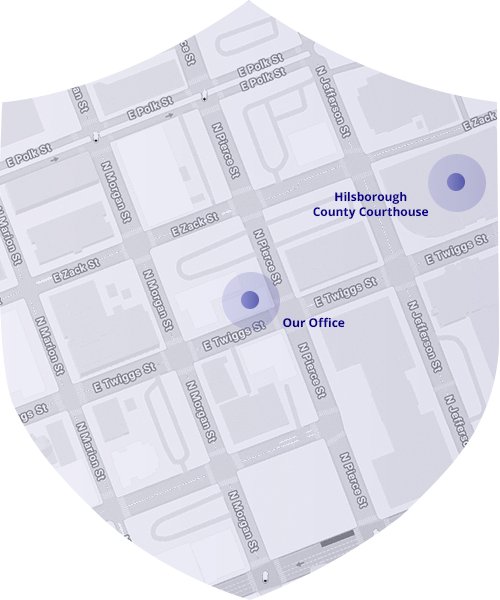
620 E. Twiggs Street, Suite 205, Tampa, FL 33602
Serving Hillsborough, Pinellas, and Pasco Counties
Part of the Forensic Evidence Series
Related Case Studies: DNA Evidence Defense | Aggravated Child Abuse Defense | Forensic Pathologist | Fingerprint Evidence is Not as Reliable as You Think | Cell Phone Location Data Can prove You Were Not There | When Brain Damage Explains Criminal Conduct | When Police Destroy Evidence They Do Not Get the Benefit of the Doubt | When a Confession is Not a Confession | When the Car–Not the Driver–Caused the Crash | The Injuries Were Real–But They Were Not From the Alleged Rape | Similar Is not The Same: How a Firearms Expert Kept Out Prejudicial Evidence
Related Pages
Visit Us
Suite #205
Tampa, FL 33602
Contact Us Now
Free Legal Consultation (813) 727-7159