- Free Consultation 24/7: (813) 727-7159 Tap Here To Call Us




What Are Flock Cameras and ALPRs in Tampa?


KEY TAKEAWAY
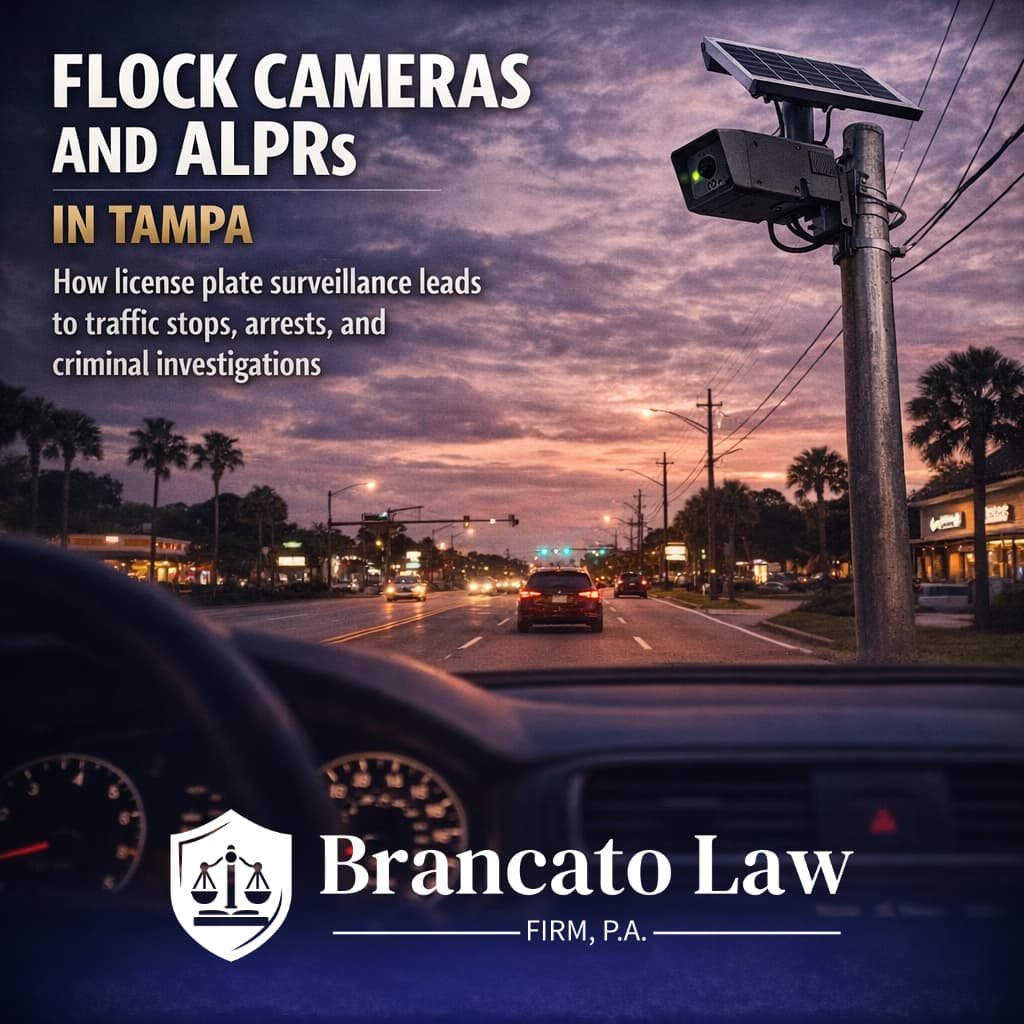
Flock Safety cameras and Automated License Plate Readers (ALPRs) are rapidly expanding across Tampa and the entire Tampa Bay area. These systems capture your vehicle’s license plate, make, model, color, and distinguishing features every time you drive past one. That data feeds into a searchable nationwide database. Thousands of law enforcement agencies can access it. Although the cameras don’t arrest you, the data they collect can trigger real-time alerts. Those alerts lead to traffic stops, criminal investigations, and arrests.
Recent reporting confirmed alarming numbers. Florida Highway Patrol conducted more than 250 immigration-related searches using Flock’s ALPR system between March and May 2025. This raises serious concerns about local surveillance technology intersecting with federal immigration enforcement in our community.
ARE YOU FACING CRIMINAL CHARGES OR AN INVESTIGATION?
Whether your case involves ALPR evidence, a traffic stop, or an immigration-related encounter—you need the right attorney. You need someone who understands how prosecutors use emerging surveillance technology to build cases.
Tampa Criminal Defense Attorney Rocky Brancato | The Brancato Law Firm, P.A.
(813) 727-7159
Free, Confidential Consultations | Serving Hillsborough, Pinellas & Pasco Counties
I’m Tampa Criminal Defense Attorney Rocky Brancato. For over 25 years, I’ve defended clients in Hillsborough County against criminal charges built on every type of evidence. That includes the newest surveillance technologies that most attorneys haven’t caught up with yet.
How Do Flock Cameras and ALPRs Work in Tampa and Hillsborough County?
Flock Safety cameras are solar-powered, motion-activated cameras that capture detailed images of every vehicle that passes them. Specifically, each camera records your license plate number, vehicle make, model, color, and unique identifying features such as bumper stickers, roof racks, or body damage. Flock calls this its “Vehicle Fingerprint” technology. The system then uploads that data to a centralized, searchable cloud database hosted on Amazon Web Services (AWS).
In Tampa and Hillsborough County, multiple agencies currently use this technology. The Hillsborough County Sheriff’s Office (HCSO) has deployed Flock cameras across the county, and Tampa Police Department signed its own contract with Flock Safety. In addition, private homeowner associations in communities like Temple Terrace have purchased Flock cameras and share data with local law enforcement when requested.
HOW THE TECHNOLOGY WORKS
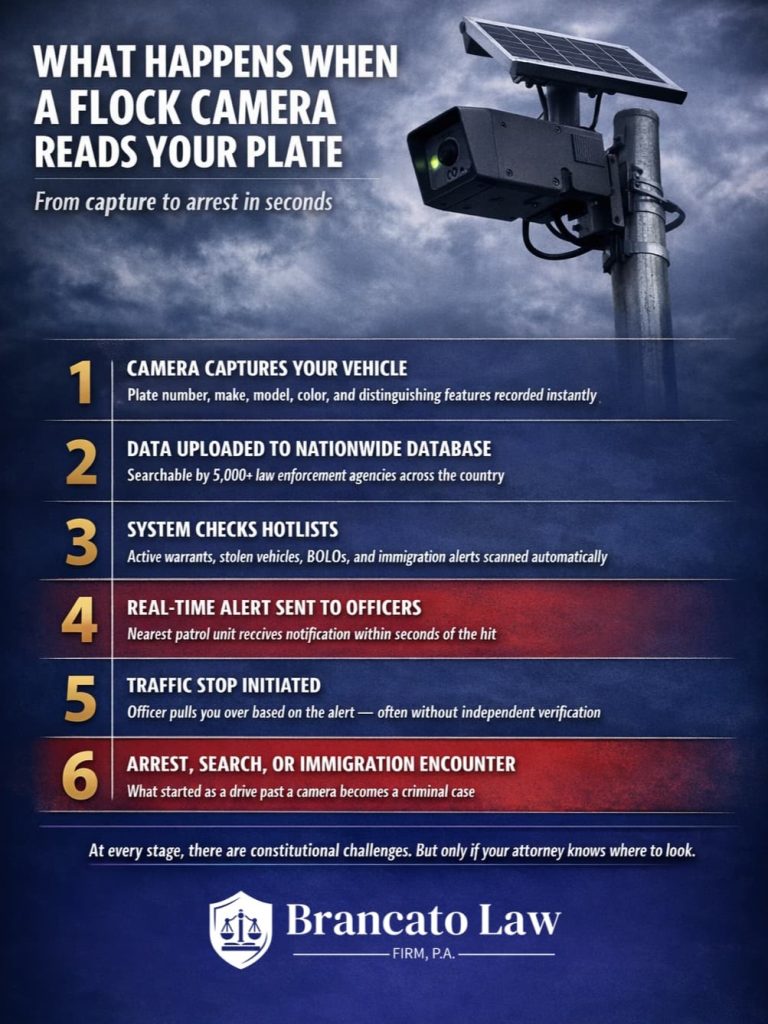
Flock and ALPR systems operate in two primary modes. Real-time alerts notify law enforcement the moment a camera detects a matching plate. These matches include active warrants, stolen vehicle reports, or BOLO alerts. The system integrates with the FBI’s National Crime Information Center (NCIC) and state hotlists. Historical searches allow investigators to query the database. They can look up any vehicle’s past locations, travel patterns, and timestamps.
Flock’s standard data retention is 30 days, after which footage and data are automatically hard-deleted from the cloud. However, individual agencies can negotiate longer retention periods with the approval of a governing body, and some Florida agencies retain ALPR data for up to three years under FDLE guidelines.
The Flock network now includes over 70,000 cameras used by more than 5,000 municipalities nationwide. As a result, a single search can track a vehicle’s movements across jurisdictions, cities, and even state lines.
Because I taught criminal procedure at the police academy, I understand exactly how law enforcement uses these tools to build probable cause—and where they overstep. The Brancato Law Firm challenges ALPR-based evidence at every stage of a criminal case.
Can a Flock Camera or ALPR Hit Lead to a Traffic Stop and Arrest in Tampa?
Yes. However, there are important legal limitations that most people—and many attorneys—don’t fully understand. Here’s how the process typically works in Hillsborough County:
First, a Flock or ALPR camera detects a license plate that matches an alert in the system—such as a stolen vehicle report, active warrant, or BOLO from another agency.
Second, the system sends a real-time notification to local law enforcement officers in the area.
Third, officers initiate a traffic stop based on the alert. At this stage, the officer still needs independent reasonable suspicion to justify the stop under the Fourth Amendment.
Fourth, during the stop, officers may discover additional evidence—such as contraband, open warrants, or other indicators—that leads to an arrest.
THE LEGAL FRAMEWORK: ALPRS AND THE FOURTH AMENDMENT
Under current law, capturing license plate data by ALPR is generally not a “search” under the Fourth Amendment. Courts have consistently ruled that plates on public roadways are in plain view. The government observes them from a place where anyone has a lawful right to be. This means minimal to no intrusion on driver privacy. More than 30 appellate and federal courts have upheld LPR evidence on this basis.
However, the law is still developing around how agencies use that data after collection. Key questions arise when agencies query databases or share information across jurisdictions. Combining ALPR data with other surveillance tools to reconstruct a person’s movements raises additional concerns. This distinction between collection and use is critical. Skilled criminal defense attorneys find opportunities to challenge ALPR-based evidence here.
CRITICAL WARNING
ALPR systems are not infallible. The OCR software that reads plates regularly misreads characters. For example, it may confuse an “8” with a “B” or a “K” with an “X.” A misread can generate a false hit. That false hit may trigger a traffic stop, a felony stop with guns drawn, or even an arrest—all based on faulty data. If law enforcement stopped or arrested you based on ALPR or Flock camera evidence, The Brancato Law Firm can challenge the accuracy and reliability of that evidence.
What Is the Connection Between Flock Cameras, 287(g) Agreements, and ICE Enforcement in Tampa?
This is the issue that has generated the most concern in our community. The convergence of three developments has created a surveillance-to-enforcement pipeline that directly affects Tampa Bay residents:
First, Flock’s expanding local presence. Tampa PD and HCSO both use Flock camera systems. The Tampa City Council is also considering integrating Flock ALPR technology into RedSpeed school zone speed cameras. This would significantly expand the number of cameras feeding data into the Flock network.
Second, the 287(g) agreement. Tampa Police Chief Bercaw signed a 287(g) agreement with ICE on February 26, 2025. Similarly, Pinellas County Sheriff Gualtieri pressured all Pinellas police chiefs to sign 287(g) agreements, and virtually all complied. Under the Task Force Model—the most common model under the current administration—these agreements allow local officers to perform federal immigration enforcement functions during routine policing activities, including traffic stops.
Third, documented immigration-related Flock searches. Reporting by Suncoast Searchlight revealed important findings. Florida Highway Patrol conducted more than 250 immigration-related searches in the Flock ALPR system between March and May 2025. Those searches used keywords like “ICE,” “ICE administrative warrant,” and “immigration overstay.” The searches spiked during Operation Tidal Wave. This was a coordinated federal-state enforcement sweep. Nearly 40% of those arrested had no criminal record.
WHAT THIS MEANS FOR YOU
Flock Safety states on its website that it does not work directly with ICE and that ICE does not have direct access to Flock cameras or data. However, the practical reality is more complicated. Local law enforcement agencies that do use Flock can share data with federal agencies through 287(g) agreements, informal cooperation, or cross-jurisdictional searches.
In Illinois, a Secretary of State audit found that U.S. Customs and Border Protection accessed Flock ALPR data from agencies that had never explicitly authorized sharing with federal authorities. In California, the Attorney General sued the City of El Cajon for using Flock to illegally share information across state lines. That obviously will not happen in Florida.
Even if Flock doesn’t share data directly with ICE, local agencies operating those cameras may do so. Agencies in Hillsborough, Pinellas, and Pasco Counties now have formal agreements authorizing exactly that. The Brancato Law Firm monitors these developments closely. They directly affect how we defend our clients.
What Fourth Amendment Defenses Can a Tampa Criminal Defense Attorney Raise Against ALPR Evidence?
The initial capture of a license plate in plain view is generally not a Fourth Amendment search. However, what happens after that capture often is. When police use ALPR data to track your movements over time, reconstruct travel patterns, or build a surveillance profile, they may cross into protected territory. Tampa criminal defense attorney Rocky Brancato examines exactly how law enforcement obtained and used ALPR data in each case we handle.
| Defense Strategy | How The Brancato Law Firm Approaches It |
|---|---|
| ALPR misread / false hit | OCR technology frequently misreads characters. We can move to obtain the raw plate image and compare it to your actual plate to expose false positives. |
| Stale or outdated alert | ALPR hotlists are not updated in real time. We investigate whether the alert that triggered your stop had already been resolved or expired. |
| Lack of independent reasonable suspicion | An ALPR hit alone may not justify a stop. We can challenge whether the officer had additional articulable facts beyond the electronic alert. |
The Brancato Law Firm, P.A. | (813) 727-7159 | 25+ Years Defending Hillsborough County
What Should You Do If Law Enforcement Stops or Arrests You Based on Flock Camera or ALPR Data in Tampa?
Was your vehicle stopped based on an ALPR alert? Do you believe surveillance technology played a role in your arrest or investigation? Here is what The Brancato Law Firm recommends:
First, exercise your right to remain silent. Do not answer questions about where you’ve been, where you’re going, or who you’ve been with. ALPR data already tells law enforcement where your car has been—anything you say can only add to the evidence against you.
Second, do not consent to a vehicle search. An ALPR hit does not automatically give officers probable cause to search your vehicle. If they ask for consent, decline politely but firmly.
Third, call a criminal defense attorney immediately. ALPR evidence is time-sensitive. Flock’s standard retention is only 30 days, so early intervention matters. The Brancato Law Firm can obtain the raw ALPR data, camera maintenance records, and alert verification logs through discovery. We act quickly before the data expires or the prosecution builds its case unchallenged.
IMPORTANT NOTE FOR COMMUNITY MEMBERS CONCERNED ABOUT IMMIGRATION ENFORCEMENT
If you or a family member had contact with law enforcement during a traffic stop where immigration status came up, speak with an attorney right away. This applies regardless of whether criminal charges resulted. The intersection of local policing, ALPR surveillance, and 287(g) agreements creates serious legal exposure. It affects both criminal defense rights and immigration proceedings. The Brancato Law Firm defends clients facing criminal charges in Hillsborough, Pinellas, and Pasco Counties. We can coordinate with or refer you to immigration counsel when needed. Call (813) 727-7159 for a confidential consultation.
How Is Flock Camera Surveillance Expanding in Tampa Right Now?
The surveillance footprint in the Tampa Bay area is growing rapidly. Understanding where this technology stands today helps you make informed decisions about your rights.
School zone speed cameras with Flock integration. As of February 2026, Tampa City Council is considering a RedSpeed partnership. The proposal includes school zone speed cameras with Flock ALPR technology at every location. RedSpeed is the only company offering direct Flock integration. Flock ALPR comes “included in the RedSpeed price.” If approved, this would add many Flock-connected cameras throughout Tampa’s school zones. These cameras capture license plate data on every passing vehicle, not just speeders.
Rising Enforcement and Expanding Camera Networks
A 1,000% increase in school zone tickets. HCSO already uses RedSpeed cameras in Hillsborough County. Between August and December 2025, the agency issued 67,611 school zone speed tickets. That represents a more than 1,000% increase over the prior school year. Expanded enforcement hours drove this surge—from arrival/dismissal times to the entire school day. Some drivers question whether the program prioritizes revenue over safety.
HOA-installed Flock cameras. Furthermore, private homeowner associations across Hillsborough County have begun purchasing Flock cameras independently. At approximately $2,500 per camera per year with a one-time installation fee of $250–$650, the technology is accessible to mid-size communities. These HOA-owned cameras can share data with local law enforcement upon request, effectively expanding the surveillance network beyond government-owned infrastructure.
The Brancato Law Firm tracks these developments because they directly affect how evidence enters criminal cases in our jurisdiction. As more cameras come online, more stops, arrests, and investigations will rely on ALPR data—and more opportunities for defense challenges will follow.
Frequently Asked Questions About Flock Cameras, ALPRs, and Your Rights in Tampa
Flock Safety cameras are automated license plate readers that capture your vehicle’s plate number, make, model, color, and distinguishing features using proprietary “Vehicle Fingerprint” technology. Unlike traditional red-light or speed cameras, Flock cameras feed data into a nationwide searchable database accessible by thousands of law enforcement agencies. As a result, your vehicle’s movements can be searched across jurisdictions and over time. The cameras are solar-powered and use cellular (LTE) data to transmit images to the cloud, meaning they require no wiring and can be installed almost anywhere. The Brancato Law Firm understands how this data enters criminal cases in Hillsborough County and how to challenge it.
No. Flock ALPR cameras do not measure or record vehicle speed. They capture still images of vehicles as they pass—typically 6 to 12 images per vehicle—but they do not function as speed detection devices. However, when Flock integrates with RedSpeed school zone cameras (as proposed for Tampa), the RedSpeed component handles speed detection while Flock handles license plate reading. These are two separate functions, but if Tampa City Council approves the proposal, they will operate together in the same camera housing at school zone locations throughout the city.
Facial Recognition, Data Storage, and Costs
No. Flock Safety states that its ALPR cameras do not use facial recognition technology and cannot search for human characteristics such as race or gender. The cameras focus on the rear of vehicles and capture vehicle characteristics and license plates—not images of drivers or passengers. However, it is possible that a person may appear in a still image captured by a Flock camera. Flock states that it does not collect personally identifiable information (PII), although civil liberties organizations have raised concerns that linking license plate data to DMV records effectively identifies individuals.
Flock Safety’s standard data retention is 30 days, after which all footage and metadata are automatically hard-deleted from the cloud. However, individual agencies can negotiate longer retention periods with the approval of a democratically elected governing body. In Florida, FDLE guidelines allow agencies to retain ALPR data for up to three years. Because this means evidence can disappear quickly under the 30-day default, early contact with a criminal defense attorney is critical. The Brancato Law Firm can move to obtain and preserve this data through discovery before it expires.
Camera Costs and Local Expansion
Flock Safety charges approximately $2,500 per camera per year as a subscription fee, plus a one-time installation cost of $250–$650 per camera. The subscription includes maintenance, software updates, footage hosting, cellular service, and customer support. For law enforcement agencies, taxpayer funds cover the cost. For HOAs and private communities, the expense typically comes from association budgets—a 150-home gated community with two entrances might spend $10,000 or more per year. Regardless of who purchases the cameras, the data can be shared with law enforcement and potentially accessed by agencies across the country through the Flock network.
Traffic Stops and Fourth Amendment Rights
An ALPR alert can provide the initial basis for a traffic stop, but officers still need reasonable suspicion to justify the detention under the Fourth Amendment. Moreover, because ALPR systems produce false hits due to character misreads and outdated alerts, The Brancato Law Firm scrutinizes whether the stop had a lawful basis in every case where ALPR data played a role. Call (813) 727-7159 if law enforcement stopped you based on camera data.
Under current law, generally no. Courts have consistently held that reading a license plate in plain view on a public roadway is not a Fourth Amendment search because the plate is a government-issued identifier displayed in a place where the public—and law enforcement—have every right to observe it. The intrusion is minimal to nonexistent. However, the legal landscape is still evolving around how agencies use the collected data—particularly when they run historical searches, share data across jurisdictions, or combine ALPR records with other surveillance tools to reconstruct a person’s movements over time. The Brancato Law Firm stays at the forefront of these developments in Hillsborough County courts.
Immigration, ICE, and Public Records
Flock Safety states it does not work directly with ICE. However, local agencies that use Flock—including Tampa PD and HCSO—can share data with federal agencies through 287(g) agreements. Reporting confirmed that Florida Highway Patrol conducted over 250 immigration-related Flock searches in 2025. Because Tampa PD signed a 287(g) agreement with ICE in February 2025, the potential for data sharing with federal immigration enforcement exists in our jurisdiction. Furthermore, the University of Washington Center for Human Rights found that some agencies shared Flock data with U.S. Border Patrol without even explicitly authorizing it.
This question is generating significant legal activity nationwide. In November 2025, a Washington state trial court ruled that data captured by Flock Safety cameras qualifies as public records under that state’s Public Records Act. The court rejected the argument that footage stored on Flock’s cloud servers falls outside public records laws, finding that the data was “created and used to further a governmental purpose” and paid for by the municipalities. In Florida, ALPR data held by law enforcement may be subject to public records requests under Chapter 119, although agencies routinely assert investigative exemptions. If you need ALPR data for your defense, The Brancato Law Firm can move to obtain it through criminal discovery or public records channels.
Challenging ALPR Evidence in Court
Yes. Defense strategies include challenging the accuracy of the plate read, arguing insufficient reasonable suspicion for the stop, and exposing stale or outdated alerts. In addition, Florida law allows defense attorneys to file Daubert/Frye motions challenging the admissibility of technical evidence—which in an appropriate case means requiring the state to establish the ALPR system’s accuracy, error rates, and the qualifications of expert witnesses before that evidence reaches the jury. Because this area of law is still developing, aggressive defense attorneys have significant room to challenge ALPR-based evidence. The Brancato Law Firm stays current on these issues in Hillsborough County courts.
Standard Flock ALPR cameras capture still images focused on the rear of vehicles—not continuous video. However, Flock also offers separate video camera products, and some newer integrations—including the RedSpeed school zone cameras proposed for Tampa—include live video streaming capability. Florida Statute § 316.1896 specifically prohibits the use of school zone speed detection systems for “remote surveillance,” which could create legal challenges if the city approves video-capable cameras. The Brancato Law Firm monitors these statutory developments to protect our clients’ rights.
After an ALPR-Related Arrest
First, exercise your right to remain silent and do not consent to a vehicle search. Then, contact a criminal defense attorney immediately. Because Flock’s default data retention is only 30 days, The Brancato Law Firm acts quickly to move for discovery of raw camera data, alert logs, system error records, and the full audit trail showing who accessed the data and why. Call (813) 727-7159.
Tampa Criminal Defense Attorney Rocky Brancato brings over 25 years of criminal defense experience in Hillsborough County, including service as a police academy instructor teaching criminal procedure. Because he understands both how law enforcement uses surveillance technology and where the constitutional boundaries lie, he identifies defense opportunities that most attorneys miss. The firm’s AV Preeminent rating and Super Lawyers recognition confirm peer-validated excellence. Call (813) 727-7159 for a free, confidential consultation.
Super Lawyers recognition is a peer-nominated designation that honors the top 5% of attorneys. Similarly, AV Preeminent represents Martindale-Hubbell’s highest rating for legal ability and professional ethics. Because no attorney can purchase either designation, they provide independent verification that The Brancato Law Firm operates at the highest level of the profession.
For more about our criminal defense strategies, visit our Tampa Criminal Defense page.
YOUR RIGHTS DON’T DISAPPEAR BECAUSE A CAMERA IS WATCHING.
Whether you’re facing criminal charges, an active investigation, or a traffic stop that escalated into something more—you deserve an attorney who understands the technology prosecutors are using against you.
Tampa Criminal Defense Attorney Rocky Brancato
The Brancato Law Firm, P.A.
(813) 727-7159
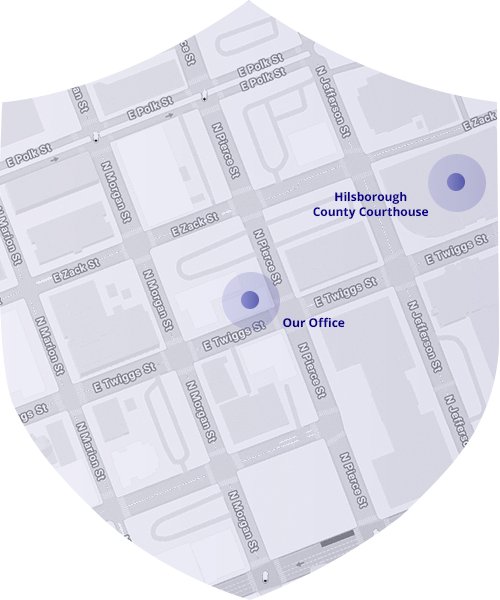
620 E. Twiggs Street, Suite 205, Tampa, FL 33602
Free, Confidential Consultations | Serving Hillsborough, Pinellas & Pasco Counties
The Brancato Law Firm, P.A. is a Tampa-based criminal defense practice. We are not affiliated with any other Brancato-named law firms.
This blog post is for informational purposes only and does not constitute legal advice. If you need legal assistance, contact our office for a consultation.
Related Links
Visit Us
Suite #205
Tampa, FL 33602
Contact Us Now
Free Legal Consultation (813) 727-7159