- Free Consultation 24/7: (813) 727-7159 Tap Here To Call Us


From First DUI to Death Penalty



What Is the Difference Between Kidnapping and False Imprisonment in Florida?


Fully rewritten and updated September 8, 2026.
| Intent. Both crimes start with the same act — forcibly, secretly, or by threat confining, abducting, or imprisoning another person against their will and without lawful authority. Under section 787.01, Florida Statutes, that act becomes kidnapping, a first-degree felony punishable by up to life in prison, when it is done for one of four specific purposes: to hold the person for ransom or as a hostage, to commit or help commit another felony, to inflict bodily harm on or terrorize the victim, or to interfere with a governmental function. Without one of those four intents the same act is false imprisonment under section 787.02, a third-degree felony with a five-year maximum. Because the conduct is identical and only the purpose differs, kidnapping cases in Tampa Bay are usually won or lost on what the State can prove about why the person was held — and, when another crime was happening at the same time, on whether the confinement was anything more than part of that crime. |
I’m Rocky Brancato, founder of The Brancato Law Firm, P.A., a Tampa criminal defense firm. Before private practice I was chief operating officer and chief assistant public defender of the Hillsborough County Public Defender’s Office, supervising more than a hundred attorneys, and I have tried more than 150 jury trials to verdict, including cases in which kidnapping was added to a robbery, a sexual battery, or a domestic dispute to turn a serious charge into a life-exposure charge. Our attorneys defend kidnapping and false imprisonment cases throughout Hillsborough, Pinellas, and Pasco Counties, and the first question we ask in every one is the same: what, exactly, does the State say the confinement was for?
How Does Florida Law Define Kidnapping?
Kidnapping is the forcible, secret, or threatened confinement, abduction, or imprisonment of another person, against their will and without lawful authority, with one of four specific intents. Section 787.01(1)(a), Florida Statutes, lists them:
- To hold the person for ransom or reward, or as a shield or hostage.
- To commit or facilitate the commission of any felony.
- To inflict bodily harm upon, or to terrorize, the victim or another person.
- To interfere with the performance of any governmental or political function.
Two features of that definition surprise most people. First, no distance is required. “Abducting” someone across the county is kidnapping, but so is confining someone in the room they are already standing in, if the intent element is met. Second, the statute has a special rule for children: under section 787.01(1)(b), confining a child under 13 is “against her or his will” whenever it is done without the consent of a parent or legal guardian. The child’s own willingness is legally irrelevant.
Kidnapping is a first-degree felony “punishable by imprisonment for a term of years not exceeding life.” There is no lesser tier of kidnapping in Florida; every kidnapping conviction carries life exposure.
What Is False Imprisonment in Florida?
False imprisonment is the same physical act without any of the four kidnapping intents. Section 787.02(1)(a), Florida Statutes, defines it as “forcibly, by threat, or secretly confining, abducting, imprisoning, or restraining another person without lawful authority and against her or his will.” The same under-13 consent rule applies. False imprisonment is a third-degree felony, punishable by up to five years in prison.
False imprisonment is also the classic lesser offense of kidnapping. When a jury is not convinced beyond a reasonable doubt that the defendant held the victim for one of the four listed purposes, but is convinced the victim was held against their will, the verdict is false imprisonment. In our experience that distinction is where a large share of Tampa Bay kidnapping cases actually resolve, whether by verdict or by negotiated plea.
Kidnapping vs. False Imprisonment: How Do They Compare?
The act is the same; the intent, the degree, and the sentencing exposure are not:
| Kidnapping — § 787.01 | False imprisonment — § 787.02 | |
|---|---|---|
| The act | Forcibly, secretly, or by threat confine, abduct, or imprison a person against their will without lawful authority | Same, plus “restraining” |
| Required intent | One of four: ransom/hostage, facilitate a felony, harm or terrorize, interfere with government | None beyond the intent to confine |
| Felony degree | First degree, punishable by life | Third degree |
| Maximum sentence | Life in prison | 5 years in prison |
| Sentencing guideline level | Level 9 (Level 10 if the intent was to harm or terrorize) | Level 6 |
| Child under 13 with a listed sex or abuse offense | Life felony (§ 787.01(3)) | First-degree felony, up to life (§ 787.02(3)) |
| Weapon or firearm used | Reclassified to a life felony; 10-20-Life mandatory minimums apply | Reclassified to a second-degree felony |
| “Dangerous crime” for bond purposes | Yes | No |
The guideline levels come from the Criminal Punishment Code’s offense severity ranking chart, section 921.0022, Florida Statutes. A Level 9 offense scores 92 points before a single victim-injury or prior-record point is added, which is why a first-time offender convicted of kidnapping is looking at a guideline sentence measured in years of prison rather than probation. False imprisonment at Level 6 scores 36 points, which leaves room for a non-prison sentence when the rest of the scoresheet is clean.
What Are the Penalties for Kidnapping in Florida?
Up to life in prison for the base offense, with three sets of enhancements that push the floor as well as the ceiling:
| Circumstance | Statute | Result |
|---|---|---|
| Kidnapping, any of the four intents | § 787.01(2) | First-degree felony punishable by life |
| Kidnapping with intent to inflict bodily harm or terrorize | § 921.0022 | Level 10 on the sentencing chart — the highest level |
| Kidnapping a child under 13 while also committing aggravated child abuse, sexual battery, a lewd or lascivious offense, prostitution or exploitation of the child, or human trafficking | § 787.01(3)(a) | Life felony; separate sentences for the kidnapping and each listed offense |
| Weapon or firearm carried during the kidnapping | § 775.087(1) | Reclassified from a first-degree felony to a life felony |
| Firearm actually possessed | § 775.087(2)(a)1 | 10-year mandatory minimum |
| Firearm discharged | § 775.087(2)(a)2 | 20-year mandatory minimum |
| Firearm discharged causing death or great bodily harm | § 775.087(2)(a)3 | 25 years to life mandatory minimum |
The firearm rules come from Florida’s 10-20-Life statute, section 775.087, Florida Statutes, which names kidnapping specifically in its list of qualifying felonies. A mandatory minimum means the judge cannot go below it regardless of the defendant’s record or the circumstances, and it must be served day for day. We explain how those minimums work, and how they are fought, in our article on Florida’s 10-20-Life law.
When Does Confinement During Another Crime Become Kidnapping?
Only when the confinement was more than an ordinary part of the other crime. This is the single most important question in Florida kidnapping law, because the second listed intent — confining someone “with intent to commit or facilitate commission of any felony” — would, read literally, turn every robbery and every sexual battery into a kidnapping as well. Every robbery victim is, in some sense, held against their will while the robbery happens.
The Florida Supreme Court closed that door in Faison v. State, 426 So. 2d 963 (Fla. 1983), a case involving two sexual batteries in which the attacker moved each victim from a visible room to a secluded one. The court adopted a three-part test that Florida courts have applied ever since. When confinement or movement is alleged to have been done to facilitate another crime, it is kidnapping only if the movement or confinement:
- Is not slight, inconsequential, and merely incidental to the other crime;
- Is not of the kind inherent in the nature of the other crime; and
- Has some significance independent of the other crime, because it makes the other crime substantially easier to commit or substantially lessens the risk of detection.
All three must be satisfied. In Faison itself the convictions stood: moving a victim from a front office with a window to a back restroom, or from a kitchen to a bedroom, was not inherent in the sexual battery, and it both hid the crime and cut off the victim’s path to a door. The court quoted with approval the lower court’s observation that “the fact that relatively short distances were involved makes no difference.”
Thirteen years later the court applied the test to a robbery in Berry v. State, 668 So. 2d 967 (Fla. 1996), where two men were robbed at gunpoint in an apartment, tied up with a coat hanger and a telephone cord, and left bound after the robbers walked out. The court held that tying someone up is a “confinement,” that it is not inherent in a robbery because a robbery can be committed without it, and that leaving the victims bound after the crime was over was “not the sort of confinement that is incidental to robbery.” Two points from Berry matter in almost every case we handle. First, confinement that continues after the underlying crime is finished — a victim locked in a closet, left tied, barricaded in a room — is the pattern courts most consistently treat as kidnapping. Second, the State does not have to prove the confinement actually worked; the question is whether it was intended to make the crime easier or harder to detect.
The Faison factors therefore break down, in practical terms, like this:
| Fact pattern | Usually kidnapping? | Why |
|---|---|---|
| Robbery victim ordered to stand still at gunpoint while property is taken | No | Inherent in robbery; slight and incidental |
| Victim moved from a public-facing room to a back room or bathroom before an assault | Yes | Reduces detection, removes escape; Faison |
| Victims tied up and left bound after the robbers leave | Yes | Confinement continues past the crime; Berry |
| Victim locked in a closet or trunk while the crime is committed | Yes | Independent significance; increased danger |
| Victim held by the arm during a brief battery | No | Incidental to the battery |
| Victim driven to a second location | Yes | Movement with independent significance |
The Faison test is not a legal technicality; it is built into the standard jury instruction on kidnapping, and it is decided by the jury as part of the elements. That is why our attorneys treat it as both a pretrial motion issue and a trial issue. A judge who denies a motion for judgment of acquittal on Faison grounds has not taken the argument away — the jury still has to be persuaded that the confinement was more than the crime itself.
What Do Recent Florida Appellate Decisions Say About Kidnapping?
Two 2026 decisions show how the statute is being applied right now, and both cut in the State’s favor, which is a reason to take the charge seriously from the first day.
In Triana v. State, No. 3D25-0504 (Fla. 3d DCA May 13, 2026), a stranger at a Miami bus stop began yelling at two women, one of whom warned him to stay away because her eight-year-old daughter was present. He shouted that he would “just snatch the baby then,” lunged toward the child and reached to grab her, was blocked by the two adults, punched one of them, and ran. He was convicted of attempted kidnapping of a child under 13, and on appeal argued there was no overt act toward a kidnapping — only words and a reach. The Third District affirmed, holding that darting toward and grabbing at the child, immediately after threatening to take her, was enough for a jury to find an overt act. The lesson is that attempted kidnapping does not require the child ever to be touched or moved; a threat plus a reach can carry a felony conviction.
In Facundo v. State, No. 2D2025-1709 (Fla. 2d DCA May 22, 2026), a Manatee County case decided by the appellate court that binds Hillsborough, Pinellas, and Pasco, a man chased a woman to her car, pounded on the window until she unlocked the door, dragged her by the hair into his own back seat, drove off, and beat her until a Highway Patrol trooper pulled alongside and she escaped. He was charged with kidnapping with intent to harm or terrorize — the Level 10 variant — and convicted. His appeal turned on a drafting error: the information said he “did attempt to” confine the victim, although he was tried and convicted of the completed crime. The Second District affirmed, holding that because he had notice of the charge, defended it as a completed kidnapping, and faced no double-jeopardy risk, the surplus language was not fundamental error. The court pointedly added that it “does not take the mistake by the State lightly” in a case where the defendant “faced the loss of his liberty for the remainder of his life.” The lesson for defendants is the opposite of the lesson for prosecutors: charging-document errors have to be raised in the trial court, by motion, before the verdict, or they are almost always lost.
When Do Tampa Bay Prosecutors Add a Kidnapping Charge?
Most often when a confinement occurs during a robbery, a sexual battery, a burglary, or a domestic violence incident, because those are the crimes in which the “facilitate a felony” intent is easiest to allege. In the 13th Judicial Circuit we see kidnapping charged in three recurring situations:
- Robbery and home invasion. Victims moved room to room, bound, or held while accomplices search the house. These cases are governed by Berry, and the line between “held at gunpoint during the robbery” and “confined beyond the robbery” is where the defense lives. Our discussion of robbery charges in Florida covers the underlying offense.
- Domestic disputes. A partner who blocks a door, takes a phone, or drives off with the other person in the car is frequently charged with kidnapping or false imprisonment alongside battery. The “harm or terrorize” intent is what the State usually alleges, and it is often the weakest element in the case. Our article on fighting a domestic violence battery charge in Florida explains how those cases move through the Hillsborough County system.
- Sexual battery. Any movement of the victim before or during the assault invites a Faison analysis and a kidnapping count, as it did in Faison itself.
Kidnapping is also a favored charge in plea negotiations precisely because of its life exposure. A defendant facing a robbery count and a kidnapping count is negotiating from a very different position than one facing robbery alone. Part of our job is to make the State prove the kidnapping is real before it is used as leverage.
What Happens at First Appearance After a Kidnapping Arrest in Hillsborough County?
You will not be released on your own recognizance, and the State may ask that you be held without bond. Kidnapping is listed as a “dangerous crime” in section 907.041(5)(a), Florida Statutes. Under section 907.041(5)(b), a person arrested for a dangerous crime “may not be granted nonmonetary pretrial release at a first appearance hearing” once the judge finds probable cause, and under section 907.041(5)(c) the State Attorney may move for pretrial detention — no bond at all — if it can show a substantial probability that no conditions will protect the community or assure your appearance.
In practice, a person arrested for kidnapping in Hillsborough County is booked at the Orient Road Jail, appears before a first-appearance judge within 24 hours, and either receives a monetary bond that is often set in the high five or six figures or is held pending a detention hearing. False imprisonment is not on the dangerous-crime list, which is one more reason the distinction between the two charges matters from the very first day. Having counsel at first appearance, with a bond argument prepared and family members present, is the difference between fighting the case from home and fighting it from a cell.
How Do Our Attorneys Fight Kidnapping Charges?
By attacking the element that separates a life felony from a five-year felony, and by making the State prove that any confinement was more than the crime it accompanied:
- The intent element. Kidnapping is a specific-intent crime. The State must prove not just that the person was confined but why. In domestic cases especially, anger, panic, and an argument that moved from the kitchen to the car do not add up to an intent to “terrorize.” We build the record on what was said, what was done, and how long it lasted.
- The Faison test. In every case where the kidnapping rides on another felony, we frame the confinement against all three Faison prongs — in a motion to dismiss where the facts are undisputed, in a motion for judgment of acquittal at trial, and in the jury instruction and closing argument. The question “was this anything more than the robbery itself?” is one juries understand.
- Consent and lawful authority. “Against her or his will” and “without lawful authority” are elements. A person who voluntarily got into the car, stayed at the house, or agreed to go somewhere is not a kidnapping victim, whatever happened later, and the evidence of that — texts, video, witnesses — has to be gathered before it disappears.
- Identification. Stranger-abduction cases, including attempted kidnappings like Triana, frequently rest on a brief encounter and a cross-racial or stressed identification. Our attorneys have won kidnapping acquittals on exactly that ground.
- Charging-document and procedural issues, raised on time. Facundo is a reminder that an information which alleges an attempt, omits an element, or fails to allege the intent has to be challenged before trial. We read every charging document against the statute before the first hearing.
- The lesser offense. Where the confinement is real but the intent is not, false imprisonment is the honest charge, and a verdict or negotiated plea to a third-degree felony — sometimes with a withhold of adjudication — is a categorically different outcome than a life-felony conviction.
For more about our defense strategies, visit our Hillsborough County criminal defense page.
Real Case Results: Kidnapping Defense in Tampa Bay
Not Guilty — Kidnapping and Robbery (Plant City). Our client faced kidnapping and robbery charges. The defense presented a mistaken-identity case, challenging the State’s identification evidence at every stage. The jury returned verdicts of Not Guilty on both counts.
Reduced — Kidnapping and Aggravated Battery to Misdemeanor Battery (September 2025). Our client was charged with kidnapping and aggravated battery arising from an alleged beating of a fellow gang member. We elected not to waive speedy trial while the investigation continued, and the leverage that created resulted in both felony charges being reduced to misdemeanor battery with probation — no first-degree felony conviction and no prison.
Past results do not guarantee future outcomes.
What Should You Do If You Are Arrested for Kidnapping in Florida?
Say nothing about the incident to anyone — not the police, not the alleged victim, not family members on a recorded jail phone — and get an attorney before first appearance. Kidnapping cases are built on the State’s version of why the person was held, and the single most common way that version gets confirmed is the defendant explaining himself. Preserve your own evidence: text messages, call logs, location data, and the names of anyone who saw the two of you together before, during, or after. If the case arises from a relationship, do not contact the other person, because a no-contact order is almost certainly a condition of any release and a violation will put you back in Orient Road. And do not accept the first offer. A kidnapping count is often charged for leverage, and it is often reducible once the State is forced to confront Faison and the intent element with a defense attorney who knows how to litigate them.
Frequently Asked Questions About Kidnapping in Florida
Is kidnapping always a life felony in Florida?
Kidnapping is a first-degree felony punishable by up to life for every version of the offense under section 787.01(2), and a life felony when a child under 13 is kidnapped in connection with a listed sex or abuse offense under section 787.01(3). A life sentence is not mandatory for a basic kidnapping, but the guidelines start at Level 9 and a firearm adds 10-20-Life mandatory minimums. Our attorneys have seen kidnapping counts reduced to false imprisonment or dismissed outright when the intent element or the Faison test could not be met.
Can you be charged with kidnapping without moving the victim anywhere?
Yes. The statute reaches confining or imprisoning as well as abducting, and the Florida Supreme Court said in Faison that short distances “make no difference.” Locking someone in a room, tying them up, or blocking them from leaving can be kidnapping if one of the four intents is proven and, where another crime was involved, the confinement was more than incidental to it.
Is false imprisonment a felony in Florida?
Yes. False imprisonment under section 787.02 is a third-degree felony punishable by up to five years in prison, and a first-degree felony punishable by up to life when the victim is a child under 13 and a listed sex or abuse offense is also committed. It is a Level 6 offense on the sentencing chart, which — unlike Level 9 kidnapping — leaves room for a non-prison sentence for a first-time offender.
Can a parent be charged with kidnapping their own child in Florida?
Usually the charge is different. Taking a child in violation of a custody order is typically prosecuted as interference with custody under section 787.03, Florida Statutes, a third-degree felony, or as removing a minor from the state under section 787.04. Kidnapping is charged when the taking is by force or threat with one of the four listed intents, or when the person taking the child has no parental rights at all. Because the under-13 rule turns on parental consent, these cases turn on the custody paperwork, and The Brancato Law Firm, P.A. reviews it before anything else.
What is the Faison test?
It is the three-part test the Florida Supreme Court adopted in Faison v. State to decide whether confinement during another crime is a separate kidnapping. The confinement must not be slight and merely incidental to the other crime, must not be inherent in the other crime, and must have independent significance by making the crime easier or reducing the chance of detection. If any prong fails, the confinement is part of the robbery or assault, not a kidnapping.
Can kidnapping charges be dropped or reduced in Florida?
Yes, and they frequently are. The most common reductions are to false imprisonment, when the State cannot prove one of the four intents, and to the underlying offense alone, when the confinement fails the Faison test. The Brancato Law Firm, P.A. has obtained a not-guilty verdict on kidnapping and robbery and a reduction of kidnapping and aggravated battery to misdemeanor battery; the path in each case ran through the intent element.
Will I get a bond on a kidnapping charge in Hillsborough County?
Not a nonmonetary one at first appearance. Kidnapping is a “dangerous crime” under section 907.041, so once probable cause is found the judge cannot release you on your own recognizance, and the State may move to hold you without bond. A monetary bond is common but is often set very high. Having an attorney at first appearance with a prepared release plan is the best way to avoid weeks in the Orient Road Jail while the case is investigated.
If you or a family member has been arrested for kidnapping or false imprisonment anywhere in Tampa Bay, the attorneys of The Brancato Law Firm, P.A. — founded by Tampa Criminal Defense Attorney Rocky Brancato — will be at first appearance with a bond argument and will begin building the intent and Faison defenses before the State files its information. Call (813) 727-7159. If you are in jail and the State has not filed formal charges within 21 days, Rule 3.133 entitles you to an adversary preliminary hearing — and the evidence that answers “why was this person held?” is easiest to find in those first three weeks.
The Brancato Law Firm, P.A.
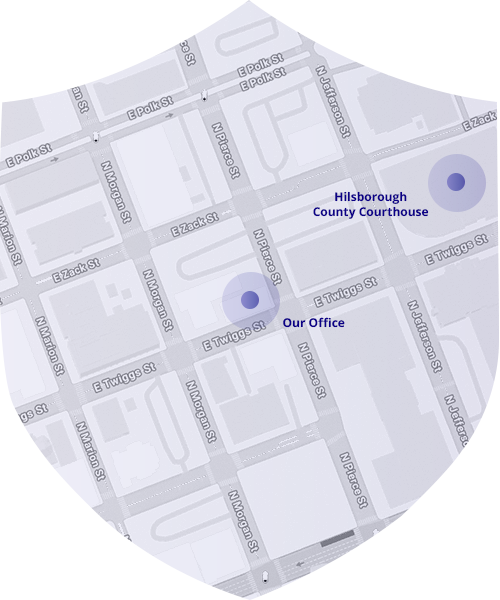
620 E. Twiggs Street, Suite 205, Tampa, FL 33602
(813) 727-7159
Serving Hillsborough, Pinellas, and Pasco Counties
The Brancato Law Firm, P.A. is a Tampa-based criminal defense practice. We are not affiliated with any other Brancato-named law firms.
Visit Us

Tampa, FL 33602
Contact Us Now
Free Legal Consultation (813) 727-7159