- Free Consultation 24/7: (813) 727-7159 Tap Here To Call Us


From First DUI to Death Penalty



Competency to Proceed Tampa: Protecting Mentally Ill Defendants



Your son was arrested last week. He is hearing voices again, hasn’t slept in days, and cannot explain to you what happened. Now he sits in the Hillsborough County Jail waiting for a court date he doesn’t understand for charges he cannot comprehend.
This scenario happens more often than most people realize. Florida law recognizes that prosecuting someone who cannot understand the proceedings violates due process. The legal mechanism that protects these individuals is called competency to proceed Tampa courts must enforce. A criminal defense attorney who understands this process can make the difference between appropriate treatment and years of unnecessary incarceration. We are your Tampa Mental Health Law Firm.
I’m Tampa Attorney Rocky Brancato. For over 25 years, I have defended clients throughout Tampa Bay, including many with serious mental illness. As the former Chief Operations Officer of the Hillsborough County Public Defender’s Office, I have handled hundreds of competency cases. Consequently, I understand both the legal requirements and the treatment systems that determine outcomes for your family. The Brancato Law Firm, P.A. can help.
What Is Competency to Proceed Tampa?
Under Florida Statute 916.12, a defendant is legally incompetent to proceed if they lack “sufficient present ability to consult with her or his lawyer with a reasonable degree of rational understanding.” Additionally, they must have a “rational, as well as factual, understanding of the proceedings.”
In simpler terms, the competency to proceed Tampa standard requires a defendant to do two things:
- Understand what is happening in their case (the charges, the judge’s role, the penalties).
- Be able to help their attorney prepare a defense.
If mental illness prevents either of these abilities, the court cannot proceed with the prosecution. This protection exists because our justice system considers it fundamentally unfair to prosecute someone who cannot participate meaningfully in their own defense.
Competency vs. Insanity: The Critical Difference
Many families confuse competency with insanity. These are entirely different legal concepts with different outcomes.
Comparison: Competency vs. Insanity Defense
| Factor | Competency to Proceed | Insanity Defense |
| Time Period | Present mental state during court. | Mental state at the time of the crime. |
| Legal Question | Can they understand the trial? | Did they know right from wrong? |
| Effect if Found | Case paused; treatment ordered. | “Not Guilty by Reason of Insanity” verdict. |
| Change Over Time | Yes (Treatment can restore it). | No (Historical fact cannot change). |
| Burden of Proof | Preponderance of Evidence. | Clear and Convincing Evidence. |
How the Evaluation Process Works
When concerns about a defendant’s mental state arise, the defense attorney, prosecutor, or judge can file a motion to appoint mental health experts. Once filed, this motion stops the “Speedy Trial” clock (Baxter v. Downey, 1991).
Florida Rule of Criminal Procedure 3.211 requires experts to evaluate specific factors.
Experts must determine if the defendant can:
- Appreciate the charges or allegations.
- Understand the possible penalties.
- Comprehend the adversarial nature of the legal process.
- Disclose pertinent facts to counsel.
- Behave appropriately in the courtroom.
- Testify relevantly if needed.
Critical Deadlines in Tampa Competency Cases
Florida law establishes specific timelines for competency to proceed Tampa hearings. Missing these deadlines can cause unnecessary delays that harm mentally ill defendants.
Statutory Timelines
| Event | Deadline |
| Status Hearing | No later than 20 days after motion is filed. |
| Final Hearing | No later than 45 days (absent good cause). |
| Stale Reports | Reports generally expire after 6 months (DCF v. Kirshner). |
| Violent Felony Dismissal | Charges dismissed after 5 years of incompetence. |
| Non-Violent Dismissal | Charges dismissed after 3 years of incompetence. |
Treatment Options: Inpatient vs. Conditional Release
Florida Statute 916.12 defaults to community-based treatment. This reflects the principle that defendants should receive care in the least restrictive setting possible.
Inpatient Forensic Treatment
Florida Statute 916.13 allows commitment to a state hospital only if there is a “substantial probability” that the defendant will regain competency. Florida courts strictly enforce this. In DCF v. Pierre (2023), the court held that without clear evidence that the condition is treatable, involuntary commitment is improper.
Conditional Release
Defendants who do not meet the criteria for hospitalization often receive a “Conditional Release Order.” They receive treatment at home or a facility like Gracepoint while supervised. As your attorney, I work directly with court liaisons to coordinate these placements.
Legal Work Continues During Treatment
Many families assume that once competency is raised, all legal work stops. This is incorrect. Florida Rule of Criminal Procedure 3.210(a)(2) explicitly states that the incompetence of the defendant “does not preclude… motions, discovery proceedings, or other procedures that do not require the personal participation of the defendant.”
An experienced competency to proceed Tampa attorney will continue building the defense during this time. I monitor treatment progress, file suppression motions, and develop strategies so we are ready the moment competency is restored.
Frequently Asked Questions
What does competency mean in court?
It means the defendant has the mental capacity to understand the proceedings and assist their lawyer. If mental illness prevents this, the prosecution must pause.
Will the charges be dropped if I am incompetent?
Eventually, yes, but not immediately. Florida Statute 916.145 mandates dismissal after 5 continuous years for violent felonies or 3 years for non-violent charges. However, the State can refile charges if you regain competency later.
Does the court provide mental health treatment?
The “treatment” provided is specifically designed to restore competency (e.g., teaching legal terminology), not necessarily to cure the underlying illness. However, we can use the time to set up comprehensive care plans.
Can I get bail while being evaluated?
Yes, but it is complicated. If the defendant is considered a danger to themselves or others, the court may revoke bond. We fight to secure conditional release to a treatment facility instead of jail.
Get Help for Your Loved One Today
If your family member has been arrested and you are concerned about their mental state, time matters. The sooner an experienced attorney raises competency issues, the sooner appropriate treatment can begin.
I offer confidential consultations to families navigating the intersection of mental illness and criminal law.
Call (813) 727-7159 Today to Discuss Your Family’s Situation.
The Brancato Law Firm, P.A.
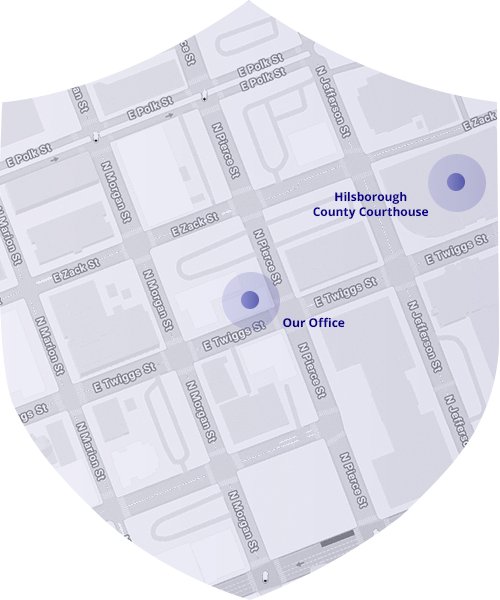
620 E Twiggs Street, Suite 205, Tampa, FL 33602
Visit Us

Tampa, FL 33602
Contact Us Now
Free Legal Consultation (813) 727-7159