- Free Consultation 24/7: (813) 727-7159 Tap Here To Call Us




What Is Burglary in Florida? Charges, Penalties, and How to Fight Back


Key Takeaway: Burglary in Florida is always a felony — ranging from a third-degree felony (up to 5 years) to a first-degree felony punishable by life in prison. The State must prove you entered or remained in a dwelling, structure, or vehicle with intent to commit a crime inside. Because intent is the key element, it is also the most common point of attack for the defense.
I’m Tampa criminal defense attorney Rocky Brancato. With more than 25 years defending felony cases in Hillsborough County — and more than 150 jury trials to verdict — I have handled burglary charges at every level, from vehicle break-ins to occupied dwelling cases carrying life sentences.
How Does Florida Law Define Burglary?
Under Florida law (§810.02), burglary means entering a dwelling, structure, or conveyance with the intent to commit a crime inside — unless the premises are open to the public or you had permission to enter. However, burglary also covers situations where you had permission to enter but then remained after that permission ended, specifically if you stayed surreptitiously with criminal intent, or stayed after someone told you to leave.
Florida Statute §810.02: The State must prove two things — (1) you entered or unlawfully remained in a dwelling, structure, or conveyance, and (2) you intended to commit a crime inside. Without proving both elements beyond a reasonable doubt, the burglary charge fails. This is where The Brancato Law Firm, P.A. focuses the defense.
It is important to understand what these terms mean in Florida law. A “dwelling” includes any building with a roof that someone uses for overnight lodging. A “structure” includes any building of any kind — a store, a warehouse, a shed. A “conveyance” means any vehicle, boat, trailer, or aircraft. Because the definitions are broad, prosecutors apply burglary charges to a wide range of situations.
What Is the Difference Between Burglary and Trespass in Florida?
The critical difference is intent. Burglary (§810.02) requires proof that you entered with the intent to commit a crime inside. Trespass (§810.08) only requires proof that you entered without permission. In other words, if you walked into someone’s garage without permission but had no intent to steal anything, the State should charge trespass — not burglary.
| Element | Burglary (§810.02) | Trespass (§810.08) |
|---|---|---|
| Unlawful entry or remaining | Required | Required |
| Intent to commit a crime inside | Required | Not required |
| Classification | Felony (1st, 2nd, or 3rd degree) | Misdemeanor (or 3rd-degree felony if armed) |
| Maximum penalty | Up to life in prison | Up to 1 year jail (misdemeanor) or 5 years (armed) |
This distinction matters enormously because prosecutors frequently overcharge. At The Brancato Law Firm, P.A., we challenge the intent element in every burglary case — because if the State cannot prove what you intended to do inside, the burglary charge should fall to trespass.
What Are the Penalties for Burglary in Florida?
Burglary penalties in Florida depend on the type of location, whether anyone was inside, and whether violence or weapons were involved. Here is how the charges break down.
First-Degree Burglary (Up to Life in Prison)
Warning: Under §810.02(2), burglary becomes a first-degree felony punishable by life in prison if you committed an assault or battery during the burglary, if you armed yourself with a dangerous weapon or explosives, or if you used a vehicle to damage the dwelling or caused more than $1,000 in property damage. First-degree burglary also applies when the offense occurs during a state of emergency or riot.
Second-Degree Burglary (Up to 15 Years)
Burglary is a second-degree felony under §810.02(3) when there is no assault, battery, or weapon — but the target is an occupied dwelling, an occupied structure, an occupied conveyance, an emergency vehicle, or a location where the intent was to steal controlled substances. A second-degree felony carries up to 15 years in prison and a $10,000 fine. Furthermore, if the burglary occurs during a riot or state of emergency, the charge jumps to a first-degree felony.
Third-Degree Burglary (Up to 5 Years)
Burglary of an unoccupied structure or an unoccupied conveyance — with no assault, battery, or weapon — is a third-degree felony under §810.02(4). It carries up to 5 years in prison and a $5,000 fine. Although this is the lowest burglary classification, it is still a felony conviction that stays on your record permanently unless you qualify for sealing or expungement.
What About Trespass Charges in Florida?
If the State cannot prove criminal intent inside the location, the charge drops to trespass. However, trespass penalties vary depending on the circumstances:
| Trespass Type | Statute | Classification | Maximum Penalty |
|---|---|---|---|
| Structure or conveyance (unoccupied) | §810.08(2)(a) | 2nd-degree misdemeanor | 60 days jail, $500 fine |
| Structure or conveyance (occupied) | §810.08(2)(b) | 1st-degree misdemeanor | 1 year jail, $1,000 fine |
| Armed trespass (structure or conveyance) | §810.08(2)(c) | 3rd-degree felony | 5 years prison, $5,000 fine |
| Property other than structure (posted/fenced) | §810.09(2) | 1st-degree misdemeanor | 1 year jail, $1,000 fine |
| Armed trespass on property | §810.09(2)(b) | 3rd-degree felony | 5 years prison, $5,000 fine |
At The Brancato Law Firm, P.A., we often negotiate burglary charges down to trespass — which means the difference between a felony record and a misdemeanor that may be eligible for sealing.
Can You Be Charged for Possessing Burglary Tools in Florida?
Yes. Under §810.06, possession of burglary tools is a separate third-degree felony. The State must prove you possessed any tool, machine, or device with intent to use it to commit burglary or trespass. The key word is intent — simply having a screwdriver or flashlight is not a crime. The State must connect the tool to a specific criminal plan.
Florida courts have thrown out burglary tools charges when the State failed to prove the defendant intended to use the item for entry. For instance, courts have ruled that gloves, a shirt, and even a miner’s light do not qualify as burglary tools without evidence of intent. Because of this, we challenge burglary tools charges aggressively at The Brancato Law Firm, P.A. — and we often get them dismissed.
How We Fight Burglary Charges in Tampa
Because I served as Chief Operations Officer and Chief Assistant Public Defender of the Hillsborough County Public Defender’s Office, I have seen thousands of burglary cases from the inside. I know how prosecutors build these cases, and I know where they fall apart. Here is how we defend burglary charges at The Brancato Law Firm, P.A.:
- Challenge the intent element. If the State cannot prove what crime you intended to commit inside, the burglary charge fails. We investigate whether the evidence actually supports criminal intent — or whether it only proves you were present.
- Attack the “entry” or “remaining” element. If you had permission to enter and the State cannot prove that permission ended, the burglary charge has a fatal flaw.
- Suppress illegally obtained evidence. If law enforcement found you inside because of an illegal search, a warrantless entry, or a coerced confession, we file motions to suppress that evidence before trial.
- Negotiate for reduced charges. When the facts support it, we push to reduce burglary to trespass — transforming a felony into a misdemeanor. This strategy can save you years in prison and protect your record.
- Fight at trial. With more than 150 jury trials, I have the courtroom experience to take burglary cases to verdict when the State overcharges or relies on weak evidence.
Real Case Results: Property Crime Defense
Reduced — Armed Burglary to Armed Trespass (High-Profile Case)
Our client entered an occupied home while armed — not realizing the homeowner was inside. The homeowner treated him with kindness, gave him food and drink, and he eventually fell asleep. The State charged armed burglary, which carried a potential life sentence. Rocky took the case to trial, and the jury returned a verdict of armed trespass — avoiding a life sentence entirely.
Past results do not guarantee future outcomes.
Not Guilty — Burglary of a Dwelling and Criminal Mischief (Friend’s Home)
Our client was accused of breaking into a friend’s home, stealing speakers, and causing damage inside the residence. The stolen speakers were found in his possession at his own home. Despite this, Rocky developed questions at trial about how the client obtained the speakers lawfully — and the jury returned Not Guilty on both burglary of a dwelling and criminal mischief.
Past results do not guarantee future outcomes.
Not Guilty — Burglary of a Structure (Shed)
Our client was charged with burglary of a structure after being accused of breaking into a shed. Rocky took the case to trial and established reasonable doubt about who committed the burglary. Not Guilty.
Past results do not guarantee future outcomes.
Can Burglary Charges Be Dropped or Reduced in Florida?
Yes — and the most common path is challenging the intent element. If the State cannot prove you entered with the intent to commit a specific crime, the charge can fall to trespass. Similarly, if the evidence came from an illegal search or an unreliable witness, the entire case may collapse. Here are the most effective strategies:
- Lack of intent. You entered the location but had no plan to commit a crime inside. Without proof of intent, the burglary charge fails.
- Consent or permission. You had permission to be in the dwelling, structure, or vehicle. If the State cannot prove your permission ended, there is no unlawful entry.
- Mistaken identity. Someone else committed the burglary, and the State cannot reliably place you at the scene.
- Suppression of evidence. If police violated your constitutional rights — through an illegal traffic stop, a warrantless search, or a coerced statement — we move to exclude that evidence.
- Pre-file advocacy. If you contact The Brancato Law Firm, P.A. before formal charges are filed, we can present mitigating evidence to the intake prosecutor at the State Attorney’s Office, 13th Judicial Circuit. In some cases, this prevents the charge entirely.
What Should You Do After a Burglary Arrest in Tampa?
If you or someone you love has been arrested for burglary and booked at Orient Road Jail or Falkenburg Road Jail, take these steps immediately:
- Stay silent. Do not explain why you were at the location. Do not give law enforcement a statement. Anything you say will become evidence.
- Call an attorney before your first appearance. Your first court hearing at the Hillsborough County Courthouse happens within 24 hours. Having a lawyer at that hearing can mean the difference between a reasonable bond and being held without bond.
- Do not talk about the case on jail phones. Every call from Orient Road and Falkenburg is recorded. These recordings are admissible at trial.
- Secure evidence quickly. Surveillance footage, text messages, and GPS data disappear fast. Your attorney needs to preserve this evidence before it is gone.
Frequently Asked Questions About Burglary in Florida
Is burglary always a felony in Florida?
Yes. Under §810.02, every burglary charge in Florida is a felony — either first degree (up to life), second degree (up to 15 years), or third degree (up to 5 years). There is no misdemeanor burglary in Florida. However, if the State cannot prove intent, the charge may drop to trespass, which is typically a misdemeanor. The Brancato Law Firm, P.A. fights to reduce burglary charges whenever the facts support it.
What is the difference between burglary and breaking and entering in Florida?
Florida does not have a separate “breaking and entering” charge. The crime is called burglary under §810.02, and it does not require “breaking” anything — simply entering without permission with criminal intent is enough. Many people assume you have to force entry, but that is not how the law works in Florida.
Can you get probation for burglary in Florida?
It depends on the degree. Third-degree burglary (unoccupied structure or vehicle) often qualifies for probation, especially for first-time offenders. Second-degree and first-degree burglary carry minimum mandatory guidelines that make probation harder to achieve — but downward departures are possible when the defense presents strong mitigating evidence. Tampa criminal defense attorney Rocky Brancato evaluates every case for departure opportunities.
More Questions About Burglary and Trespass
What counts as a “structure” for burglary charges in Florida?
Under Florida law, a “structure” means any building of any kind — including stores, warehouses, sheds, fenced areas, and even tents or temporary shelters. The definition is intentionally broad, which means prosecutors can charge burglary in situations many people would not expect.
What happens if you are caught with burglary tools in Florida?
Possession of burglary tools (§810.06) is a third-degree felony carrying up to 5 years in prison. However, the State must prove you intended to use the tool for burglary or trespass. Simply having a screwdriver, flashlight, or gloves is not enough. At The Brancato Law Firm, P.A., we challenge the intent element and have gotten these charges dismissed.
Hiring a Burglary Defense Attorney
What experience does Rocky Brancato have with burglary defense?
Rocky Brancato has defended burglary cases for over 25 years in the 13th Judicial Circuit. As the former Chief Operations Officer of the Hillsborough County Public Defender’s Office, he managed the attorneys handling the highest-volume felony docket in the circuit — including thousands of burglary cases. He holds an AV Preeminent rating from Martindale-Hubbell, Super Lawyers recognition, and perfect 10.0 ratings on both Justia and Avvo.
How much does a burglary defense lawyer cost in Tampa?
Fees depend on the degree of the burglary charge, the complexity of the evidence, and whether the case goes to trial. The Brancato Law Firm, P.A. offers free, confidential consultations so you can understand what you are facing before making any commitment. Call (813) 727-7159 to discuss your case.
You Are Reading This for a Reason — Let Us Help
If you are facing burglary charges in Tampa, you know the stakes are serious. Even a third-degree burglary conviction means a permanent felony record. We have spent more than 25 years fighting property crime charges in Hillsborough County, and we know how to challenge the intent element, suppress illegally obtained evidence, and negotiate charges down when the State overreaches.
Every day you wait is a day the prosecution builds its case. The earlier Tampa criminal defense attorney Rocky Brancato gets involved, the more options you have — including pre-file advocacy that may prevent formal charges entirely.
Call The Brancato Law Firm, P.A. today at (813) 727-7159 for a free, confidential consultation. We are available 24/7 and serve clients throughout Hillsborough, Pinellas, and Pasco Counties.
For more about how we defend serious criminal charges, visit our Violent Crimes practice page. You can also read our guide on What Is Robbery in Florida? — robbery and burglary charges frequently overlap, and the defense strategies share common ground.
The Brancato Law Firm, P.A. is a Tampa-based criminal defense practice serving clients exclusively in Hillsborough, Pinellas, and Pasco Counties. We are not affiliated with any other Brancato-named law firms.
This page is for informational purposes only and does not constitute legal advice. Each case is unique, and outcomes depend on the individual facts and circumstances involved. Past results do not guarantee future outcomes.
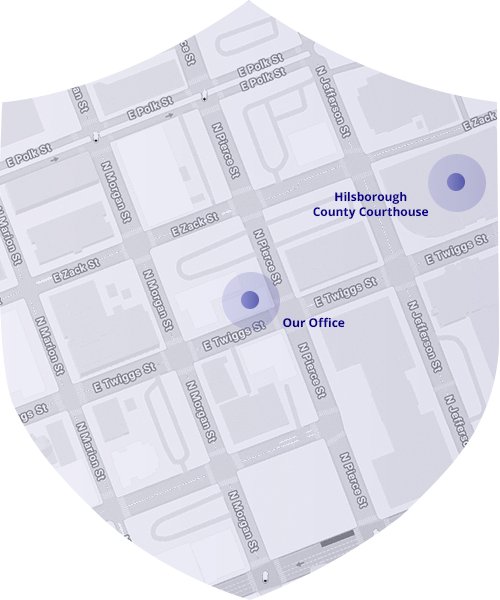
Visit Us
Suite #205
Tampa, FL 33602
Contact Us Now
Free Legal Consultation (813) 727-7159