- Free Consultation 24/7: (813) 727-7159 Tap Here To Call Us




What Is a Downward Departure in Florida?



A Tampa criminal defense attorney explains how to avoid prison under Florida’s Criminal Punishment Code—including the statutory mitigators most lawyers know and the non-statutory mitigation most lawyers miss.
| Key Takeaway A downward departure allows a Florida judge to impose a sentence below the minimum calculated by the Criminal Punishment Code scoresheet. The statute lists 14 specific mitigating circumstances—but critically, this list is not exclusive. Section 921.0026(1) uses the language “includes, but is not limited to,” which opens the door to any mitigating factor supported by competent, substantial evidence. Most criminal defense attorneys miss this, limiting themselves to the statutory factors when the law permits far more. |
Understanding the Criminal Punishment Code Scoresheet
Florida’s Criminal Punishment Code establishes a point-based sentencing system for all non-capital felonies committed on or after October 1, 1998. Moreover, every felony defendant facing sentencing will have a scoresheet prepared—typically by the State Attorney’s Office—that calculates a recommended sentence based on specific factors.
The scoresheet assigns points for the primary offense (the most serious charge), additional offenses pending before the court, prior criminal record, victim injury, legal status at the time of the offense (such as being on probation), and various sentencing enhancements. Additionally, the total points determine what sentence the law requires or permits.
| Calculating the Lowest Permissible Sentence If total sentence points exceed 44, the lowest permissible prison sentence in months equals: (Total Sentence Points − 28) × 0.75. For example, 100 total points results in a minimum sentence of 54 months in state prison. |
Three Critical Sentencing Thresholds
Florida law establishes three distinct sentencing thresholds based on total scoresheet points. Understanding these thresholds is essential because each involves different legal standards and procedural requirements:
| Total Points | Sentencing Outcome | Statutory Authority |
| 22 or fewer | Mandatory non-prison sanction (for qualifying 3rd degree felonies) | § 775.082(10) |
| 44 or fewer | Court may impose non-prison sanction | § 921.0024 |
| Above 44 | Prison required unless downward departure granted | § 921.0026 |
| What Is a “Non-State Prison Sanction”? A non-state prison sanction means probation or a county jail sentence of up to 364 days. Any sentence of incarceration for one year or more means Florida State Prison. This is why you will hear judges pronounce sentences of “one year and one day, Florida State Prison”—to make clear the defendant is going to state prison, not county jail. |
22 Points or Fewer: Mandatory Non-Prison Sanction
Under Florida Statute § 775.082(10), if a defendant is sentenced for an offense committed on or after July 1, 2009, which is a third-degree felony but not a forcible felony as defined in § 776.08, and excluding any third-degree felony violation under Chapter 810 (burglary offenses), and if the total sentence points are 22 points or fewer, the court must sentence the offender to a non-state prison sanction.
This is not a downward departure—it is the law mandating a non-prison outcome. The only exception is if the court makes written findings that a non-state prison sanction could present a danger to the public. Consequently, for qualifying defendants, the burden shifts to the State to justify incarceration rather than to the defense to justify leniency.
44 Points or Fewer: Discretionary Non-Prison Sanction
When the total scoresheet points are 44 or fewer, the court has discretion to impose a non-state prison sanction without making any departure findings. In other words, the judge may sentence the defendant to probation, community control, or county jail time without needing to justify a departure from the guidelines. However, the court is not required to do so—prison remains an option at the judge’s discretion.
Above 44 Points: Downward Departure Required to Avoid Prison
Once total sentence points exceed 44, state prison is the lowest permissible sentence. Therefore, any sentence that does not include state prison—whether probation, community control, drug treatment, mental health treatment, or county jail—constitutes a downward departure. The court cannot impose such a sentence unless mitigating circumstances reasonably justify the departure.
What Is a Downward Departure?
A downward departure is a sentence below the lowest permissible sentence calculated by the Criminal Punishment Code scoresheet. Florida Statute § 921.0026 prohibits such departures unless “there are circumstances or factors that reasonably justify” the departure. Furthermore, the statute provides a list of mitigating circumstances that can support a departure sentence—but this list is explicitly non-exclusive.
In practical terms, a downward departure gives the judge the legal authority to impose probation, drug treatment, mental health treatment, or a county jail sentence instead of state prison—even when the scoresheet recommends years of incarceration. However, the judge must make written findings explaining the reasons for the departure within seven days of sentencing.
| Important Limitation—But Not a Dead End Under § 921.0026(3), the defendant’s substance abuse or addiction—including intoxication at the time of the offense—is NOT a mitigating factor and does not justify a downward departure under any circumstances. However, this does not mean a defendant with substance abuse issues has no options. Other mitigators can still apply separately: childhood trauma, mental health conditions independent of substance abuse, employment history, military service, cooperation, and many others. Substance abuse may be part of the defendant’s story, but it cannot be the reason for departure. |
Statutory Mitigating Circumstances Under § 921.0026
Florida law provides 14 specific mitigating circumstances in § 921.0026(2). If a proposed factor falls within one of these statutory categories, it is necessarily mitigating in any case where it is present. The following table summarizes the statutory mitigators:
| Section | Mitigating Circumstance |
| (a) | The departure results from a legitimate, uncoerced plea bargain. |
| (b) | The defendant was an accomplice and a relatively minor participant in the criminal conduct. |
| (c) | The defendant’s capacity to appreciate the criminal nature of the conduct or to conform to the law was substantially impaired. |
| (d) | The defendant requires specialized treatment for a mental disorder unrelated to substance abuse or for a physical disability, and is amenable to treatment. |
| (e) | The need for payment of restitution to the victim outweighs the need for a prison sentence. |
| (f) | The victim was an initiator, willing participant, aggressor, or provoker of the incident. |
| (g) | The defendant acted under extreme duress or under the domination of another person. |
| (h) | Before the defendant was identified, the victim was substantially compensated. |
| (i) | The defendant cooperated with the state to resolve the current offense or any other offense. |
| (j) | The offense was committed in an unsophisticated manner and was an isolated incident for which the defendant has shown remorse. |
| (k) | At the time of the offense the defendant was too young to appreciate the consequences of the offense. |
| (l) | The defendant is to be sentenced as a youthful offender. |
| (m) | The defendant’s offense is a nonviolent felony with 60 points or fewer, and the defendant is amenable to drug court treatment. |
| (n) | The defendant was making a good faith effort to obtain or provide medical assistance for a drug-related overdose. |
| (1) | Any other mitigating circumstance supported by competent, substantial evidence—the statutory list “includes, but is not limited to” the factors above. See § 921.0026(1). |
| Common Trap: Mitigator (j) Requires ALL THREE Elements To qualify under mitigator (j), the defendant must prove the offense was unsophisticated AND an isolated incident AND that the defendant has shown remorse. Missing any one element defeats the mitigator entirely. See State v. Brannum, 876 So. 2d 724 (Fla. 5th DCA 2004); State v. Sweeney, 67 So. 3d 1154 (Fla. 2d DCA 2011). Courts have rejected departures where defendants were remorseful but had prior records (not isolated), or where the offense was isolated but the defendant merely apologized without accepting responsibility (insufficient remorse). |
Non-Statutory Mitigators: What Most Attorneys Miss
Here is what separates effective mitigation from checkbox lawyering: Section 921.0026(1) explicitly states that mitigating factors “include, but are not limited to” those listed in subsection (2). This language opens the door to any circumstance that reasonably justifies a departure, so long as it is supported by competent, substantial evidence and not otherwise prohibited by law.
As the Fifth District Court of Appeal explained in State v. Stephenson, 973 So. 2d 1259, 1263 (Fla. 5th DCA 2008), “the trial court may impose a downward departure for reasons not delineated in section 921.0026, so long as the reason given is supported by competent, substantial evidence and not otherwise prohibited.”
The critical distinction is this: if a factor falls within a statutory category, it is necessarily mitigating whenever present. However, if a factor does not fall within a statutory category, it must be shown to be mitigating in that particular case—not merely present. See Ford v. State, 802 So. 2d 1121 (Fla. 2001); Coday v. State, 946 So. 2d 988 (Fla. 2006).
Categories of Non-Statutory Mitigation Recognized by Florida Courts
Florida appellate courts have recognized numerous non-statutory mitigating factors. The following table identifies some, but not all, categories that have been addressed in case law:
| Category | Case Law Support |
| Childhood abuse or neglect | Nibert v. State, 574 So. 2d 1059 (Fla. 1990); Guardado v. State, 965 So. 2d 108 (Fla. 2007) |
| Exposure to violence in the home | Douglas v. State, 878 So. 2d 1246 (Fla. 2004); Campbell v. State, 159 So. 3d 814 (Fla. 2015) |
| Parent’s alcoholism or addiction | Lawrence v. State, 846 So. 2d 440 (Fla. 2003); Lebron v. State, 982 So. 2d 649 (Fla. 2008) |
| Brain damage affecting conduct | Allen v. State, 137 So. 3d 946 (Fla. 2013) |
| Reasons crime was committed | State v. Randall, 746 So. 2d 550 (Fla. 5th DCA 1999); State v. Montanez, 133 So. 3d 1151 (Fla. 4th DCA 2014) |
| Employment history | Anderson v. State, 863 So. 2d 169 (Fla. 2003); Darling v. State, 808 So. 2d 145 (Fla. 2002) |
| Military service | Walker v. State, 707 So. 2d 300 (Fla. 1997); Fuentes v. State, 533 So. 2d 311 (Fla. 2d DCA 1988) |
| Age (undeveloped brain or dementia) | Hurst v. State, 819 So. 2d 689 (Fla. 2002); Gonzalez v. State, 136 So. 3d 1125 (Fla. 2014) |
| Potential for rehabilitation | Valle v. State, 502 So. 2d 1225 (Fla. 1987); State v. Coleman, 780 So. 2d 1004 (Fla. 4th DCA 2001) |
| Church/community involvement | Walker v. State, 707 So. 2d 300 (Fla. 1997) |
| Co-defendant disparity | Gonzalez v. State, 136 So. 3d 1125 (Fla. 2014) |
Childhood Trauma and Developmental History
Florida courts have consistently recognized childhood trauma as mitigating. In Nibert v. State, 574 So. 2d 1059 (Fla. 1990), the Florida Supreme Court held that “the fact that defendant had suffered through more than a decade of psychological and physical abuse during the defendant’s formative childhood and adolescent years is in no way diminished by the fact that the abuse finally came to an end.”
Similarly, courts have recognized exposure to violence in the home, parental alcoholism or addiction, effects of substance use during pregnancy, unstable environments (frequent moves, foster care), and early developmental trauma as mitigating factors. See Guardado v. State, 965 So. 2d 108 (Fla. 2007); Hernandez v. State, 4 So. 3d 642 (Fla. 2009).
Age: Young Defendants and the Developing Brain
Neuroscience has established that the prefrontal cortex—the brain region responsible for executive function, impulse control, and decision-making—does not fully develop until the mid-twenties. This scientific reality can support mitigation for defendants who are too old for Youthful Offender status but whose brain development was not complete at the time of the offense.
For a court to give a non-minor defendant’s age significant weight, the age must be linked to some other characteristic—such as significant emotional immaturity or mental problems. Hurst v. State, 819 So. 2d 689 (Fla. 2002). Expert neuropsychological testing can establish this connection.
The Mental Health Mitigator: Two Approaches
Section 921.0026(2)(d) provides that a departure is justified when “the defendant requires specialized treatment for a mental disorder that is unrelated to substance abuse or addiction or for a physical disability, and the defendant is amenable to treatment.” In my 25 years of criminal defense practice, this is by far the most commonly invoked mitigator. Nevertheless, the way attorneys approach this mitigator makes an enormous difference in outcomes.
The Standard Approach: Dual-Diagnosis Evaluations
Most defense attorneys utilize what I call the “dual-diagnosis” approach. Specifically, the attorney sends the client to a psychologist or psychiatrist for an evaluation. The evaluator confirms that the defendant has both a mental health condition (such as depression, anxiety, bipolar disorder, PTSD, or ADHD) and a substance abuse condition—but that the mental health condition would exist independently even if the defendant had never used drugs or alcohol.
A remarkably high percentage of criminal defendants qualify for this mitigator. The evaluator writes a report, the defense attorney gives it to the prosecutor, and it provides something for the State’s file—a document that gives the prosecutor cover to agree to a departure and resolve the case without a trial or prison sentence.
This process is largely perfunctory and transactional. Nevertheless, it serves an important function: it allows cases to be resolved when the prosecutor is willing to depart but needs documentation to justify the decision. In routine cases where the State is amenable to a non-prison resolution, this may be sufficient.
The Higher Level: Comprehensive Mitigation Reports
A comprehensive mitigation report goes far deeper than confirming a diagnosis. In contrast, it tells the defendant’s story—explaining how childhood trauma, untreated mental illness, brain injury, or developmental factors contributed to the criminal conduct. Furthermore, it demonstrates not merely that the defendant qualifies for treatment, but that treatment is actually likely to succeed.
The statute’s language is instructive: the defendant must “require” specialized treatment and be “amenable” to that treatment. A true mitigation report addresses both elements persuasively, combining the statutory mental health mitigator with non-statutory factors such as childhood abuse, resilience, employment history, and demonstrated commitment to recovery.
| Important: You No Longer Have to Prove DOC Cannot Provide Treatment Prior to 2014, many courts required defendants to prove that the Department of Corrections could not provide the specialized treatment needed. The Florida Supreme Court eliminated this requirement in State v. Chubbuck, 141 So. 3d 1163 (Fla. 2014), holding that the plain language of the statute does not include such a requirement. Many attorneys and some judges still operate under the old rule—but the law is clear: you must show that you require treatment and are amenable to it, not that DOC cannot provide it. |
Consider the difference between these two reports for the same defendant:
| Perfunctory Dual-Diagnosis Report “Client has depression and substance use disorder. The depression would exist independently of the substance abuse. Client is amenable to treatment.” |
| Comprehensive Mitigation Report “Client was severely physically abused as a child. Despite this trauma, he showed remarkable resilience—completing trade school, obtaining a welding certification, and maintaining stable employment for seven years. Undiagnosed PTSD from the childhood abuse was triggered by a specific life event, leading to a mental health episode and subsequent substance use as self-medication. Since arrest, the client has reinitiated treatment with his provider, demonstrated amenability by maintaining all appointments and medication compliance, and has been working overtime to support his family while maintaining his treatment regimen. This history demonstrates that when he has appropriate support, he succeeds. The underlying causes of his conduct are treatable, and he has already demonstrated commitment to that treatment.” |
One gives the prosecutor paperwork. The other tells the story of a human being who deserves a chance—and provides evidence that the chance will not be wasted.
| What Genuine Remorse Looks Like: State v. VanBebber A defendant was convicted of DUI manslaughter. The evidence showed he had no prior record, had not consumed alcohol in six months before the incident, stayed at the scene after the crash, performed CPR on the victim, and told investigators he wished he had been the one who died. The court found this demonstrated unsophisticated conduct, an isolated incident, and genuine remorse—all three elements required under mitigator (j). Result: Downward departure granted. State v. VanBebber, 848 So. 2d 1046 (Fla. 2003) |
Comparing the Two Approaches
The following table summarizes the key differences between standard dual-diagnosis evaluations and comprehensive mitigation reports:
| Standard Dual-Diagnosis Evaluation | Comprehensive Mitigation Report |
| Confirms diagnoses exist independently | Documents full life history, trauma, and circumstances leading to offense |
| Single evaluation session | Multiple sessions with collateral interviews (family, employers, teachers) |
| Provides diagnoses to check a statutory box | Explains how conditions contributed to criminal conduct |
| Transactional: gives prosecutor cover | Persuasive: gives judge reason to believe treatment will succeed |
| No treatment plan | Detailed, individualized treatment plan with specific providers |
| Generic recommendations | Identifies specific facilities, therapists, and programs |
| Cost: $500–$1,500 | Cost: $2,500–$10,000+ depending on complexity |
Mitigation Specialists: Not Just for Death Penalty Cases
Beyond psychologists and psychiatrists, licensed mental health counselors and licensed clinical social workers—some of whom work as “mitigation specialists” in death penalty cases—are adept at developing comprehensive psychosocial histories and non-statutory mitigation. These professionals do not merely diagnose; they investigate, interview family members and others who know the defendant, and build a narrative that explains how the defendant’s life history led to the criminal conduct.
There is no rule limiting mitigation specialists to capital cases. Retaining such an expert in a serious non-capital case can provide the comprehensive mitigation that makes the difference between prison and treatment.
How a Tampa Criminal Defense Attorney Can Help
As the former Chief Operations Officer of the Hillsborough County Public Defender’s Office, I led and mentored a staff of over 100 attorneys handling thousands of criminal cases. Throughout my career, I have mentored generations of criminal defense lawyers—and I have seen mitigation done well and done poorly. The difference often determines whether a client goes to prison or goes to treatment.
Building a Complete Solution, Not Just Presenting a Report
My approach to mitigation goes beyond presenting evidence to a judge. Instead, I work to build a complete solution—a package that gives the court confidence that departure is the right decision. This includes developing a concrete treatment plan with identified providers, a work plan demonstrating the defendant’s path to stability, documented family support, and a demonstrated family commitment to the defendant’s success.
The goal is not simply to check a statutory box. Rather, it is to present a plan so thorough and credible that the judge feels confident taking the risk to depart from the guidelines.
Understanding Judicial Reality: The Risk Judges Take
Florida judges are elected. Every time a judge grants a downward departure, that judge is taking a political risk. If the defendant reoffends—especially if the defendant commits a serious crime—the judge may wake up to a newspaper article blaming the outcome on the departure decision. This reality is always in the back of a judge’s mind.
Effective mitigation accounts for this reality. A comprehensive mitigation package does not merely give the judge legal grounds to depart—it gives the judge confidence that the departure will succeed. The more thoroughly we demonstrate that the defendant has support, structure, accountability, and a genuine path forward, the easier it becomes for the judge to justify the decision—both legally and politically.
If you or a loved one is facing felony charges in Hillsborough, Pinellas, or Pasco County, the sentencing strategy matters as much as the defense strategy. Mitigation is not an afterthought—it requires the same level of investigation, preparation, and expertise as any other aspect of criminal defense.
Frequently Asked Questions About Downward Departures in Florida
A downward departure is a sentence below the lowest permissible sentence calculated by Florida’s Criminal Punishment Code scoresheet. Consequently, it allows a judge to impose probation, treatment, or a shorter sentence when mitigating circumstances justify deviating from the guidelines.
You must demonstrate that mitigating circumstances reasonably justify a sentence below the guidelines. Florida Statute § 921.0026 lists 14 specific mitigators, but the list is explicitly non-exclusive. Any factor supported by competent, substantial evidence and not otherwise prohibited by law can justify a departure.
No. Florida law specifically prohibits using substance abuse or addiction—including intoxication at the time of the offense—as a mitigating factor. However, if a defendant has a mental health condition that exists independently of any substance abuse, that mental health condition can support a departure under § 921.0026(2)(d).
A dual-diagnosis evaluation confirms that a defendant has both a mental health condition and a substance abuse condition, but that the mental health condition would exist even without the substance abuse. This evaluation satisfies the requirement that the mental disorder be “unrelated to substance abuse or addiction” for purposes of the § 921.0026(2)(d) mitigator.
Under § 775.082(10), if a defendant’s total scoresheet points are 22 or fewer and the offense is a qualifying third-degree felony (non-forcible, not a Chapter 810 burglary), the court must impose a non-prison sanction unless it makes written findings that the defendant presents a danger to the public. This is not a departure—it is a mandatory non-prison outcome for qualifying defendants.
Non-statutory mitigating factors are circumstances that justify a downward departure but are not specifically listed in § 921.0026(2). Because the statute uses “includes, but is not limited to” language, courts may consider any factor supported by competent evidence—such as childhood trauma, employment history, military service, or potential for rehabilitation.
Yes. Under Florida law, the imposition of a sentence below the lowest permissible sentence is subject to appellate review. However, the extent of the departure—meaning how far below the guidelines the judge sentenced—is not subject to appellate review. Therefore, the State can challenge whether a departure was legally justified, but not the magnitude of the departure.
A basic mitigation evaluation confirms diagnoses and amenability to treatment. In contrast, a comprehensive mitigation report documents the defendant’s full life history, trauma, and circumstances—explaining how these factors contributed to the offense and why treatment is likely to succeed. The comprehensive report is far more persuasive in serious cases or when the State opposes departure.
No. Mitigator (a) requires that the departure result from a legitimate, uncoerced plea bargain with the State. An open plea where the court provides an advisory sentence does not qualify. If the State does not agree to the departure, it is as if no plea bargain occurred. See State v. Beck, 763 So. 2d 506 (Fla. 4th DCA 2000); State v. Van Bebber, 848 So. 2d 1046 (Fla. 2003).
No. The cooperation mitigator requires that the defendant did something to help resolve the offense or other offenses—such as providing information that leads to arrests or helps solve other crimes. Pleading guilty (even with a post-arrest confession), being cooperative during the presentence investigation, or turning yourself in after being on the run does not qualify. See State v. Lindsay, 163 So. 3d 721 (Fla. 5th DCA 2015); State v. Sweeney, 67 So. 3d 1154 (Fla. 2d DCA 2011).
Your Future Is Worth Fighting For
Contact Tampa Criminal Defense Attorney Rocky Brancato Today
Call (813) 727-7159 for a Confidential Consultation
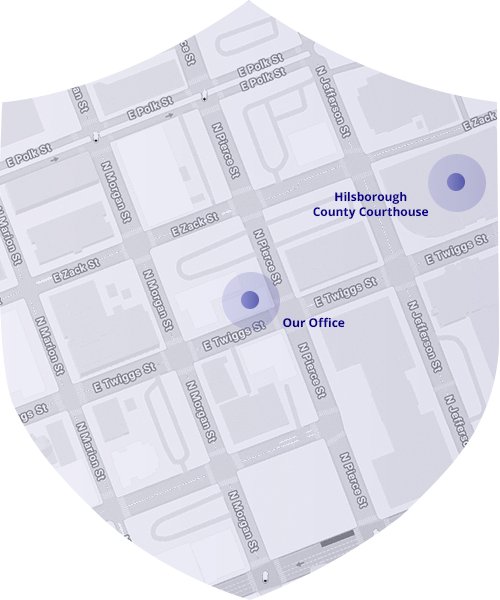
620 E. Twiggs Street, Suite 205, Tampa, FL 33602
Serving Hillsborough, Pinellas, and Pasco Counties
25+ Years of Criminal Defense Experience | Former Chief Operations Officer, Hillsborough County Public Defender’s Office
Related Articles
Visit Us

Suite #205
Tampa, FL 33602
Contact Us Now
Free Legal Consultation (813) 727-7159