- Free Consultation 24/7: (813) 727-7159 Tap Here To Call Us


From First DUI to Death Penalty



Motion to Dismiss Tampa: End Your Criminal Case Early



The prosecutor just told you they are moving forward with charges. A court date is set, and you are likely imagining the worst: a trial, a conviction, and a derailed life. But what if your case never makes it to trial? What if a judge throws out the charges before any jury hears the evidence?
This happens more often than most people realize. Florida law gives your defense attorney a powerful tool called a motion to dismiss Tampa criminal defense lawyers use to end weak cases early. Under Florida Rule of Criminal Procedure 3.190(c)(4), your attorney can ask the court to dismiss charges when the facts, even as the State presents them, simply do not prove a crime.
I’m Tampa Attorney Rocky Brancato. For over 25 years, I have defended clients throughout Tampa Bay. As a former Elite Major Crimes Defense Attorney and COO of the Public Defender’s Office, I have filed hundreds of these motions. I know exactly when they work and how to structure them for success. The Brancato Law Firm, P.A. can help.
What Is a Motion to Dismiss Under Florida Rule 3.190(c)(4)?
A motion to dismiss asks the judge to drop your charges before trial begins. Under Rule 3.190(c)(4), your motion to dismiss Tampa attorney can file this request when two specific conditions exist:
- The material facts are not in dispute.
- Those undisputed facts do not establish a prima facie case of guilt, or they establish a complete legal defense.
In other words, even if everything the police and prosecutor claim is true, the law may still not support the charge against you. This principle has deep roots in Florida jurisprudence. The Florida Supreme Court affirmed this standard in Dorelus v. State (1999).
For example, suppose the State charges you with theft. However, the undisputed facts show you reasonably believed you owned the property. Because theft requires intent to “permanently deprive,” the facts fail to establish a crime. Therefore, the court should end your case immediately.
Motion to Dismiss vs. Other Pretrial Motions
Many defendants confuse different pretrial motions. Understanding the distinctions helps you recognize which strategy applies to your Tampa case.
Comparison: Types of Pretrial Motions
| Motion Type | Purpose | Result if Granted |
| Motion to Dismiss | Argues undisputed facts fail to prove a crime. | Case dismissed entirely. |
| Motion to Suppress | Challenges illegally obtained evidence (4th Amendment). | Specific evidence excluded (case may continue). |
| Judgment of Acquittal | Argues State failed to prove its case during trial. | Acquittal entered by judge. |
| Speedy Trial Motion | Demands trial within statutory time limits. | Case dismissed if State is not ready. |
When Does a Motion to Dismiss Tampa Strategy Work?
This motion only succeeds when both sides agree on the material facts. If the State disputes any factual element, the judge must deny the motion. Additionally, the judge cannot weigh evidence or assess witness credibility at this stage.
Florida courts apply a specific standard: the judge must view all facts in the light most favorable to the State (State v. Hart, 1996). This means your motion must succeed even under the prosecution’s best interpretation of events.
Common scenarios where this motion works include:
- Self-Defense: Undisputed facts show you acted reasonably under Stand Your Ground laws.
- Entrapment: Police conduct clearly crossed the line into entrapment.
- Missing Elements: The State cannot prove an essential element (like “intent”).
- Statute of Limitations: The timing of the charges is legally barred.
What Must a Motion to Dismiss Include?
Florida courts enforce strict technical requirements. If your attorney fails to meet them, the judge will deny the motion regardless of its merits.
Your motion must:
- Clearly state that the material facts are not in dispute.
- Describe those facts in sufficient detail.
- Demonstrate that these facts fail to prove a crime.
- Be sworn to by someone with firsthand knowledge (usually the defendant).
- State the facts are “true and correct” (not just “to the best of my knowledge”).
The Florida Supreme Court emphasized this last requirement in State v. Rodriguez (1988). If you fail to swear to the facts properly, the motion is legally void.
Important Warning: Anything you swear to in this motion can be used against you at trial if the motion fails. Therefore, working with an experienced motion to dismiss Tampa attorney is essential to avoid creating problems for your defense.
How Does the State Respond?
Once you file a legally proper motion, the State has three options. Their response determines whether the judge can grant your dismissal.
The State’s Response Options
| Response Type | What It Means | Effect on Your Motion |
| Traverse | State disputes one or more material facts. | Motion Denied. A jury must decide the facts. |
| Demurrer | State accepts facts but argues they still prove a crime. | Judge Decides. The court rules on the law. |
| Standing Silent | State files no response within the deadline. | Motion Granted. Court rules by default. |
If the State files a “Traverse,” it must specifically dispute the material facts. A weak or unclear traverse may still allow your motion to succeed (Bell v. State, 2003).
Why You Need an Experienced Attorney
Not every attorney files these motions. Many lack the experience to recognize when they work. Others fear the consequences of a poorly drafted motion.
These concerns are valid. A motion to dismiss Tampa courts scrutinize requires precision. If you swear to facts that later contradict your trial defense, you have created serious problems. Similarly, if you omit critical details, the court will deny your motion.
With over 25 years of criminal trial experience, I understand both the power and the risks of these motions. I have handled thousands of felony cases and know how to craft motions that withstand State challenges.
Frequently Asked Questions
Can my Tampa criminal case be dismissed before trial?
Yes. Under Florida Rule of Criminal Procedure 3.190(c)(4), your attorney can file a motion if the undisputed facts fail to prove a crime. If granted, your case ends without a trial.
What is the difference between dismissing and suppressing?
A motion to dismiss argues that no crime occurred based on the facts. A motion to suppress argues that evidence was stolen by the police. Suppression limits evidence; dismissal ends the case.
What happens if the State disputes the facts?
If the State files a “Traverse” disputing facts, the judge must deny the motion. This motion only works when facts are undisputed. However, a weak traverse may still fail.
Can my sworn statement be used against me?
Yes. Because the motion must be sworn, any facts you state can be used against you at trial if the motion fails. This is why expert legal drafting is critical.
Find Out If Your Case Can Be Dismissed
Every criminal case has unique facts. Some cases can be dismissed before trial. Others require different strategies. The only way to know is to have an experienced attorney review your situation.
Call (813) 727-7159 Today for Your Confidential Case Review.
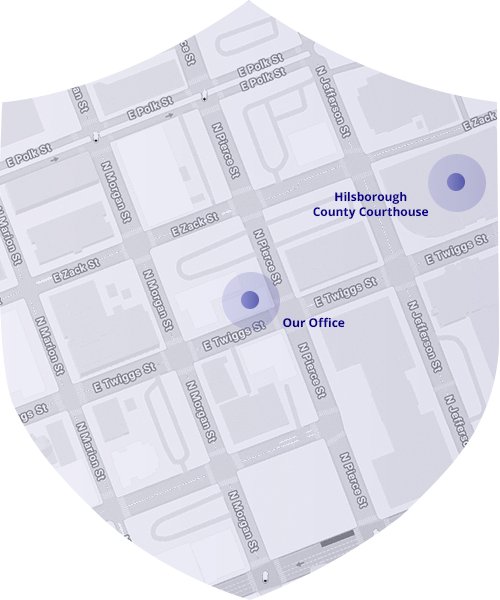
We are located at 620 E Twiggs Street, Suite 205, Tampa, FL 33602
Visit Us

Tampa, FL 33602
Contact Us Now
Free Legal Consultation (813) 727-7159