- Free Consultation 24/7: (813) 727-7159 Tap Here To Call Us


From First DUI to Death Penalty



Corpus Delicti Defense Tampa: Challenging Confessions



The detective played the recording back to you. You heard your own voice admitting to something you didn’t do. The pressure of the interrogation room broke you down, and now those words are the centerpiece of the State’s case. You likely feel like the verdict is already written.
However, the prosecutor knows something you don’t: under Florida law, your confession alone is often not enough to convict you. This is where a corpus delicti defense Tampa attorney becomes your most valuable asset. The Latin term means “body of the crime,” and it acts as a firewall between your statements and the jury.
I’m Tampa Attorney Rocky Brancato. For over 25 years, I have defended clients throughout Tampa Bay facing cases built primarily on confessions. As a former Elite Major Crimes Defense Attorney and COO of the Public Defender’s Office, I have challenged hundreds of improperly admitted statements. I know how to use this doctrine to protect your rights. My firm, The Brancato Law Firm, P.A., can help you in your case where you made statements to police.
What Is Corpus Delicti Under Florida Law?
This legal principle requires the prosecution to establish that a crime actually occurred before they can introduce your confession as evidence. It exists specifically to safeguard against wrongful convictions based solely on a defendant’s words9.
The Florida Supreme Court affirmed this rule in State v. Allen (1976), holding that independent proof of the crime must exist before a defendant’s statements are admissible. More recently, in State v. Jackson (2024), the court emphasized that the State must show all elements of the crime exist before the jury hears your confession.
The Bottom Line: If the State cannot prove a crime happened without using your words, your corpus delicti defense Tampa strategy may force the judge to throw out the statement.
How This Rule Changes Your Case
The impact of this defense is dramatic. Without independent proof, the State’s case often collapses.
Comparison: The Impact of the Corpus Delicti Rule
| Scenario | Without the Rule | With the Corpus Delicti Rule |
| Theft Confession | Confession alone convicts you. | Inadmissible until State proves property was stolen. |
| Assault Admission | Statement is primary evidence. | State must prove assault happened independent of your words. |
| False Confession | Leads to wrongful conviction. | Defendant protected because no crime is established. |
Confessions vs. Admissions: No Distinction
You might think this only applies to a full, signed confession. That is incorrect. Under Florida law, there is no meaningful distinction between a formal “confession” and a casual “admission” for these purposes.
In Burks v. State (1993), the Florida Supreme Court held that any incriminating statement requires independent corpus delicti. Whether you signed a document or just made an offhand comment, the State cannot bootstrap its case by relying on your words alone.
Critical Nuances in Tampa Courts
While the rule is powerful, there are specific exceptions and nuances that an experienced corpus delicti defense Tampa lawyer must navigate.
The DUI Identity Exception
In most cases, identity is not part of corpus delicti. The State just needs to prove a crime happened, not who did it. However, DUI cases are different.
In State v. Walton (2010), the Florida Supreme Court held that the driver’s identity can become part of corpus delicti if the evidence cannot establish a crime without it. This creates a unique opportunity to challenge DUI charges where the State cannot prove you were behind the wheel.
The Sexual Abuse Exception (and Its Limits)
Florida Statute 92.565 creates an exception for sexual abuse cases. It allows confessions without independent proof if the court deems the statement trustworthy.
However, this is not a free pass for prosecutors. In State v. Tumlinson (2016), the court denied the admission of a defendant’s journal because there was zero corroboration. Merely having “access” to a victim is not enough to bypass the rule.
Corpus Delicti in Sentencing
This protection extends beyond the trial itself. In Atkins v. State (1984), the court ruled that it is improper to use an unproven admission as an aggravating factor during sentencing. Prosecutors cannot use uncorroborated statements to increase your punishment.
Warning: You must raise this objection at the right time. Failing to challenge corpus delicti at trial typically waives the issue on appeal.
Frequently Asked Questions
What does corpus delicti mean?
It is Latin for “body of the crime”. It requires the State to prove a crime actually occurred—using independent evidence—before they can use your confession against you.
Can I be convicted based only on my confession?
Generally, no. The State needs independent proof. However, strict exceptions exist for certain sexual abuse cases under Florida Statute 92.565.
How is this different from a Motion to Suppress?
A motion to suppress argues the confession was obtained illegally (e.g., coercion or Miranda violations). A corpus delicti defense Tampa challenge argues the confession is inadmissible because the State hasn’t proven a crime happened yet, regardless of how the statement was obtained.
Does this apply to DUI cases?
Yes, with specific nuances regarding the identity of the driver. If the State cannot place you behind the wheel independent of your admission, we may be able to block the statement.
Challenge the Evidence Against You
If your case relies heavily on a confession, you may have a stronger defense than you realize. But you need an attorney who knows when to raise the objection.
Rocky Brancato has spent over 25 years fighting for defendants in Hillsborough County.
Call (813) 727-7159 Today to Discuss Your Defense Options.
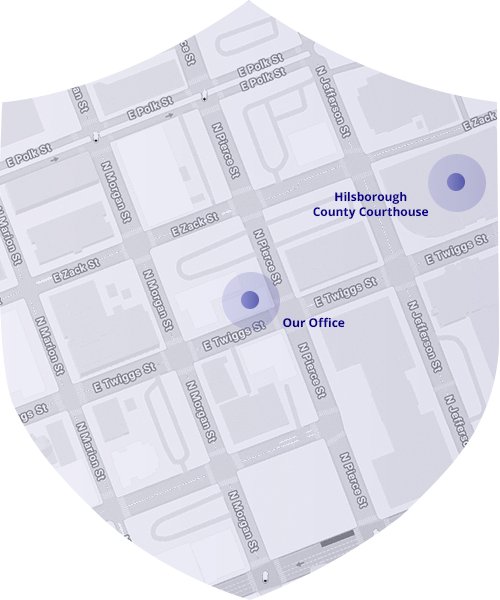
620 E Twiggs Street, Suite 205, Tampa, FL 33602
Visit Us

Tampa, FL 33602
Contact Us Now
Free Legal Consultation (813) 727-7159