- Free Consultation 24/7: (813) 727-7159 Tap Here To Call Us




Timing Optimization and Timing Management in Criminal Defense



The Strategic Practice That Separates Effective Advocacy From Reckless Aggression
| Key Takeaway Timing optimization is the practice of strategically timing individual acts—motions, communications, negotiations—to maximize the likelihood of a favorable response. Timing management is the ongoing process of adjusting timing strategy throughout a case based on changing circumstances: the passage of time, personnel changes, new evidence, or shifts in the legal landscape. Together, these practices distinguish strategic advocacy from reactive lawyering. They are not taught in law school, rarely discussed in legal literature, and represent one of the most underappreciated skills in criminal defense. |
A Note to Fellow Attorneys
I am publishing this article for two audiences: potential clients who want to understand how I approach their cases, and fellow criminal defense attorneys who may find these concepts useful in their own practice. Rising tides raise all ships. If this framework helps other attorneys achieve better outcomes for their clients, everyone benefits—including the justice system itself.
What I call “timing optimization” and “timing management” are not terms you will find in legal textbooks. They are concepts I have developed over 25 years of criminal defense practice, including my tenure leading and mentoring a staff of over 100 attorneys at the Hillsborough County Public Defender’s Office. These ideas emerged from both practicing and observing—watching what works, what fails, and most importantly, why.
This Is Not Time Management
Before defining these concepts, let me clarify what they are not. Time management is a practice every attorney must master: calendaring deadlines, scheduling depositions, allocating hours to different cases, avoiding conflicts. It is administrative. Necessary, but not strategic.
Timing optimization and timing management are something else entirely. They concern not when you have time to do something, but when doing it will produce the best result.
| Concept | Definition | Example |
| Time Management | Organizing tasks and deadlines efficiently | Calendaring depositions, filing deadlines, court dates |
| Timing Optimization | Strategically timing individual acts to maximize favorable response | Waiting to present mitigation until after a favorable deposition |
| Timing Management | Managing multiple timing decisions across case lifecycle based on changing conditions | Reassessing negotiation approach after judge transfers to a different division |
Timing Optimization Defined
Timing optimization is the practice of strategically timing individual acts, communications, motions, and negotiations to maximize the likelihood of a favorable response or outcome. It operates at the level of discrete decisions: When should I send this email? When should I file this motion? When should I raise this issue with the prosecutor?
The underlying insight is that the same request made at different times may produce entirely different results. Felony cases typically take three months to a year or even longer to resolve through the natural course of litigation—discovery, depositions, motion practice, pretrial conferences. A prosecutor who summarily rejects a plea offer at the first pretrial—when the case is fresh and emotions run high—may accept the identical offer several months later, after the normal progression of the case has run its course, the witness has moved, or the prosecutor’s caseload has doubled.
| The Core Principle of Timing Optimization The substance of your request matters. But so does when you make it. Optimize both. |
Timing Management Defined
Timing management is the ongoing process of monitoring and adjusting timing decisions across the lifecycle of a case. Where timing optimization concerns individual acts, timing management concerns the case as a whole. It requires continuous attention to changing conditions that may create new opportunities—or close old ones.
Timing management responds to two categories of triggers: the passage of time itself and the passage of events.
The Passage of Time
Human beings are emotional. Prosecutors, judges, and alleged victims are human beings. When a case first arrives, emotions often run high. The alleged victim may be calling the prosecutor’s office daily. The prosecutor may feel pressure to take a hard line. The judge may be influenced by inflammatory media coverage.
Time has a way of changing this. Emotions cool. Other cases demand attention. The alleged victim stops calling. What seemed like an outrage requiring maximum punishment gradually becomes just another file on a crowded desk. The same prosecutor who stonewalled negotiations in month one may be genuinely receptive in month six—not because the case changed, but because the emotional temperature dropped.
The Passage of Events
Beyond time itself, specific events can transform the timing landscape. In the criminal justice system, these events occur regularly:
| Timing Trigger | Strategic Response |
| Passage of time (emotions cool) | Re-approach prosecutor who previously rejected offer after several court appearances |
| Personnel change (new prosecutor/judge) | Present case fresh to new decision-maker without baggage of prior conflict |
| Favorable deposition testimony | Leverage new evidence to reopen negotiations from stronger position |
| Witness becomes unavailable | File motion to dismiss or negotiate from position of prosecutorial weakness |
| Client completes treatment/classes | Present demonstrated rehabilitation as basis for diversion or reduced charges |
| Prosecutor’s caseload increases | Offer reasonable resolution that allows prosecutor to clear case efficiently (this is common—see below) |
The Reality of Prosecutor Turnover
| Why Caseload Changes Are Predictable Prosecutor caseload increases are not a remote possibility—they are a near certainty over the life of a felony case. Most attorneys become prosecutors to learn the craft and then move on to other opportunities. It is a demanding job, and many attorneys discover they are not suited for it. Some accumulate caseloads they never meaningfully address before leaving. Recruitment is perpetually difficult, which means remaining prosecutors often handle double caseloads while the office tries to fill vacancies. These realities create timing opportunities that the strategic attorney anticipates and exploits. |
Effective timing management requires the attorney to continuously monitor for these triggers and adjust strategy accordingly. A rigid approach—”I made my offer, they rejected it, now we try the case”—ignores the reality that circumstances change and opportunities arise.
The Aggressive Attorney Trap
Early in my career, I fell into a pattern that many young attorneys consider a virtue: immediate aggression. As soon as I received the police report, I would email the prosecutor with a list of observations and demands. I would challenge everything, concede nothing, and make clear I was ready to fight.
The prosecutor would retort. I would respond. Positions would harden. Before long, both sides had dug into trenches from which neither could retreat without losing face. The case was headed to trial—not necessarily because trial was in my client’s best interest, but because both attorneys had made it a battle of egos.
The good news? I tried and won a lot of cases this way. The bad news? In retrospect, some of those clients went through months of stress, sleepless nights, and the emotional tunnel of trial preparation—only to achieve an outcome that might have been obtained with different timing and far less trauma. The result was the same, but the journey was unnecessarily brutal.
| The Danger of Premature Aggression When an attorney creates an adversarial dynamic too early, the prosecutor may dig in simply to avoid appearing weak. The judge may lose patience with perceived gamesmanship. The client, who initially felt reassured by having a “fighter,” may end up facing trial on charges that could have been reduced or dismissed with different timing. Aggression without timing strategy can force clients into battles they did not need to fight. |
The Alternative: Strategic Patience
Over time, I began to think differently about timing. I started asking myself whether my actions were strategic or merely habitual—whether I was making decisions based on what would produce the best outcome, or simply following rigid timing practices because “that’s how it’s done.” This shift in thinking changed everything.
Instead of firing off immediate demands, I began waiting for natural developments within the normal course of the case. I would take the deposition and see what happened. Often, the witness testified more favorably than the police report suggested. Sometimes the alleged victim expressed reluctance to proceed. Occasionally, the prosecutor would be transferred to a different division, and a new prosecutor—without the baggage of prior conflict—would take over the file.
Each of these developments created an opportunity. The favorable deposition gave me leverage. The reluctant victim signaled prosecutorial weakness. The new prosecutor offered a fresh start. None of these opportunities would have materialized if I had forced the case into an adversarial posture from day one.
Case Study
| Case Example: The Power of Waiting A client was charged with burglary. The victim caught a quick glimpse of the suspect’s face as he fled—sun going down, conditions poor. But the victim was furious. His work tools were stolen, and he wanted blood. He made a photographic lineup identification, and the prosecutor insisted on prison. Three months later at deposition, everything changed. The victim had learned police arrested someone for a burglary across the street. His neighbor provided that suspect’s name—someone from whom police recovered a fingerprint. The victim looked him up and was no longer certain about his original identification. The case was dismissed. Had I attacked the weak identification early, the victim might have dug in defensively. Instead, the natural progression of the case allowed him to discover the doubt himself. |
When Aggression Is Appropriate
Nothing in timing strategy suggests that aggression is never warranted. To the contrary, there are circumstances that demand immediate, forceful action:
Evidence at risk of destruction demands immediate action to preserve it. If your client is in custody and bond is achievable, every day matters. A witness about to become unavailable whose testimony favors your client must be deposed now. Constitutional violations requiring suppression motions with specific deadlines cannot wait—you file on time or waive the issue.
Timing strategy is not an excuse for passivity. It is a framework for distinguishing between situations that require immediate action and situations that reward patience.
| The Question to Ask Before taking any significant action in a case, ask yourself: Is this the optimal time? If acting now is unlikely to produce a better result than acting later, consider waiting. If waiting creates risk—evidence loss, deadline expiration, client harm—act immediately. |
The Ethical Framework: Diligence, Not Delay
Timing strategy must operate within ethical boundaries. The Florida Bar Rules of Professional Conduct provide the framework that ensures strategic patience never becomes dilatory conduct.
| Florida Bar Rule | Requirement | Timing Strategy Application |
| Rule 4-1.1 (Competence) | Provide competent representation with legal knowledge, skill, thoroughness, and preparation | Strategic timing demonstrates sophisticated understanding of case dynamics—the opposite of reckless aggression |
| Rule 4-1.3 (Diligence) | Act with reasonable diligence and promptness; avoid unreasonable delay | Timing strategy never justifies delay for delay’s sake; strategic patience is purposeful, not dilatory |
| Rule 4-1.4 (Communication) | Keep client reasonably informed; explain matters so client can make informed decisions | Clients must understand why waiting serves their interests; transparency about timing strategy is essential |
The distinction between strategic timing and improper delay is purposefulness. If waiting serves the client’s interests—allowing emotions to cool, waiting for favorable developments, preserving relationships that may produce future benefits—it is strategic. If waiting serves no purpose except to prolong the case, it is dilatory and ethically problematic.
Practical Application: A Framework
For attorneys seeking to implement timing strategy, I offer this framework:
Initial Assessment and Early Action
When a case first arrives, certain actions should be taken promptly. Review discovery, identify what is missing, and politely request the additional materials. This is not the time for demands or ultimatums—it is the time for professional inquiry. If the prosecutor snaps at you or responds dismissively, resist the urge to meet aggression with aggression. Do not indulge the conflict. Instead, step back and strategize your next timing.
Consider making an extra effort at the next court appearance to be friendly to the prosecutor—without discussing the case. Simply acknowledge them. Greet them by name. People like hearing their name. These small gestures can defuse tension and create an environment where future negotiations are more productive. Assess the emotional temperature. Identify potential timing triggers. And resist the urge to escalate simply because you were met with hostility.
Continuous Monitoring and Active Strategy
Throughout the case, monitor for timing triggers. Did the prosecutor change? Perhaps the judge rotated to a different division. Maybe the witness became unavailable or changed their story. Time itself may have allowed emotions to cool. Each trigger creates a potential opportunity.
But continuous monitoring is not merely passive observation. It involves taking into account your last interaction with the prosecutor and developing a timing strategy—and perhaps even a “massaging” strategy—for what comes next. Sometimes you are waiting for the right moment. Other times you are actively creating that moment or catalyzing conditions that will make it arrive sooner. A friendly interaction in court, a professional courtesy, a gesture of respect—these are not distractions from your work. They are part of timing management.
Strategic Action
When timing conditions are favorable, act decisively. Approach the new prosecutor with a fresh perspective. Present the favorable deposition testimony as grounds for dismissal. Offer a reasonable resolution when the prosecutor’s caseload creates pressure to clear cases. Strategic patience should culminate in strategic action at the optimal moment.
Client Communication
Throughout this process, keep clients informed. Explain why waiting may serve their interests. Ensure they understand that strategic patience is purposeful, not passive. When clients understand the framework, they become partners in timing strategy rather than frustrated observers wondering why their attorney is not “doing something.”
Frequently Asked Questions
FAQ – What is Timing Optimization and Management
Timing optimization is the practice of strategically timing individual acts—motions, communications, negotiations, and requests—to maximize the likelihood of a favorable response. It recognizes that the same request made at different times may produce different results, and seeks to identify the optimal moment for action.
Timing management is the ongoing process of monitoring case developments and adjusting timing strategy throughout the lifecycle of a case. It responds to two types of triggers: the passage of time itself (which allows emotions to cool and circumstances to change) and the passage of events (such as personnel changes, favorable depositions, or witness unavailability).
Immediate action is appropriate when evidence is at risk of destruction, when a client is in custody and bond is achievable, when constitutional violations require timely motions, or when any delay would prejudice the client’s position. Timing strategy is about distinguishing situations that reward patience from situations that require urgency.
FAQ – Practical Aspects of Timing Optimization and Timing Management
When a prosecutor or judge transfers to a different division, a new decision-maker takes over the case without the baggage of prior negotiations or conflicts. This creates an opportunity to present the case fresh, without the entrenched positions that may have developed with the prior prosecutor. Effective timing management monitors for these changes and capitalizes on them.
Premature aggression can force prosecutors and judges into defensive positions where they feel they cannot compromise without appearing weak. When an attorney creates an adversarial dynamic too early, both sides may dig in, and the case becomes a battle of egos rather than a search for reasonable resolution. Strategic timing avoids creating unnecessary conflicts that close off paths to favorable outcomes.
Ask your attorney to explain their strategy. An attorney practicing timing optimization should be able to articulate why waiting serves your interests in specific circumstances—not simply delay for delay’s sake. They should also explain when immediate action is necessary and why. Transparency about timing strategy demonstrates sophistication; inability to explain it suggests reactivity rather than strategy.
FAQ – Ethics of Timing Optimization and Timing Management
The distinction is purposefulness. Strategic timing serves the client’s interests by waiting for conditions that improve the likelihood of a favorable outcome. Dilatory tactics delay cases for no legitimate purpose. The Florida Bar Rules require diligent representation, which means timing strategy must always have a strategic rationale—not merely a desire to postpone.
Yes, provided the timing strategy is purposeful and not dilatory. Florida Bar Rule 4-1.3 requires diligent representation and prohibits unreasonable delay. However, strategic patience that serves the client’s interests—such as waiting for favorable developments or allowing emotions to cool—is consistent with competent representation. The key is that timing decisions must always have a legitimate strategic rationale.
Conclusion: Strategy Over Impulse
Timing optimization and timing management are not magic formulas. They are frameworks for disciplined thinking about when to act—frameworks that distinguish strategic advocacy from reactive lawyering.
The attorneys who market themselves as “aggressive” are often telling you something important: they prioritize appearing tough over achieving optimal outcomes. True advocacy is not about aggression for its own sake. It is about deploying the right approach at the right time to produce the best result for the client.
After 25 years of criminal defense practice, I can say with confidence: timing matters as much as substance. The attorney who understands both will consistently outperform the attorney who masters only one.
For my fellow attorneys: I hope this framework proves useful in your practice. For potential clients: I hope it helps you understand how I approach cases—not with reflexive aggression, but with strategic discipline that puts your interests first.
Strategic Representation Starts with the Right Attorney
Contact Tampa Criminal Defense Attorney Rocky Brancato Today
Call (813) 727-7159 for a Confidential Consultation
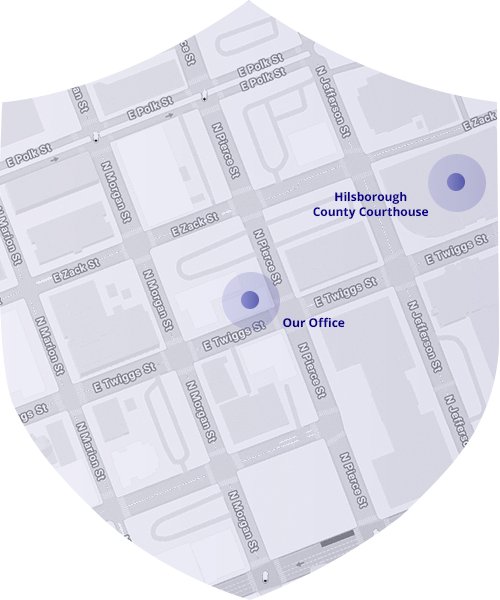
620 E. Twiggs Street, Suite 205, Tampa, FL 33602
Serving Hillsborough, Pinellas, and Pasco Counties
25+ Years of Criminal Defense Experience | Former Chief Operations Officer, Hillsborough County Public Defender’s Office
Related Articles
Tampa Criminal Defense Attorney
The Constitutional Right to Speedy Trial
While Early Intervention from a Tampa Criminal Defense Lawyer is Crucial
Visit Us

Suite #205
Tampa, FL 33602
Contact Us Now
Free Legal Consultation (813) 727-7159