- Free Consultation 24/7: (813) 727-7159 Tap Here To Call Us


From First DUI to Death Penalty


Forensic Interviews in Tampa Child Abuse Cases



Understanding What Happens at Mary Lee’s House — And How to Challenge Contaminated Testimony
Updated January 18, 2026
| Key Takeaway In Tampa child abuse and sex offense cases, the child’s statement often serves as the most damaging evidence against the accused. However, a forensic interview at a Children’s Advocacy Center like Mary Lee’s House does not guarantee reliable testimony. Memory contamination from parents, teachers, or investigators before the interview can create false narratives that even perfectly conducted interviews cannot undo. Challenging the reliability of these statements requires an attorney who understands both the science of memory and the investigative protocols. |
When the State accuses someone of child abuse or sex offenses in Tampa, the most damaging evidence frequently comes from a single source: the child’s statement. However, obtaining this statement involves far more complexity than a police officer asking questions in a living room. In Hillsborough County, these high-stakes interrogations typically occur at a Children’s Advocacy Center (CAC), such as Mary Lee’s House in Tampa.
Tampa Criminal Defense Attorney Rocky Brancato brings over 25 years of experience defending clients against these serious allegations. As former Chief Operations Officer of the Hillsborough County Public Defender’s Office, he led and mentored a staff of over 100 attorneys. Additionally, he spent years in an elite legal unit handling exclusively child abuse, sex crimes, and homicide cases. Consequently, he knows exactly what happens behind the mirror at Mary Lee’s House — and he knows how to challenge the reliability of what occurs inside.
What is a Forensic Interview?
| Definition: Forensic Interview A forensic interview is a structured conversation with a child conducted by a specially trained civilian interviewer — not a police officer. The purpose is to obtain a legally defensible statement from the child in a neutral environment. In Hillsborough County, most forensic interviews occur at Mary Lee’s House, Tampa’s Children’s Advocacy Center. |
Forensic interviewers follow rigorous protocols designed to create a neutral environment and minimize suggestion. Ideally, the process involves open-ended questioning, video recording for court use, and observation by a multidisciplinary team. Nevertheless, the presence of protocols does not guarantee accurate testimony.
How the Forensic Interview Process Works
| Stage | What Happens | Defense Considerations |
| Neutral Questioning | Interviewer uses open-ended questions like “Tell me about that” rather than leading questions | Did interviewer deviate from protocol? Were questions actually leading? |
| The “Earpiece” Dynamic | Detectives, CPIs, and prosecutors watch from behind one-way mirror, feeding questions via earpiece | Did the team push for specific answers? Was there bias in suggested questions? |
| Video Recording | Every word and gesture is recorded for court use | Does recording show interviewer frustration, pressure, or protocol violations? |
| Multidisciplinary Team | Law enforcement, DCF, prosecutors, and medical staff collaborate | Did team members have predetermined conclusions before interview began? |
The Real Danger: Contaminated Testimony
| Critical Warning: Memory Contamination A major problem in Tampa child abuse cases arises when a child’s memory becomes contaminated before they ever reach the forensic interviewer. Well-meaning but untrained individuals — parents, teachers, or foster care providers — often speak with the child first. Unfortunately, these early discussions can introduce confirmation bias and create false memories that no subsequent interview can undo. |
Understanding how contamination occurs is essential for mounting an effective defense. Research on child memory and suggestibility demonstrates that children are particularly vulnerable to adult influence, especially from authority figures they want to please.
How Memory Contamination Occurs
| Contamination Type | How It Happens | Example |
| Leading Questions | Repeated questioning with embedded assumptions | Parent repeatedly asks “Did he touch you?” until child says yes |
| Authority Influence | Children alter stories to match what they believe adults want to hear | Child changes answer after seeing adult’s disappointed reaction |
| The “Scripted” Narrative | Repeated telling cements inaccurate story as false memory | Child recites rehearsed narrative at forensic interview |
| Confirmation Bias | Adults interpret ambiguous statements as confirmations | Teacher assumes “He hurt me” refers to abuse rather than scolding |
| Source Confusion | Child cannot distinguish between actual memory and suggested scenario | Child describes scene from conversation as if personally experienced |
| The Science of False Memories in Children Once a child repeats an inaccurate story enough times, it cements in their mind as a false memory. Consequently, even a perfectly conducted forensic interview at Mary Lee’s House cannot undo this damage. The child is simply reciting a script they learned at home — and they genuinely believe it happened. This makes identifying pre-interview contamination crucial to the defense. |
How We Challenge Forensic Interviews
At The Brancato Law Firm, we never take forensic interviews at face value. Instead, we meticulously dissect every aspect of the investigation to identify weaknesses the prosecution hopes you will not notice. Our approach combines legal expertise with understanding of child psychology and memory science.
Critical Points We Investigate
| Investigation Area | What We Examine | Why It Matters |
| Pre-Interview Timeline | Who talked to the child first? When did allegations first surface? | Identifies potential contamination sources before official interview |
| Improper Techniques | Did interviewer break protocol? Did they become suggestive when child denied abuse? | Protocol violations undermine reliability of statement |
| Investigator Bias | Did detective behind mirror push for “confession” rather than truth? | Reveals predetermined conclusions driving the investigation |
| Adult Witness Depositions | Aggressively question parents, teachers, and caregivers | Exposes coaching or influence before tape started rolling |
| Video Analysis | Review every moment of recorded interview | Identifies subtle pressure, leading questions, or interviewer frustration |
| Defense Strategy: Attacking Reliability The State’s case often rises or falls on the forensic interview. If we can demonstrate that interview technique was fundamentally flawed, that the child received coaching before the interview, or that investigators pursued confirmation rather than truth, we can undermine the prosecution’s entire case. This is why experienced defense representation is essential from the earliest stages. |
Understanding Mary Lee’s House
| What is Mary Lee’s House? Mary Lee’s House is a Children’s Advocacy Center (CAC) located in Tampa, Florida. It serves as the primary facility where law enforcement, child protection professionals, and medical staff collaborate to investigate child abuse allegations in Hillsborough County. Most forensic interviews in serious child abuse cases occur at this location. |
The facility includes interview rooms designed to appear child-friendly, observation areas with one-way mirrors, and medical examination rooms. While the CAC model aims to reduce trauma to children by consolidating services, the collaborative nature of investigations creates opportunities for bias and confirmation-seeking behavior among team members.
The Multidisciplinary Team Approach
At Mary Lee’s House, multiple agencies work together during the investigation. This multidisciplinary team typically includes Tampa Police or Hillsborough County Sheriff’s detectives, Child Protective Investigators from DCF, forensic interviewers trained in child questioning protocols, medical professionals who conduct examinations, and often prosecutors from the State Attorney’s Office. While this collaboration supposedly serves the child’s interests, it can also create an environment where team members reinforce each other’s assumptions.
Frequently Asked Questions About Forensic Interviews
Mary Lee’s House is a Children’s Advocacy Center (CAC) in Tampa where law enforcement, child protection professionals, and medical staff collaborate to investigate child abuse allegations. Most forensic interviews in Hillsborough County occur at this facility because it provides a centralized location for the multidisciplinary team approach. The environment is designed to appear child-friendly, though the presence of multiple investigators observing via one-way mirror creates significant concerns about bias.
No, parents are strictly prohibited from watching the interview or being in the room while it occurs. This rule exists to prevent parents from signaling answers to the child, whether intentionally or unintentionally. However, law enforcement and other team members observe from behind a one-way mirror and can suggest questions to the interviewer via earpiece. This dynamic raises important questions about who actually controls the interview process.
Yes, under certain circumstances. If we can prove that the interview technique was fundamentally flawed, coercive, or that the child was deemed incompetent to distinguish truth from lies, the judge may suppress the statement or limit its use in court. Additionally, evidence of pre-interview contamination or coaching can significantly undermine the statement’s reliability, even if the court admits it into evidence.
Usually not, though it frequently serves as the primary evidence. The State also looks for medical evidence and corroborating witnesses to support their case. Nevertheless, in many cases, the child’s statement constitutes the only direct evidence the State possesses. This reality makes attacking the interview’s reliability the most critical component of an effective defense strategy.
Memory contamination occurs when a child’s recollection becomes altered through suggestion, leading questions, or repeated questioning by adults before the formal forensic interview. Once contamination occurs, children may develop false memories that feel completely real to them. Consequently, even a perfectly conducted forensic interview cannot undo this damage — the child simply recites what they have come to believe happened, regardless of whether it actually occurred.
Well-meaning adults often contaminate memories without realizing it. Repeated leading questions like “Did he touch you?” can cause a child to eventually say yes simply to end the questioning or please the adult. Similarly, visible emotional reactions from adults can signal to children what answer is expected. Children are naturally suggestible and often alter their stories to match what they believe authority figures want to hear.
Contact an experienced criminal defense attorney immediately — before speaking with investigators. Do not attempt to contact the child or discuss the allegations with family members who may become witnesses. Your attorney should obtain the full video recording of the forensic interview, investigate the pre-interview timeline to identify potential contamination, and examine whether investigators followed proper protocols.
Why choose The Brancato Law Firm for child abuse defense?
Attorney Rocky Brancato brings over 25 years of criminal defense experience, including years in an elite unit handling exclusively child abuse, sex crimes, and homicide cases. As former Chief Operations Officer of the Hillsborough County Public Defender’s Office, he led and mentored a staff of over 100 attorneys. Throughout his career, he has mentored generations of criminal defense lawyers. This specialized background means he understands forensic interview protocols, the science of child memory, and how to expose contamination and investigator bias.
Protect Your Future. Call Now.
Facing allegations based on a child’s statement is a nightmare that requires experienced legal representation. Tampa Criminal Defense Attorney Rocky Brancato and The Brancato Law Firm, P.A. understand the science of memory, the rules of evidence, and exactly how to challenge contaminated testimony.
Call (813) 727-7159 Now for a Confidential Consultation
The Brancato Law Firm, P.A.
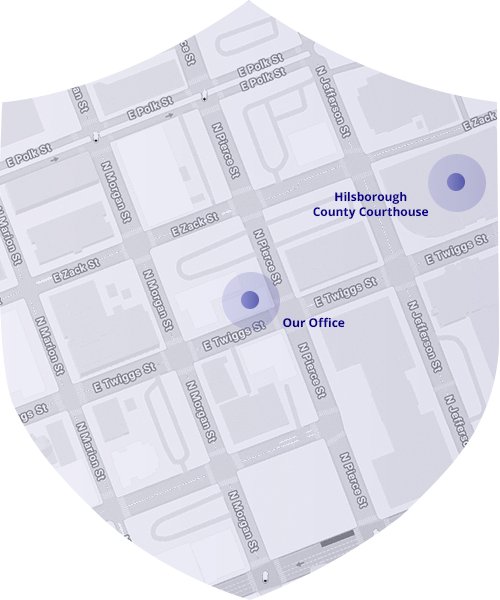
620 E Twiggs Street, Suite 205, Tampa, FL 33602
Serving Hillsborough, Pinellas, and Pasco Counties
Related Resources
Tampa Child Abuse Defense Attorney
Tampa Sex Crimes Defense Attorney
Medical Opinion in Child Abuse Cases
SANE Nurse Testimony: What Tampa Defendants Need to Know

Visit Us

Tampa, FL 33602
Contact Us Now
Free Legal Consultation (813) 727-7159