- Free Consultation 24/7: (813) 727-7159 Tap Here To Call Us


From First DUI to Death Penalty


Florida Court Reverses Cannabis Trafficking Conviction


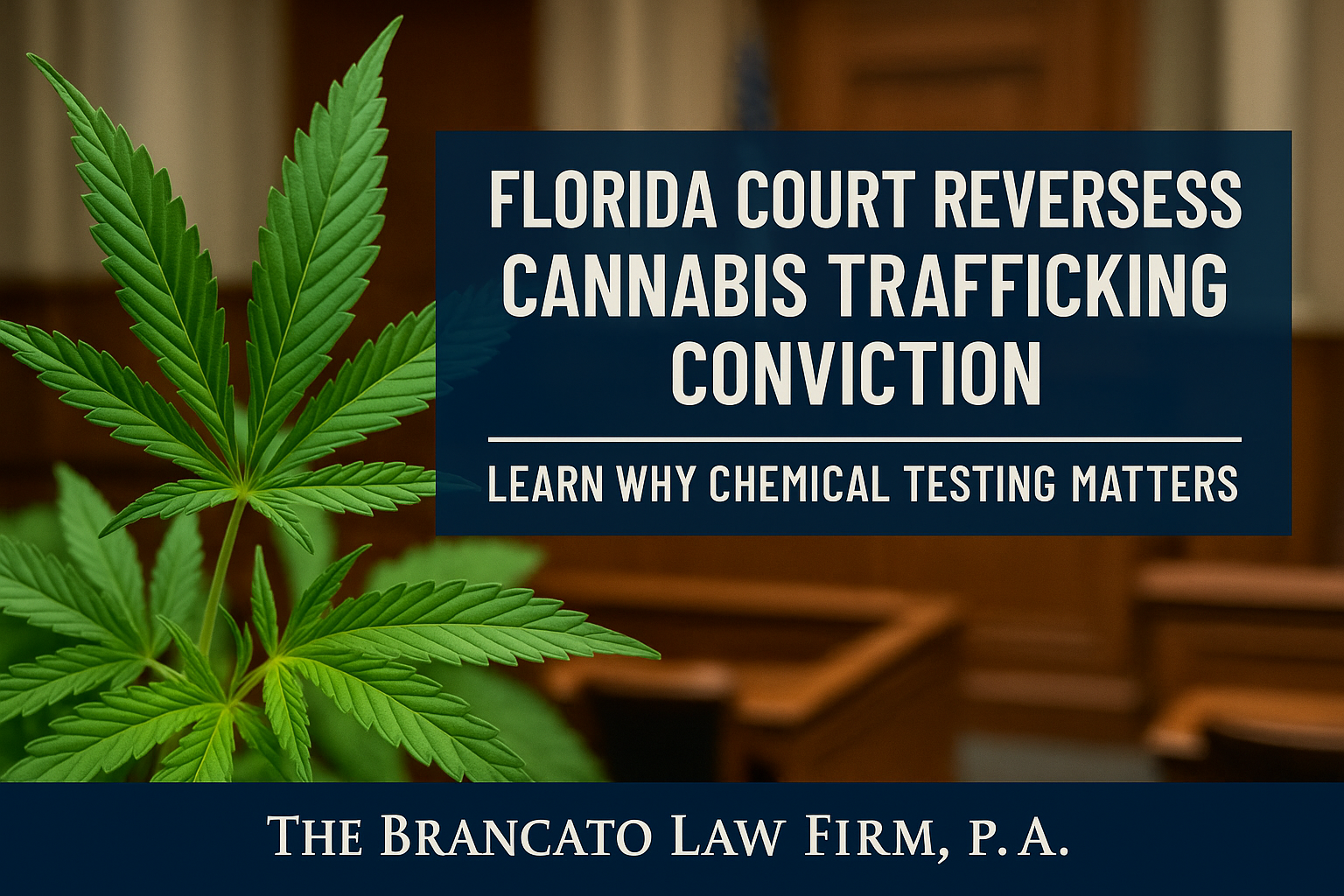
Hemp Legalization Requires Chemical Testing to Prove Illegal Cannabis
Campbell v. State, No. 2D2023-0651 (Fla. 2d DCA Mar. 26, 2025)
| Case Summary Holding: Florida’s Second DCA reversed a cannabis trafficking conviction because the State only tested 1 of 50 bundles—failing to prove the total quantity exceeded the legal hemp THC threshold. Key Rule: After hemp legalization, prosecutors cannot rely on appearance or smell alone. Chemical testing must confirm THC content exceeds 0.3% to prove illegal cannabis. Result: Trafficking conviction reversed; case remanded for reduced conviction based only on the single tested sample. |
On March 26, 2025, Florida’s Second District Court of Appeal issued a ruling that could reshape cannabis prosecutions throughout the state. In Campbell v. State, the court reversed a major trafficking conviction from Hillsborough County—not because the defendant proved the substance was legal hemp, but because the State failed to prove it wasn’t.
This decision highlights a critical shift in Florida drug law: after hemp legalization, prosecutors can no longer rely on what something looks like or smells like. They need laboratory proof. A Tampa Drug Crimes Attorney can help you if you get arrested for lawful hemp.
Hemp vs. Illegal Cannabis: The Legal Distinction
| Characteristic | Legal Hemp | Illegal Cannabis | |
| THC Content | ≤ 0.3% (legal) | > 0.3% (illegal) | |
| Appearance | Green, leafy plant material | Green, leafy plant material | |
| Smell | Identical to marijuana | Identical to hemp | |
| K-9 Detection | Dogs alert to both | Dogs alert to both | |
| Legal Status | Legal under 2018 Farm Bill | Schedule I controlled substance | |
| How to Distinguish | Laboratory chemical testing ONLY | ||
The 2018 Federal Farm Bill and Florida’s State Hemp Program legalized hemp—defined as cannabis containing 0.3% THC or less. Because hemp and marijuana are visually and aromatically identical, the only way to distinguish them is through laboratory testing.
What Happened in the Campbell Case
In July 2022, Tampa International Airport police flagged a flight arriving from Denver, Colorado. A K-9 unit alerted to two large duffle bags, which Pryce Campbell later claimed at baggage claim. Officers seized the bags pending a warrant.
Inside, police found fifty vacuum-sealed bundles of a green, leafy substance—over 60 pounds total. The Florida Department of Law Enforcement (FDLE) tested only one of the fifty bundles, confirming the presence of cannabis. Based on the combined weight of all bundles, the State charged Campbell with trafficking cannabis between 25 and 2,000 pounds—a first-degree felony.
How the Defendant’s Testimony Changed Everything
At trial, Campbell testified that he believed the bundles contained hemp, not marijuana. He explained that he purchased them in Oregon for $50 per bundle—significantly lower than the street value of illegal cannabis, which would have been approximately $1,000 per bundle.
This testimony raised a critical question: if the substance was illegal marijuana worth $50,000 on the street, why would Campbell pay only $2,500 for it?
Campbell’s testimony accomplished something crucial. By offering a credible alternative explanation—legal hemp purchased at hemp prices from a hemp-legal state—he forced the State to prove the substance was illegal cannabis. And here’s where the State’s case collapsed.
The Court’s Analysis
| Issue | Court’s Ruling |
| Visual/Smell ID | Every State witness admitted they cannot distinguish hemp from marijuana by sight or smell |
| Burden of Proof | Once defendant raised plausible hemp defense, State had duty to chemically exclude hemp |
| Testing Adequacy | Testing 1 of 50 bundles insufficient to prove trafficking quantity |
| Trafficking Threshold | State failed to prove beyond reasonable doubt that total weight exceeded 25 lbs of illegal cannabis |
The Second DCA reversed the trafficking conviction and remanded for a reduced conviction based solely on the single tested sample. Campbell’s case was sent back for resentencing on the lesser charge.
What This Means for Cannabis Cases in Florida
Campbell establishes several critical principles that apply to cannabis prosecutions throughout Florida:
- Visual and Smell Evidence Is No Longer Enough: After hemp legalization, prosecutors cannot prove illegal cannabis based on appearance, odor, or K-9 alerts alone.
- Chemical Testing Is Required: The State must verify THC content exceeds 0.3% through laboratory analysis to prove the substance is illegal.
- Trafficking Charges Require Testing the Full Quantity: When weight determines the charge level, testing a sample isn’t sufficient—the State must prove the entire quantity is illegal.
- Defendant Testimony Can Shift the Burden: By raising a credible hemp defense—supported by facts like price and origin—defendants can force prosecutors to prove illegality through testing.
For more, see our post on how drug weight is proven in a Florida trafficking case.
Frequently Asked Questions
Can police still arrest me based on the smell of cannabis?
Yes—police can still make arrests based on probable cause, including odor. However, Campbell makes clear that prosecutors cannot convict based on smell alone. They must prove through chemical testing that the THC content exceeds 0.3%.
Does this case apply to simple possession charges?
Yes. While Campbell involved trafficking, the underlying principle applies to any cannabis charge: the State must prove the substance is illegal cannabis (>0.3% THC), not legal hemp. However, the testing requirement becomes most critical in trafficking cases where weight determines severity.
What if my case involved cannabis shipped from a state where it’s legal?
Origin from a legal state strengthens a hemp defense. As Campbell demonstrated, purchasing cannabis products from states with legal hemp programs—at prices consistent with hemp—supports the argument that the substance was legal. However, marijuana remains illegal in Florida regardless of where it originated.
Should I testify in my cannabis case?
That depends entirely on the facts of your case. Campbell’s testimony was effective because it was credible, consistent with the evidence (low price, legal origin state), and raised a specific legal defense. However, testifying always carries risks. This decision requires careful strategic analysis with your attorney.
Facing Cannabis Charges in Tampa?
Hemp legalization changed Florida drug law fundamentally. Prosecutors who rely on outdated methods—visual identification, odor, K-9 alerts—may not be able to sustain convictions when defendants demand scientific proof.
I’m Tampa Attorney Rocky Brancato. For over 25 years, I have defended clients facing drug charges throughout Tampa Bay. If you’re facing cannabis trafficking, possession, or other drug charges, I can evaluate whether the State has the chemical evidence necessary to prove their case—and whether a hemp defense applies to your situation.
Call (813) 727-7159 for a Confidential Consultation
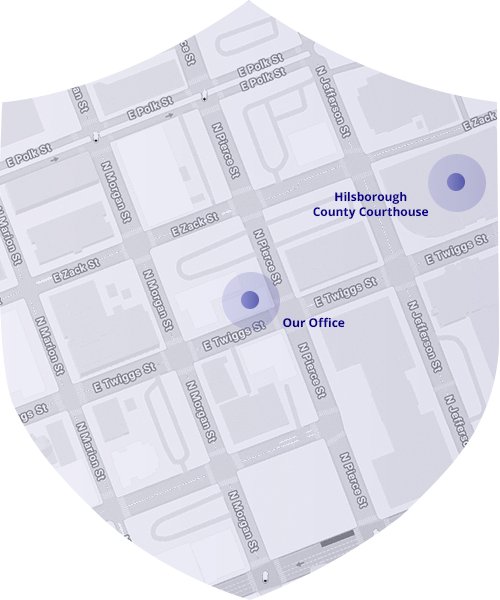
620 E Twiggs Street, Suite 205, Tampa, FL 33602
Serving Hillsborough, Pinellas, and Polk.
Case Citation: Pryce M. Campbell, III v. State of Florida, No. 2D2023-0651 (Fla. 2d DCA Mar. 26, 2025). See also 2018 Federal Farm Bill (Agricultural Improvement Act of 2018); Florida State Hemp Program (§581.217, Fla. Stat.).
Visit Us
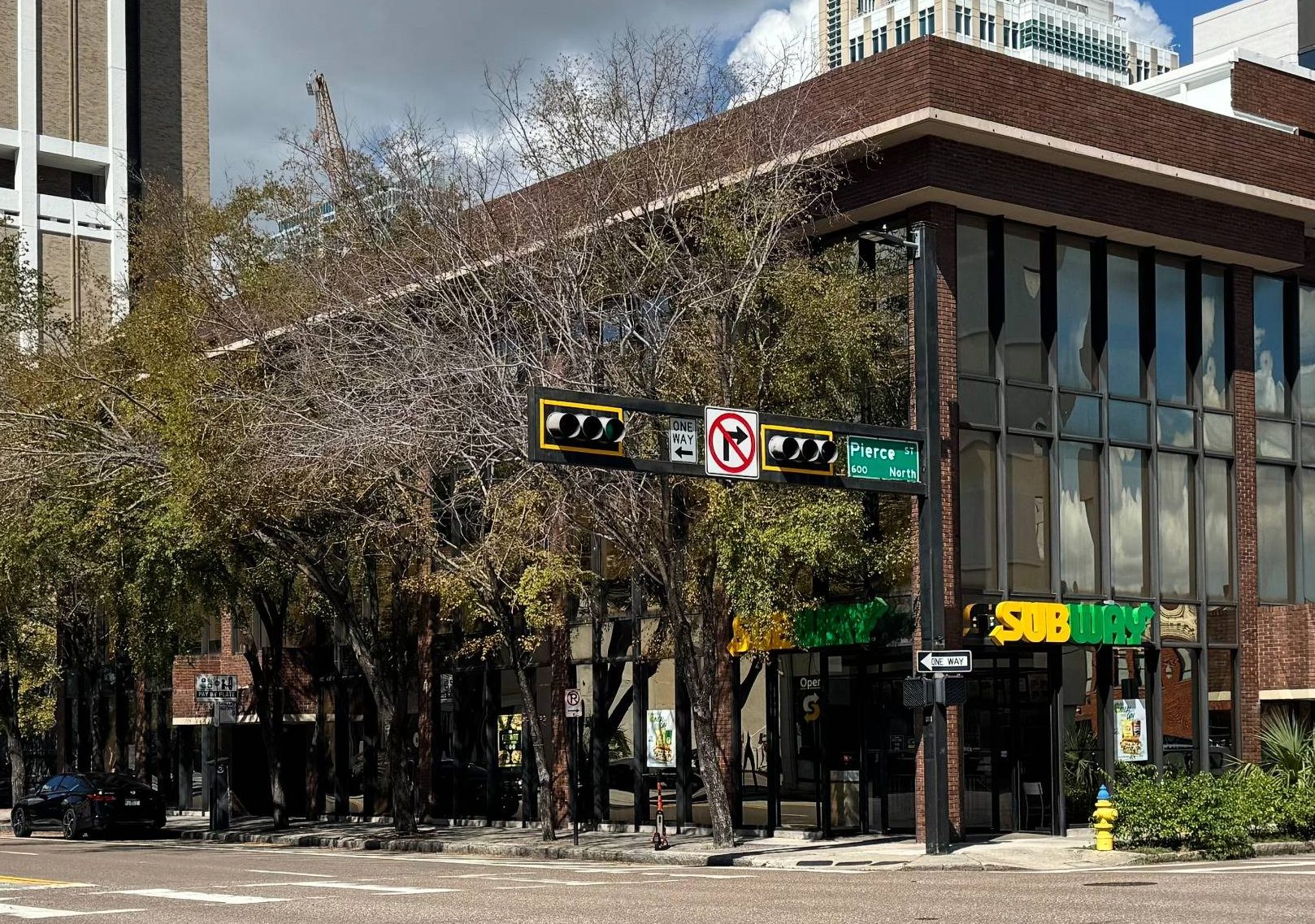
Tampa, FL 33602
Contact Us Now
Free Legal Consultation (813) 727-7159