- Free Consultation 24/7: (813) 727-7159 Tap Here To Call Us


From First DUI to Death Penalty



Mental Health Defense Tampa Attorney | Brancato Law Firm, P.A.


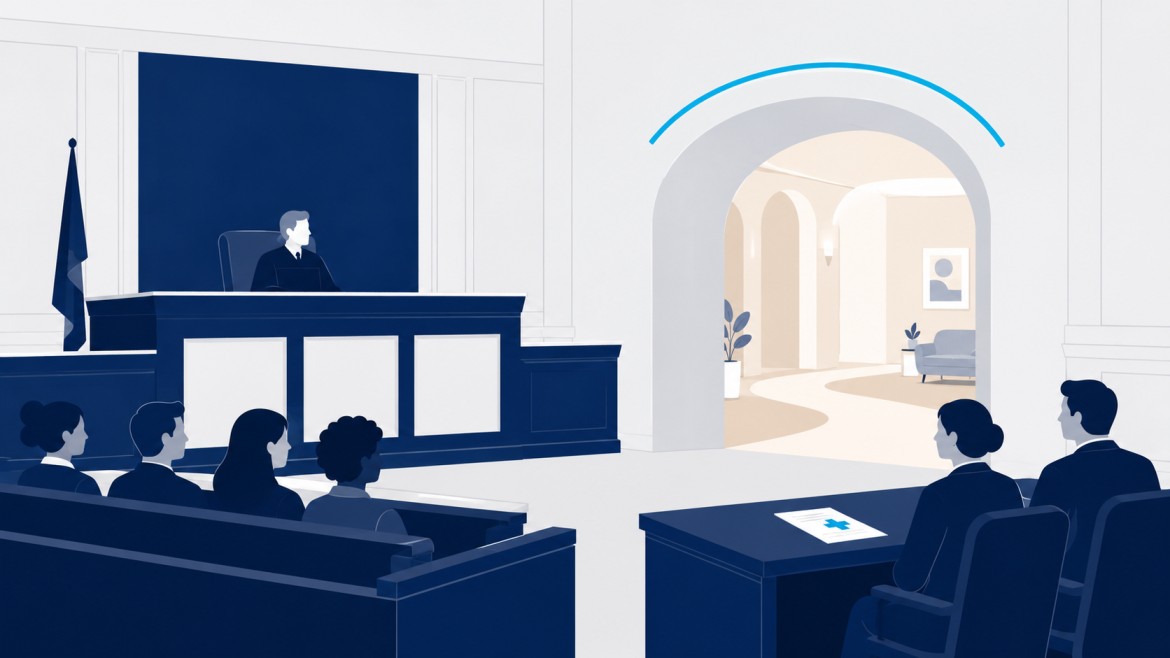
Your brother was arrested again. He stopped taking his medication three weeks ago. Now he is in the Hillsborough County Jail, hearing voices and facing felony charges he does not understand. The jail medical staff won’t return your calls, and you feel completely alone.
Mental health defense in Tampa refers to legal strategies that account for a defendant’s psychiatric condition, including competency challenges, the insanity defense, and diversion through specialized courts like Mental Health Court and Veterans Treatment Court. The right strategy can be the difference between prison and treatment. Florida law provides pathways to help defendants get care instead of a conviction. However, accessing these options requires an attorney who knows the system inside and out.
The Brancato Law Firm has defended clients with mental illness throughout Tampa Bay for over 25 years. Founder Rocky Brancato served as Chief Operations Officer of the Hillsborough County Public Defender’s Office, directing strategy on thousands of cases involving schizophrenia, bipolar disorder, and PTSD. He is death-qualified under the Rules of the Florida Supreme Court, a credential reflecting the rigorous training required for the most serious criminal matters. The Brancato Law Firm, P.A. can help with your criminal mental health case.
Mental Illness in the Florida Criminal Justice System
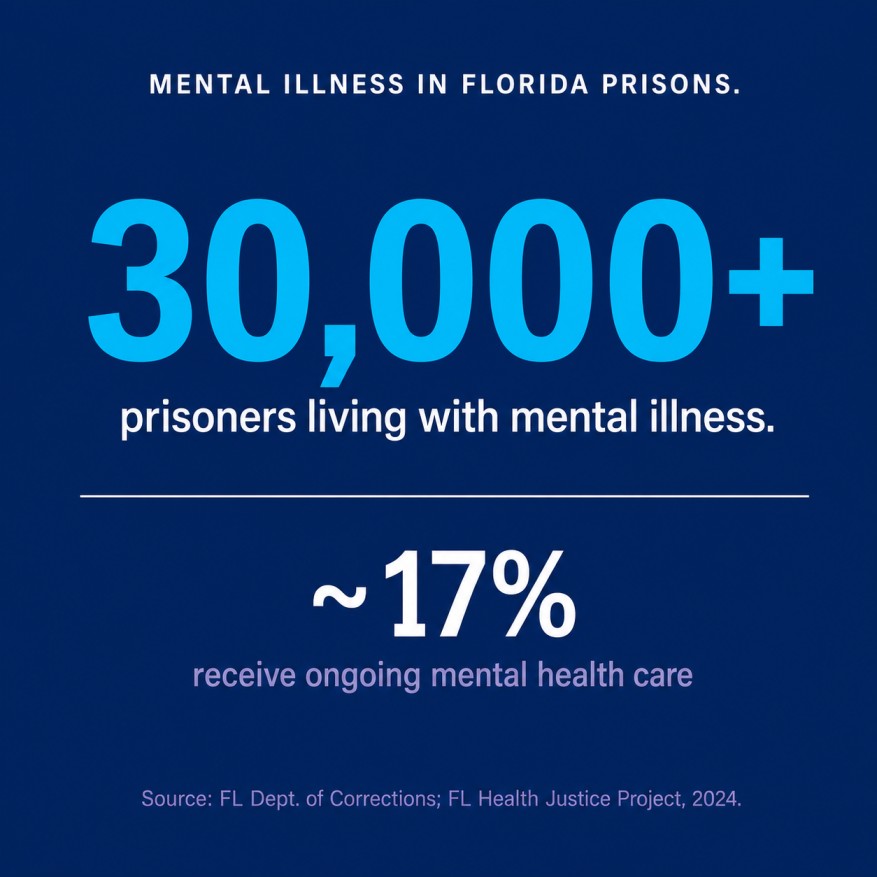
The criminal justice system was not designed to treat mental illness. According to the Florida Department of Corrections, approximately 17% of Florida state prison inmates receive ongoing mental health care, and a 2024 Florida Health Justice Project analysis estimated more than 30,000 Florida prisoners (roughly one-third of the state prison population) live with mental illness. Many of these individuals never received appropriate treatment before their arrest.
Florida statutes provide specific mechanisms that allow us to seek diversion. The 2025 Florida Legislature also expanded pretrial mental health diversion options through new misdemeanor and pretrial felony diversion programs under Florida Statutes §§ 916.135 and 916.136. Time matters. An experienced mental health defense Tampa lawyer can often intervene before the State Attorney files formal charges.
Mental Health Defense Strategies in Florida
Mental illness affects criminal cases in several ways. We use different legal tools depending on your specific situation.
Comparison: Defense Strategies for Mental Illness
| Strategy | When It Applies | Potential Outcome |
| Competency to Proceed | Defendant cannot understand the trial. | Proceedings paused for treatment. |
| Insanity Defense | The defendant did not know right from wrong. | “Not Guilty by Reason of Insanity.” |
| Mental Health Court | Eligible felony charges + qualifying diagnosis. | Charges reduced or dismissed. |
| Veterans Court | Service-connected PTSD/TBI. | VA services and peer support. |
| Mental Health Mitigation | Illness affected behavior. | Treatment-based probation. |
Specialized Courts in Hillsborough County
Tampa offers specialized courts designed to treat rather than punish.
Tampa Mental Health Court (Division “M”)
Hillsborough County’s mental health program operates as Mental Health Criminal Division “M” under Administrative Order S-2023-046, issued by the Thirteenth Judicial Circuit and effective October 1, 2023. Division “M” handles four categories of defendants:
- Defendants eligible for the Mental Health Pre-Trial Intervention (MHPTI) program
- Defendants eligible for a post-adjudicatory mental health program
- Defendants found incompetent to proceed on second-degree or third-degree felonies
- All defendants found not guilty by reason of insanity
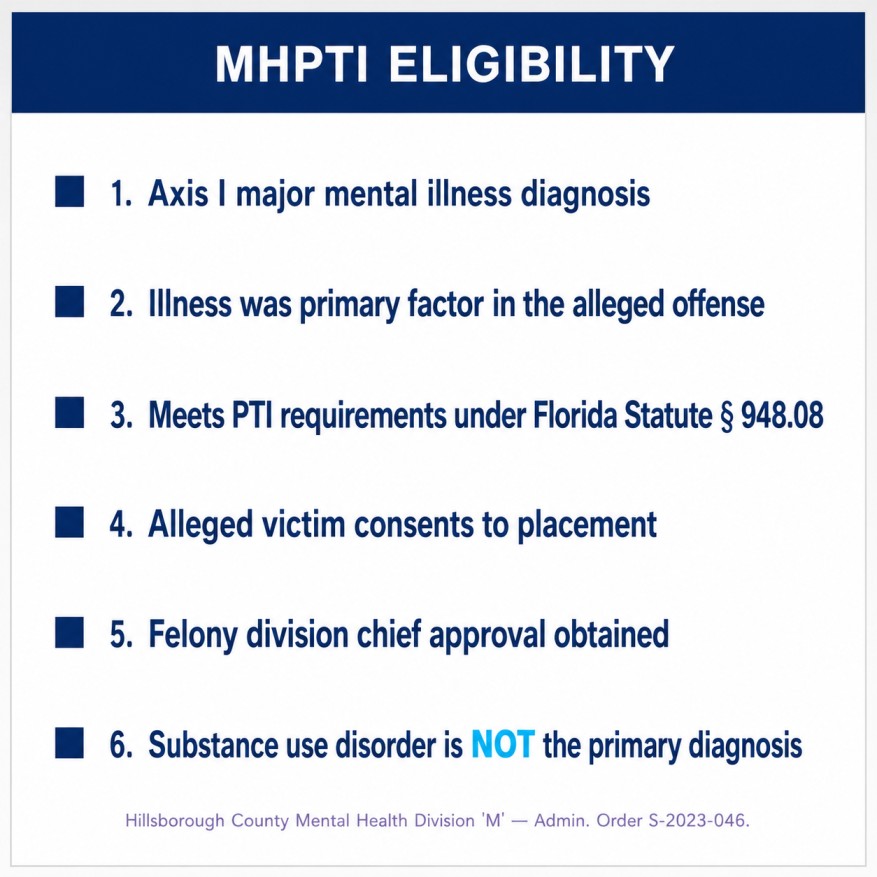
To qualify for MHPTI, a defendant must meet pre-trial intervention requirements under Florida Statute § 948.08, have an Axis I major mental illness (such as schizophrenia, bipolar disorder, major depressive disorder, or PTSD) that was the primary factor in the alleged crime, and obtain victim consent along with felony division chief approval. Substance use disorder cannot be the primary diagnosis.
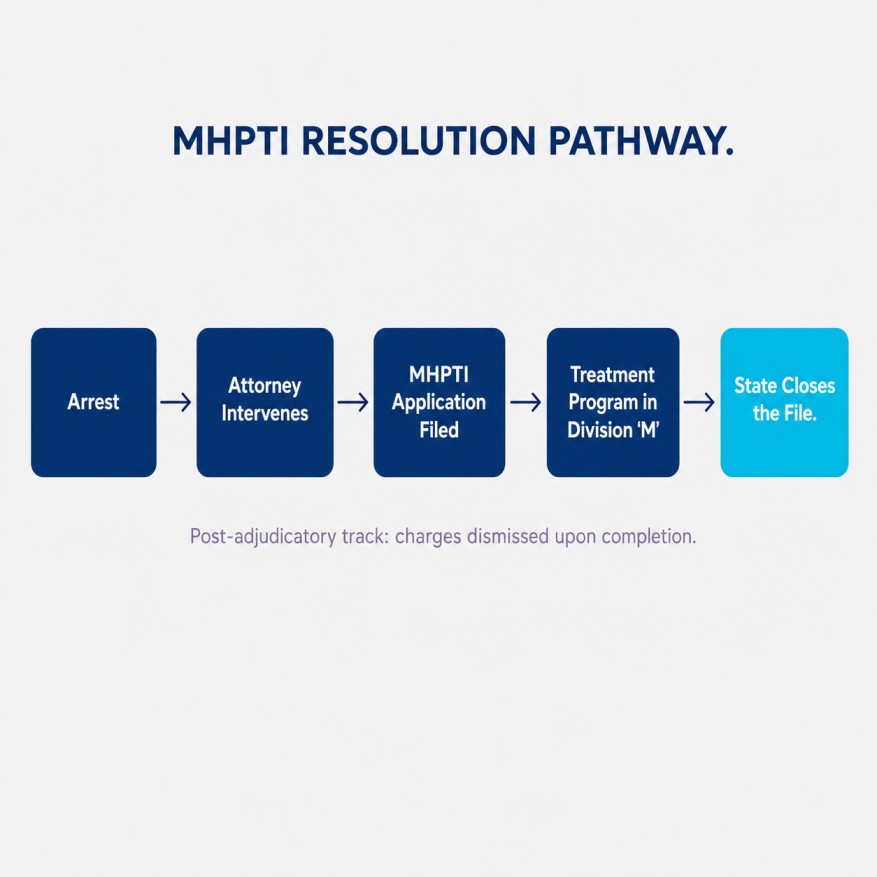
Successful MHPTI completion ends with the State closing the file. Successful post-adjudicatory program completion results in dismissal of the charges.
Tampa Veterans Treatment Court
This docket serves veterans with service-related conditions like PTSD or traumatic brain injury. The court connects veterans with VA services and peer mentors who understand military service.
Tampa Drug Court
Many defendants struggle with co-occurring substance use disorders. Drug Court addresses both addiction and mental health simultaneously. It offers a chance to avoid incarceration through intensive recovery work.
Time Limits for Charges When a Defendant Remains Incompetent
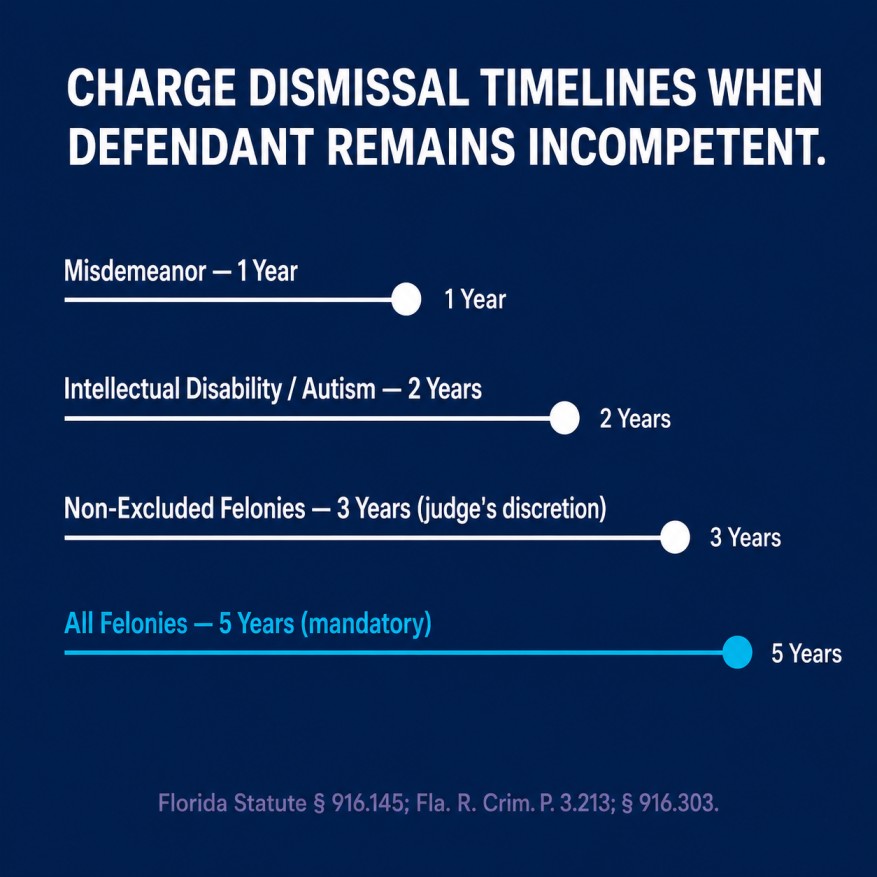
Under Florida Statute § 916.145, charges against a felony defendant who remains incompetent must be dismissed without prejudice after 5 continuous, uninterrupted years of incompetency. A judge may dismiss charges as early as 3 years after the incompetency finding, but only for charges that are not on the statute’s list of excluded serious offenses. That list includes murder, manslaughter, sexual battery, robbery, kidnapping, armed burglary, aggravated battery, aggravated assault with a deadly weapon, any forcible felony under § 776.08, and any offense involving a firearm.
For misdemeanor charges, dismissal occurs after 1 year under Florida Rule of Criminal Procedure 3.213. For incompetency based on intellectual disability or autism, dismissal occurs after no more than 2 years under § 916.303. Even after dismissal, the State may refile charges if the defendant later becomes competent.
Baker Act Defense
The Baker Act, formally Florida’s Mental Health Act, lets a judge, a law enforcement officer, or a qualifying mental health professional order an involuntary examination when someone appears to have a mental illness and, because of that illness, cannot care for themselves or may be a danger to themselves or others. The examination takes place at a state-designated receiving facility and can last up to 72 hours, with the clock starting the moment the person arrives.
The law is meant to be a safeguard, but it is sometimes applied too quickly or on thin evidence. Watching a family member in crisis is frightening, and the process can sweep up people who do not actually meet the legal criteria for a hold.
Those 72 hours matter. Before the facility decides whether to release your loved one, transition them to voluntary treatment, or petition a court for longer involuntary placement under Florida Statute § 394.467, there is a narrow window to act. When the facts support it, we can challenge the basis for the petition, show the court that a support system and a treatment plan are already in place, and advocate for release before the situation escalates further.
Note: We currently handle Baker Act matters only when they are connected to an active criminal case. If your family member is facing criminal charges alongside the hold, call (813) 727-7159 to discuss the situation.
Working with Mental Health Experts in Criminal Cases
Effective mental health defense Tampa strategy requires a team approach. We don’t just read records; we work with a trusted network of clinical professionals.
Our Expert Network
| Expert Type | Role in Your Defense |
| Forensic Psychiatrists | Provide diagnoses and testimony on mental state. |
| Licensed Psychologists | Conduct testing and competency evaluations. |
| Mitigation Specialists | Investigate background to present a complete picture. |
For a deeper look at how cognitive impairments factor into criminal cases, see our article on forensic psychiatry and brain damage in criminal defense.
Frequently Asked Questions
Can mental illness get my charges dropped?
Yes, in some cases. Programs like Mental Health Court or Drug Court can lead to the dismissal of charges upon successful completion. Additionally, under Florida Statute § 916.145, if a felony defendant remains incompetent for 5 continuous years, charges must be dismissed without prejudice. The court may dismiss certain non-listed felony charges after 3 years.
What conditions qualify for Hillsborough County’s Mental Health Program?
Hillsborough County’s Mental Health Pre-Trial Intervention program requires an Axis I major mental illness that was the primary factor in the alleged offense. This typically includes schizophrenia, schizoaffective disorder, bipolar disorder, major depressive disorder, and PTSD. Substance use disorder cannot be the primary diagnosis. The defendant must also meet PTI eligibility under Florida Statute § 948.08, and the alleged victim must consent to the placement.
What should I do if my family member is Baker Acted?
Contact an attorney immediately. Baker Act holds have strict time limits. We can review the circumstances and challenge unlawful detention to prevent unnecessary stays in a facility.
Does Tampa have a court for veterans?
Yes. Tampa Veterans Treatment Court is a specialized docket within the Hillsborough County criminal justice system designed for veterans with service-connected conditions like PTSD and traumatic brain injury. It offers resources that civilian courts cannot provide.
What is the difference between competency and insanity?
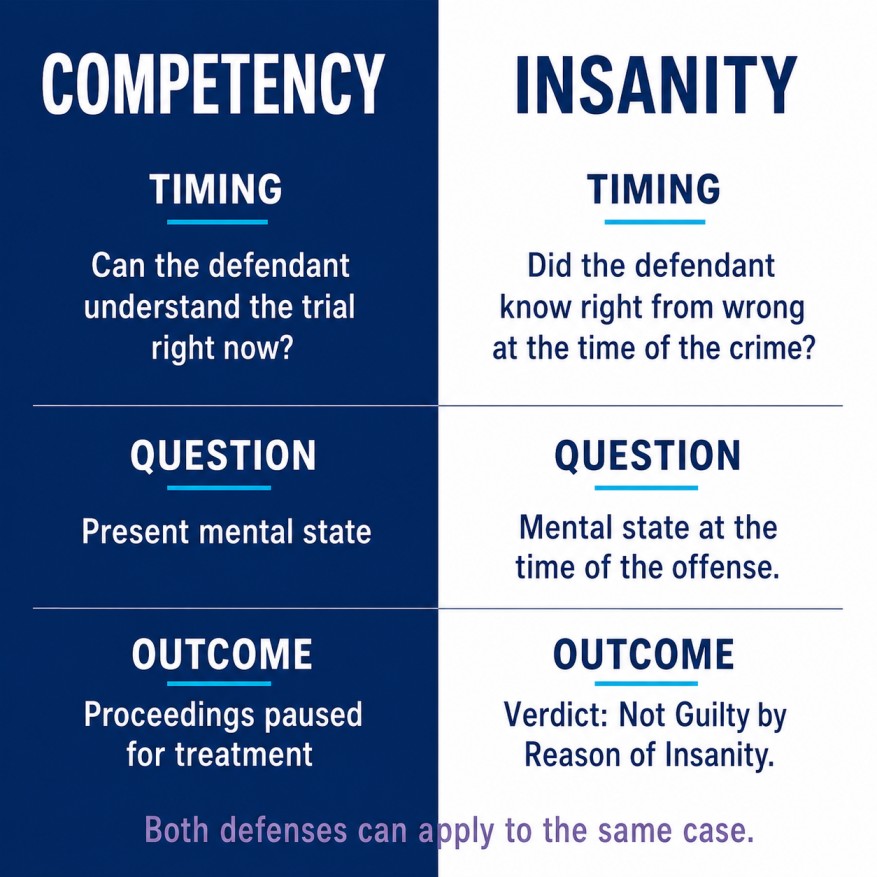
Competency determines if the defendant currently understands the trial. Insanity determines if the defendant knew right from wrong at the time of the crime. Both defenses can apply to the same case.
Get Help for Your Loved One Today
If your family member is sitting in jail without their medication, time matters. The sooner we intervene, the sooner we can pursue treatment instead of prison.
We offer confidential consultations to families dealing with this situation.
Call (813) 727-7159 today to discuss your family’s situation.
The Brancato Law Firm, P.A.
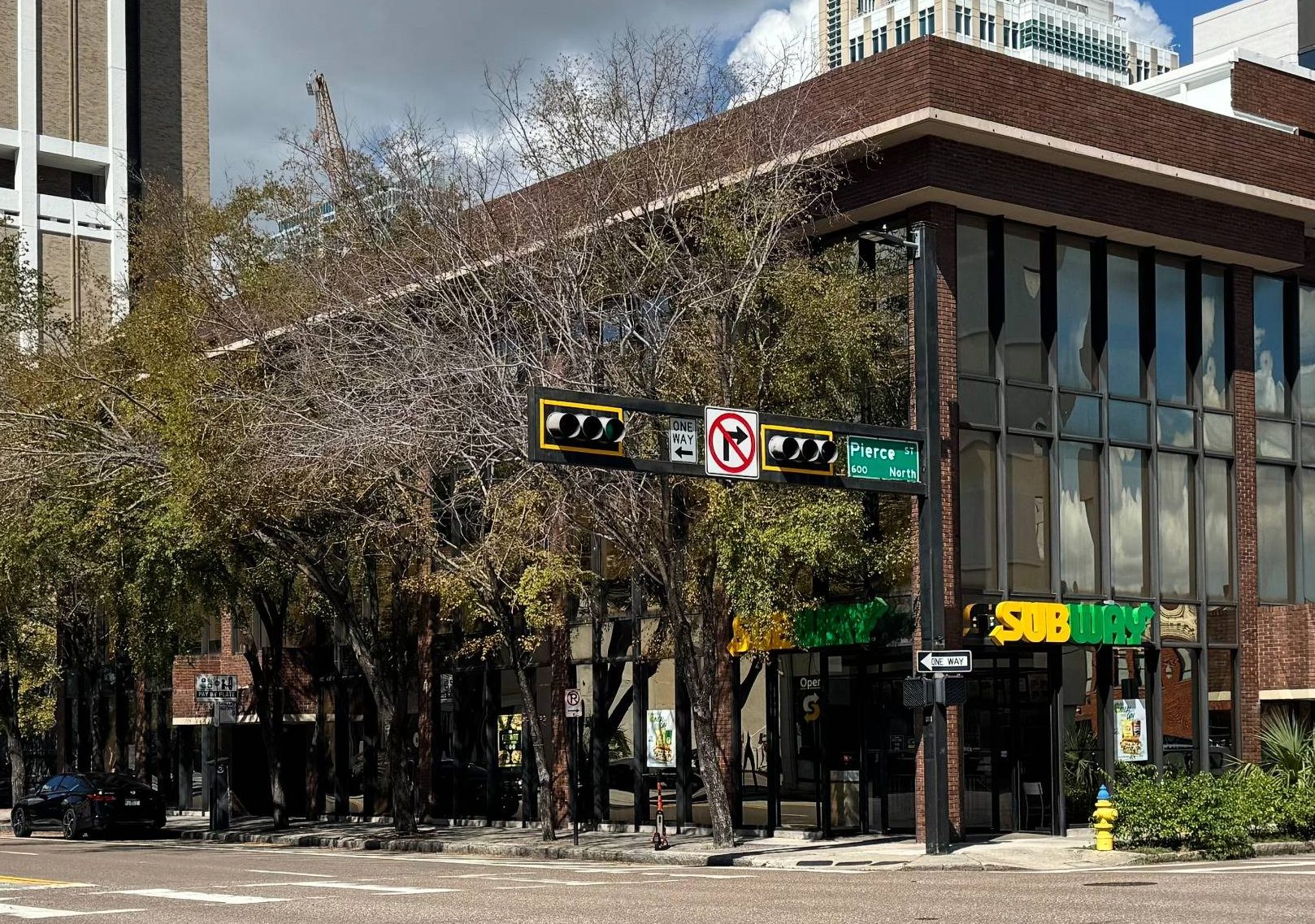
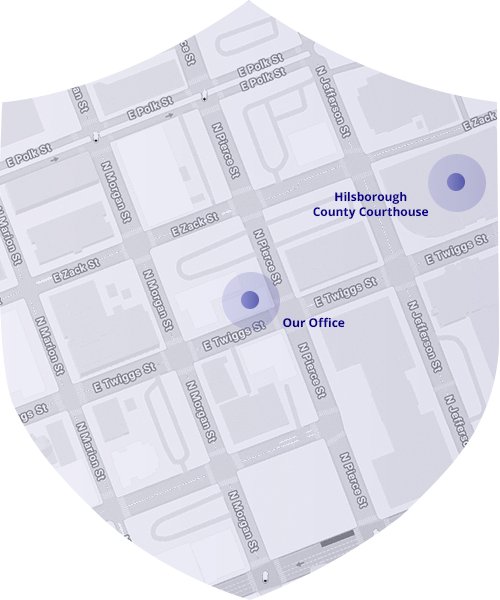
620 E. Twiggs Street, Suite 205, Tampa, FL 33602.
The Brancato Law Firm, P.A. is a Tampa-based criminal defense practice serving clients exclusively in Hillsborough, Pinellas, and Pasco Counties. We are not affiliated with any other Brancato-named law firms.
This page is for informational purposes only and does not constitute legal advice. Each case is unique, and outcomes depend on the individual facts and circumstances involved. Past results do not guarantee future outcomes.
Visit Us
Suite #205
Tampa, FL 33602
Contact Us Now
Free Legal Consultation (813) 727-7159