- Free Consultation 24/7: (813) 727-7159 Tap Here To Call Us




Florida Death Penalty Defense: Proving Intellectual Disability in 2025


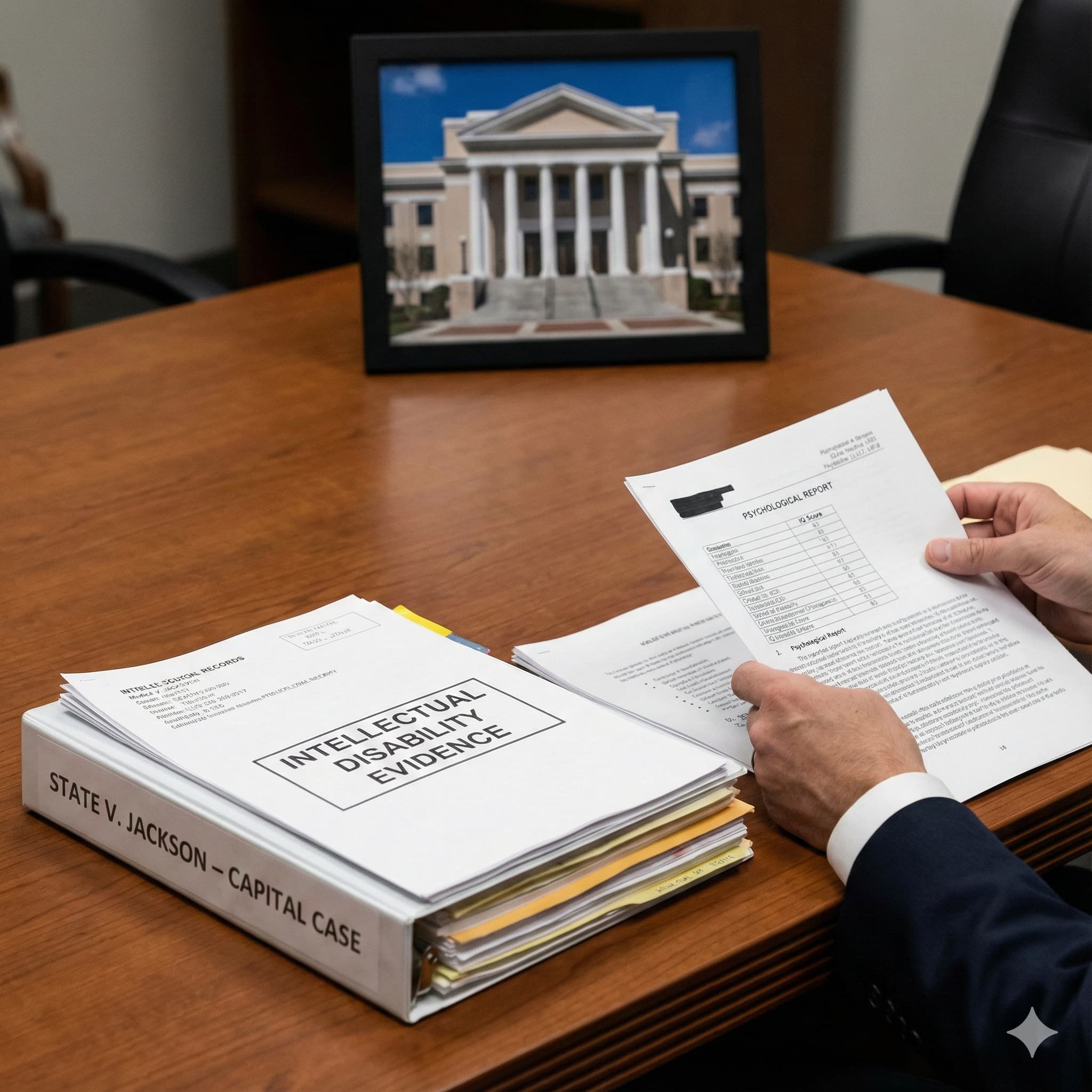
State v. Jackson (December 2025) confirms that “surface skills” like using a phone or driving do not disprove intellectual disability—courts must examine the full picture of adaptive deficits
| ✓ CONSTITUTIONAL PROTECTION: ATKINS V. VIRGINIA (2002) The U.S. Supreme Court ruled that executing intellectually disabled individuals violates the Eighth Amendment’s prohibition against cruel and unusual punishment. However, proving that disability in a Florida courtroom requires meeting a specific three-prong legal test by “clear and convincing evidence.” |
When the State Seeks Death: The Battle to Prove Intellectual Disability
Imagine facing the ultimate punishment—the death penalty—while battling an intellectual disability that makes it impossible for you to understand the world like everyone else. For decades, the Constitution has protected such individuals from execution.
However, prosecutors often point to a defendant’s ability to drive a car, use a cell phone, or make jail calls as “proof” that they fake their disability. A new ruling from Miami demonstrates that courts must look deeper than surface-level skills.
| FLORIDA STATUTE § 921.137 – INTELLECTUAL DISABILITY BAR TO EXECUTION Under Florida law, a defendant who proves intellectual disability by clear and convincing evidence cannot receive the death penalty. The defense must establish all three prongs: 1. Significantly subaverage intellectual functioning (generally IQ ≤ 70, with Standard Error of Measurement) 2. Deficits in adaptive behavior (conceptual, social, and practical skills) 3. Onset before age 18 (documented through childhood records) |
The Case: State v. Jackson (December 22, 2025)
Reginald Jackson faced indictment for two counts of First-Degree Murder, Armed Robbery, and Kidnapping for the 2013 killings of a woman and her grandson in Miami-Dade County. The State sought the death penalty.
Jackson’s defense team filed a motion to bar the death penalty, arguing that Jackson met the legal definition of “Intellectually Disabled” under Florida Statute § 921.137. What followed became a battle over what “disability” really means.
| CASE SUMMARY: STATE V. JACKSON (FLA. 3RD DCA, DECEMBER 22, 2025) Court: Florida Third District Court of Appeal Charges: Two counts First-Degree Murder, Armed Robbery, Kidnapping (Death penalty sought) State’s Argument: Jackson could drive a car, use a cell phone, discuss politics on jail calls, and cooperate with police—therefore he was “faking” disability Defense Evidence: IQ scores as low as 63; never surpassed 6th-grade level; labeled “emotionally handicapped”; could not cook, needed reminders to bathe, grandmother read his mail Holding: Death penalty BARRED—Jackson proved intellectual disability by clear and convincing evidence Key Reasoning: Performing basic tasks like using a phone or driving poorly does not negate clear evidence of severe deficits in reasoning, academics, and self-care. Courts must look for deficits, not just surface competence. |
The Evidence Battle: What the State Claimed vs. What the Defense Proved
The Jackson case illustrates how prosecutors attack intellectual disability claims by focusing on “strengths” while ignoring documented deficits:
| State’s “Strengths” Attack | Defense’s Documented Deficits |
| Could drive a car | Never had a license; drove poorly |
| Used a cell phone | Could not count money or write his name at age 5 |
| Discussed politics on jail calls | Never surpassed 6th-grade academic level |
| “Cooperative” with police | Labeled “emotionally handicapped” in school records |
| Could hold short conversations | Multiple IQ tests showed scores as low as 63 |
| Appeared “functional” | Could not cook; needed reminders to bathe; grandmother read his mail as an adult |
| ⚠ COURT’S KEY RULING: “STRENGTHS” DON’T DISPROVE DISABILITY The Third DCA rejected the State’s “strengths-based” attack. The legal standard requires courts to look for deficits, not just competence. Just because a person can mask their disability in short interactions does not mean they possess the judgment or reasoning required to face the ultimate punishment. The ability to perform basic tasks like using a phone or driving poorly does not negate clear evidence of severe deficits. |
The Three-Prong Test for Intellectual Disability in Florida Capital Cases
To save a client from death row in Florida, the defense must prove three specific elements by “clear and convincing evidence”:
| Prong | Legal Standard | How We Prove It |
| 1. Subaverage Intellectual Functioning | IQ ≤ 70 (with Standard Error of Measurement per Hall v. Florida—a 72 may qualify) | Retain neuropsychologists; gather all prior IQ testing; ensure SEM is applied |
| 2. Deficits in Adaptive Behavior | Conceptual (reading, writing, math); Social (relationships, judgment); Practical (self-care, job skills) | Interview family, teachers, employers; document daily living struggles; obtain school IEPs |
| 3. Onset Before Age 18 | Issues must have manifested during developmental period (childhood) | Pull birth records, medical records (head injuries), decades-old school records; locate former teachers |
| HOW WE BUILD A MITIGATION CASE THAT SAVES LIVES Capital cases require exhaustive investigation into the defendant’s entire life history. We act as investigators: • Birth records – Jackson was born to a drug-addicted mother, establishing prenatal risk factors • Medical records – Head injuries, developmental delays, hospitalizations • School IEPs – Individualized Education Programs documenting special education placement • Teacher interviews – Locating educators who remember the student’s struggles decades later • Family testimony – Documenting daily living deficits that “surface skill” observations miss • Neuropsychological evaluation – Comprehensive testing with Hall v. Florida SEM analysis |
Frequently Asked Questions: Intellectual Disability and the Death Penalty
What is the IQ cutoff for the death penalty in Florida?
Generally, an IQ of 70 or below indicates intellectual disability. However, under the U.S. Supreme Court’s Hall v. Florida ruling, courts must apply the “Standard Error of Measurement” (SEM). Consequently, scores slightly above 70 can still qualify. For example, a measured score of 72 might actually represent a true score of 67, qualifying the defendant for protection.
Can a defendant be executed if they are mentally ill?
“Intellectual Disability” (low IQ with adaptive deficits) differs from “Mental Illness” (conditions like schizophrenia or bipolar disorder). While the Constitution bars executing intellectually disabled individuals, severe mental illness typically serves as mitigation evidence to argue for a life sentence rather than an automatic bar to execution. Therefore, establishing intellectual disability provides stronger protection.
How do you prove a disability existed from childhood?
We conduct exhaustive historical investigation. Specifically, we pull birth records (Jackson’s showed a drug-addicted mother), medical records documenting head injuries or developmental delays, and school IEPs. Additionally, we locate former teachers who remember the student’s struggles. This investigation often spans decades and requires significant resources.
What are “adaptive behavior deficits”?
Adaptive behavior refers to the practical skills needed for daily functioning. Courts examine three domains: Conceptual (reading, writing, math, memory); Social (interpersonal skills, empathy, judgment); and Practical (personal care, job responsibilities, money management). Jackson, for instance, could not cook, needed reminders to bathe, and required his grandmother to read his mail as an adult.
What is the “Standard Error of Measurement” (SEM)?
IQ tests have inherent measurement error—no test produces a perfectly precise score. The SEM accounts for this uncertainty. Under Hall v. Florida (2014), the Supreme Court ruled that states cannot use a strict IQ cutoff of 70 without considering the SEM. Consequently, a defendant who scores 72 on a test might have a true IQ of 67, falling within the protected range.
Why do prosecutors focus on “surface skills” like driving or phone use?
Prosecutors attempt to undermine disability claims by highlighting any apparent competence. However, as the Jackson court ruled, the legal standard requires examining deficits, not strengths. Many intellectually disabled individuals can “mask” their disability in short interactions while still lacking the judgment and reasoning required for culpability at the capital level. Performing basic tasks does not negate documented severe deficits.
What is mitigation in a capital case?
Mitigation refers to evidence presented during the penalty phase of a capital trial that argues for a life sentence instead of death. This includes childhood abuse, mental health history, intellectual limitations, trauma, and other factors that explain (not excuse) the defendant’s conduct. Even if a defendant cannot prove intellectual disability under the three-prong test, mitigation evidence can still save their life.
What burden of proof applies to intellectual disability claims?
Florida requires proof by “clear and convincing evidence”—a higher standard than preponderance of the evidence but lower than beyond a reasonable doubt. This means the defense must present evidence that makes the existence of intellectual disability highly probable. Therefore, thorough investigation and expert testimony prove essential.
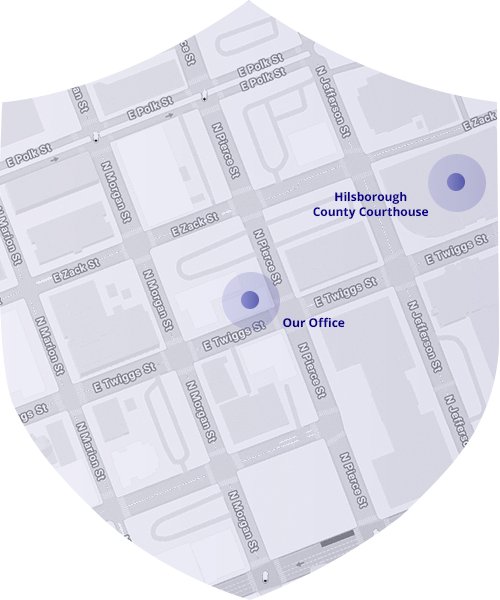
| Fighting for Life in Hillsborough County Capital cases represent the most complex litigation in the criminal justice system. You need an attorney who understands the science of the brain and the procedural rules of the death penalty. Call (813) 727-7159 for a Confidential Consultation The Brancato Law Firm, P.A. 620 E. Twiggs Street, Suite 205, Tampa, FL 33602 Serving Hillsborough, Pinellas, and Pasco Counties |
| ABOUT ATTORNEY ROCKY BRANCATO With over 25 years of criminal defense experience, Tampa Attorney Rocky Brancato has handled the most serious cases, including homicides. As former Chief Operations Officer of the Hillsborough County Public Defender’s Office, he knows how to build the mitigation case that saves lives. When the State seeks death, he remains relentless in uncovering the truth about a client’s mental history. |
Related:
Visit Us

Suite #205
Tampa, FL 33602
Contact Us Now
Free Legal Consultation (813) 727-7159