- Free Consultation 24/7: (813) 727-7159 Tap Here To Call Us


From First DUI to Death Penalty



Can I Get Off the Sex Offender Registry in Florida?


Updated 8/11/2026
Read This Before You Call
Most people who want off the Florida registry are barred by statute, and usually for a reason no attorney can change — most often a single arrest since release, or the offense of conviction itself. A registration deputy may have told you to contact a lawyer. Deputies are not applying the statute.
Work through the six questions below → They take about two minutes and they will tell you where you stand before you spend money on a consultation. Due to the volume of inquiries we receive on sex offender registry removal, we no longer offer free consultations.
Key Takeaway
Florida law provides only two routes off the sex offender registry: a Romeo and Juliet motion under § 943.04354, and a petition after 25 years under § 943.0435(11). Registration is otherwise for life. Most registrants are permanently barred — a single arrest for any offense since release ends eligibility forever, and an adult conviction for sexual battery, kidnapping, or certain lewd and lascivious offenses can never be removed. Even a petitioner who meets every requirement can be denied, because the court “may grant or deny” relief.
I’m Tampa Criminal Defense Attorney Rocky Brancato. I served in the Major Crimes Unit at the Hillsborough County Public Defender’s Office — homicide, sex crimes, child abuse — and I have practiced criminal defense and sex crimes defense for over 25 years. This page explains what the statute actually says, including the parts that disqualify most people who ask.
Start here: six questions that will tell you if you are barred
Work through these in order. Each one is drawn directly from § 943.0435(11). If a question stops you, it stops you — the bars below are statutory, and no lawyer can motion around them.
Question 1. Are you currently in custody, or on probation, parole, community control, or any other supervision or sanction for the offense?
Include unpaid restitution, fines, or costs if your sanction has not formally terminated.
YES → Stop. The waiting period has not begun. The clock starts when the last piece of your sentence ends, not when you left prison. Come back when your sanctions have terminated.
NO → Go to Question 2.
Question 2. Since the date everything ended, have you been arrested for anything at all?
Any felony. Any misdemeanor. Including charges that were dropped, dismissed, nolle prossed, or resolved by acquittal. Including a failure-to-register arrest. However minor, however long ago.
YES → Stop. You are permanently barred under § 943.0435(11)(a)1. The statute conditions eligibility on the fact of arrest, not on the outcome. No attorney can change this. One exception worth checking yourself: if your FDLE record shows an arrest that never happened or belongs to someone else, that is a records error and it must be corrected before anything else is possible.
NO → Go to Question 3.
Question 3. Was your requirement to register based on an adult conviction for any of the following?
- Kidnapping or false imprisonment — § 787.01, § 787.02
- Sexual battery — § 794.011, other than § 794.011(10)
- Lewd or lascivious battery under § 800.04(4)(a)2., where the court found the victim was under 12 or that force or coercion was used
- Lewd or lascivious molestation under § 800.04(5)(b)
- Lewd or lascivious molestation under § 800.04(5)(c)2., where the court found both force or coercion and unclothed genitals or genital area
- Lewd or lascivious offense on an elderly or disabled person — § 825.1025(2)(a)
- An attempt or conspiracy to commit any of the above
- Another state’s or the federal equivalent of any of the above
YES → Stop. Permanently barred under § 943.0435(11)(a)1.a.–h. Registration is for life unless you obtain a full pardon or your conviction is set aside in a postconviction proceeding. Note that three of these apply only where the sentencing court made a specific written finding — if your judgment and sentence contains no such finding, the bar may not reach you. That is a question about your paperwork, not your memory of the case.
NO, and my only registrable offense was a JUVENILE adjudication → Keep going. These bars apply only to adult convictions. A juvenile adjudication — even under § 794.011 — does not permanently bar you.
NO → Go to Question 4.
Question 4. Have you been designated a sexual predator, as opposed to a sexual offender?
A predator designation is a separate written finding by a judge under § 775.21. It appears on your FDLE record. If you are unsure, it probably does not apply to you.
YES → Stop, with one exception. The § 943.0435(11) petition applies to sexual offender registration. Section 775.21(6)(l) requires a sexual predator to maintain registration for life absent a full pardon or a conviction set aside, and there is no equivalent removal petition. The exception: if the designation itself was entered contrary to law — wrong statute, required written findings never made, predicate offenses that do not qualify — that is a defect in the order and it can be attacked by motion. That is a different case, and it is one we handle.
NO → Go to Question 5.
Question 5. How long has it been since the last of your confinement, supervision, and sanctions ended?
Less than 20 years → Stop. Add 25 years to the date your last sanction terminated — that is the earliest date the statute would allow you to petition. Between now and then, a single arrest for anything ends your eligibility permanently.
20 to 25 years, and you finished everything before July 1, 2007 → You are in the one genuinely contested area of this law. See the 20-year argument below before you do anything.
20 to 25 years, and you finished after July 1, 2007 → Stop. The 25-year period applies to you. Your earliest date is 25 years from termination.
25 years or more → Go to Question 6.
Question 6. Were you removed from another state’s registry, or told you no longer have to register somewhere else?
YES → That relief does not carry over, and the route is different from everything above. See our post on moving to Florida after being taken off of the sex offender registry in another state. Relief under § 943.0435(11)(b) is a request to FDLE, not a motion to a judge.
NO → You have cleared every automatic bar in the statute. That is uncommon, and it is as far as a list of questions can honestly take you — what remains is discretionary, and it is decided on your records and in front of a particular judge. Read on.
The default is lifetime registration
Now the detail behind those questions. Section 943.0435(11) opens by stating the rule, and the rule is permanent.
Fla. Stat. § 943.0435(11) — a sexual offender “shall maintain registration with the department for the duration of his or her life unless the sexual offender has received a full pardon or has had a conviction set aside in a postconviction proceeding for any offense that meets the criteria for classifying the person as a sexual offender for purposes of registration.”
A full pardon and a vacated conviction are the only two things that end the obligation automatically. Everything else on this page is an exception the Legislature carved out, and every exception is narrow.
Note also § 943.0435(12): “The designation of a person as a sexual offender is not a sentence or a punishment but is simply the status of the offender which is the result of a conviction for having committed certain crimes.” Courts rely on that language to reject punishment-based challenges. We have litigated against it, and it is the reason arguments framed as “this is punishment” tend to fail while arguments framed as “the order does not comply with the statute” tend to succeed.
Route one: the 25-year petition under § 943.0435(11)
The clock starts later than people think
The waiting period runs from lawful release from “confinement, supervision, or sanction, whichever is later.” Not from arrest, not from conviction, and not from your release from prison if probation followed. If you served prison and then probation, the clock starts when probation terminated.
A note for people who were told twenty years. That was the law until July 1, 2007, when Ch. 2007-209, § 6 raised it to 25 and simultaneously created the permanent bars in Question 3. If you were told twenty and are now being told twenty-five, you were not misled — the statute changed underneath you.
The arrest bar is absolute
Critical — This Disqualifies Most People
Section 943.0435(11)(a)1. requires that you “ha[ve] not been arrested for any felony or misdemeanor offense since release.” Arrested. Not convicted. Section 943.0435(11)(a)3. is broader still, requiring a showing that you have not been arrested for “any crime” since release.
In our experience defending failure-to-register cases in Hillsborough County, this is the single most common reason a caller who believes he qualifies does not.
The offense list, and the findings inside it
The permanent bars are listed in Question 3 above. Two details matter and most summaries omit both.
The findings requirement cuts both ways. Three of the bars apply only where the sentencing court made a specific written finding. If your judgment and sentence contains no such finding, the bar may not reach you. This is the first thing we look at. The Fifth District applied exactly this reasoning in the juvenile context in M.B. v. State, 159 So. 3d 960 (Fla. 5th DCA 2015), holding registration was error because the trial court never made the required finding and in fact found the opposite. The subsection “must be strictly construed.”
The bars reach only adult convictions. A person whose only registrable offense is a juvenile adjudication is not permanently barred, even under § 794.011, and may petition after 25 arrest-free years. FDLE takes the same position and conducts written case reviews specifically where the offense was a juvenile adjudication. We have found this point missed repeatedly, including by people told years ago that they could never come off.
Even a perfect petition can be denied
Critical — Relief Is Discretionary. § 943.0435(11)(a)3. — the court “may grant or deny” the petition. You must demonstrate no arrest for any crime since release, that relief complies with the federal Adam Walsh Child Protection and Safety Act of 2006, and that “the court is otherwise satisfied that the offender is not a current or potential threat to public safety.”
FDLE and the State Attorney must receive notice at least three weeks before the hearing, and both “may present evidence in opposition to the requested relief or may otherwise demonstrate the reasons why the petition should be denied.”
If the court denies the petition, it “may set a future date at which the sexual offender may again petition.”
“Not a current or potential threat to public safety” is doing a great deal of work in that sentence, and it is why two petitioners with identical records get different outcomes in different courtrooms. Any lawyer who quotes you odds on one of these is guessing.
Route two: Romeo and Juliet removal under § 943.04354
Narrower, but it requires no waiting period at all — and unlike the 25-year petition, it can reach a person otherwise facing lifetime registration.
The Statute — § 943.04354
Eligibility requires all of the following:
- Conviction, regardless of adjudication, or adjudication of delinquency, for a violation of § 800.04, § 827.071, or § 847.0135(5) — or a similar offense in another jurisdiction;
- No other conviction or delinquency adjudication for § 794.011, § 800.04, § 827.071, or § 847.0135(5);
- Registration required solely on the basis of that conviction; and
- The person is not more than 4 years older than the victim, who was 13 or older but under 18 at the time of the offense.
Critical — Two Offenses People Wrongly Believe Qualify
Sexual battery no longer qualifies. Ch. 2016-104, § 4 removed § 794.011 from the qualifying list. It now appears only in the disqualifying clause. Most Florida law firm pages, and most secondary sources, still describe § 794.011 as Romeo and Juliet eligible. It has not been since 2016.
Traveling to meet a minor does not qualify. Only § 847.0135(5) is on the list, not § 847.0135(3). The Sixth District confirmed this in Maxey v. State, 6D2024-1883 (Fla. 6th DCA Mar. 6, 2026), which also held that a trial court may vacate a removal order it granted in error.
Two procedural points matter in Tampa, both from our own district.
You can file at any time. Hurtado v. State, 2D20-2478 (Fla. 2d DCA Nov. 24, 2021): because the current statute contemplates disposition at a hearing and not necessarily at sentencing, “a defendant may file the motion at any time.” Older sources say the motion must be made at sentencing. That was the pre-2014 rule from Clark v. State, 95 So. 3d 986 (Fla. 2d DCA 2012), and Hurtado supersedes it. If you were told years ago that you missed your window, that advice may no longer be correct.
You get one attempt. Hurtado footnote 2: “Successive motions to remove the registration requirement are not authorized.” Section 943.04354(2)(b) provides that if the court denies the motion, the person “is not authorized under this section to file another motion.” This is why we do not file these until the record supports them — a denial is permanent, and it forecloses the one route with no waiting period.
Relief is discretionary here too. State v. Caragol, 120 So. 3d 641 (Fla. 5th DCA 2013): the court “has discretion to deny the petition even where a defendant meets all the criteria,” though “that discretion is not unbridled and the court must set forth the basis of its determination.” And a court has no discretion to grant relief where the criteria are not met — Clark, 95 So. 3d at 988.
The two routes compared
| 25-Year Petition § 943.0435(11) | Romeo & Juliet Motion § 943.04354 | |
|---|---|---|
| Waiting period | 25 years from end of all sanctions | None |
| Qualifying offenses | Any registrable offense except the permanent bars | Only § 800.04, § 827.071, § 847.0135(5) |
| Sexual battery (§ 794.011) | Adult conviction = permanent bar | Disqualifies entirely |
| Arrest since release | Any arrest = permanent bar | Not a statutory factor |
| Age relationship required | No | Yes — within 4 years, victim 13–17 |
| Notice to State / FDLE | 3 weeks | 21 days |
| Discretionary? | Yes — “may grant or deny” | Yes — “it may grant” |
| If denied | Court may set a date to re-petition | No successive motion permitted |
| The Brancato Law Firm, P.A. · Hillsborough, Pinellas, and Pasco Counties · (813) 727-7159 | ||
If you were removed from another state’s registry
Florida does not honor another state’s decision to remove you. It applies its own criteria to your underlying conviction, and if that conviction is one Florida requires registration for, you register here. See our blog post on moving to Florida after being taken off the sex offender registry in another state.
There is a route, and it is not the one most people expect. Section 943.0435(11)(b) requires two showings, both of them: proof that the other state’s designation has been removed by court order or by operation of law, and proof that you “do[] not meet the criteria for registration under any other sub-subparagraph under subparagraph (1)(h)1.” The second requirement is what defeats most people — the underlying conviction independently satisfies Florida’s own criteria, whatever the other state did.
Procedurally, this is a request to FDLE, not a motion to a circuit judge. Adams v. State, 37 So. 3d 953 (Fla. 4th DCA 2010), holds that filing in circuit court first is premature: a person “must first exhaust his administrative remedies under section 943.0435(11)(b) … by petitioning the FDLE and perhaps even filing a petition for writ of mandamus with the circuit court.” If FDLE refuses, mandamus is the remedy. FDLE states its own position plainly: removal from another state’s registration requirement does not guarantee removal from the requirement to register in Florida.
One thing worth knowing. Adams expressly declined to reach the Full Faith and Credit and Equal Protection arguments, and no Florida appellate decision we located resolves whether Full Faith and Credit compels recognition of another state’s termination. That question is open.
What about the 20-year argument?
If you completed your sanctions before July 1, 2007, you may have heard that the 25-year period cannot be applied to you. That argument is real, it is being litigated, and you should understand honestly where it stands — because where it stands depends on which part of the state you are in.
Circuit judges around Florida have granted these petitions on the theory that the Legislature cannot move the finish line, and a Miami-Dade court found the 2007 amendment punitive in nature. That order was affirmed in State v. Whitehead, 3D22-2119 (Fla. 3d DCA Mar. 20, 2024) — but by per curiam affirmance without opinion, which establishes no precedent and binds no trial court.
Against that, the Second District Court of Appeal, which reviews Hillsborough, Pinellas, and Pasco, has now twice said the opposite. In State v. Korson, 2D2024-0807 (Fla. 2d DCA Mar. 26, 2025), and again in State v. Perdomo, 2D2024-0857 (Fla. 2d DCA May 16, 2025), the court stated that § 943.0435 is procedural under Givens v. State, 851 So. 2d 813 (Fla. 2d DCA 2003), that trial courts “should have applied the current version,” and that the pre-2007 petitioner should have been excluded. Perdomo went out of its way to “reiterate” the point “given the frequency with which the issue presented by the State appears to be arising.”
September 2026 update: The Fourth District has now joined the Second on the substance. In Florida Department of Law Enforcement v. Garcia, No. 4D2025-2547 (Fla. 4th DCA Sept. 2, 2026), a Broward petitioner who pled to sexual battery in 1991 and finished supervision in 2000 persuaded a successor judge to remove him from the registry on the theory that the 2007 amendment could not reach him. FDLE, which had not been a party, moved to vacate under § 943.0436(3); the trial court ruled FDLE had no standing. The Fourth District reversed on every point. It held that a removal petition is a civil regulatory proceeding, not part of the criminal case, so the order was appealable; that FDLE has standing to protect its statutory duty to maintain the registry; and that because § 943.0435 is procedural, the version in effect when the petition is filed controls. A petitioner who had not yet reached twenty years when the Legislature moved the line in 2007 had, in the court’s words, only “a mere expectation based on an anticipation of the continuance of an existing law, which is not a vested right.” The court ordered the removal order stricken. Two cautions for Tampa Bay readers: Garcia expressly disagrees with Korson on whether these proceedings are criminal or civil, which is a jurisdictional question the Second District still answers differently, and the opinion is not final until rehearing is resolved. On the question that matters to you, though — which version of the statute applies — Tampa’s appellate court and Fort Lauderdale’s now say the same thing. Note also that since October 1, 2024, FDLE itself is entitled to notice of every removal petition and may appear to oppose it.
What This Means In Practice
Both Korson and Perdomo were dismissed for lack of jurisdiction. Under LaFave v. State, 149 So. 3d 662 (Fla. 2014), the State has no right to appeal and no certiorari route from an order granting removal from the registry. That is why the Second District could only offer guidance rather than reverse — and it is why circuit judges continue to grant these petitions.
The practical consequence: the argument is currently disfavored on the law in this district, but an order granting your petition cannot be reversed. Both Korson and Perdomo arose in Hillsborough County. This is a case about the record you build and the judge who hears it, not about a box you check.
That is the honest picture. If someone tells you this argument is a sure thing, they have not read Korson. If someone tells you it is hopeless, they have not read LaFave.
Frequently asked questions
What is the fastest way to get off the Florida sex offender registry?
For most registrants there is no fast way — the 25-year petition under § 943.0435(11) requires 25 years from the end of all sanctions. The only route without a waiting period is a Romeo and Juliet motion under § 943.04354, which requires that the victim was 13 to 17 and that you are not more than four years older, among other criteria. A full pardon or a conviction set aside in postconviction proceedings also ends the obligation.
Does a dismissed charge count as an arrest for registry removal purposes?
Yes. Section 943.0435(11)(a)1. bars the petition for anyone “arrested for any felony or misdemeanor offense since release,” and the statute conditions eligibility on the fact of arrest rather than the disposition. A charge that was dropped, dismissed, or resolved by acquittal still ends eligibility permanently.
When does the 25-year clock start?
At lawful release from “confinement, supervision, or sanction, whichever is later.” If you served prison followed by probation, the clock starts when probation terminated, not when you left prison. If a sanction has not formally terminated, the clock has not started.
Can a juvenile adjudication ever come off the Florida registry?
Yes, and more often than people assume. The permanent bars in § 943.0435(11)(a)1. apply only where registration is “based upon an adult conviction.” A person whose only registrable offense is a juvenile adjudication is not permanently barred, even for an offense under § 794.011, and may petition after 25 arrest-free years. Separately, a withheld adjudication of delinquency requires no registration at all — K.J.F. v. State, 44 So. 3d 1204 (Fla. 1st DCA 2010).
If I qualify, does the judge have to grant my petition?
No. Section 943.0435(11)(a)3. states the court “may grant or deny” relief, and requires the court to be “satisfied that the offender is not a current or potential threat to public safety.” FDLE and the State Attorney receive three weeks’ notice and may appear and present evidence in opposition. Petitioners who meet every statutory criterion are denied.
I was removed from another state’s registry. Do I still have to register in Florida?
Almost always yes. Relief under § 943.0435(11)(b) requires proving both that the other state’s designation was removed and that you do not independently qualify under any other route in § 943.0435(1)(h)1., and the second requirement is usually fatal. That request goes to FDLE administratively rather than to a circuit judge. See Adams v. State, 37 So. 3d 953 (Fla. 4th DCA 2010).
Does a withhold of adjudication keep me off the registry?
Not for an adult. Section 943.0435(1)(b) defines “convicted” to include a plea “regardless of whether adjudication is withheld.” DeRosa v. Tunnell, 989 So. 2d 1206 (Fla. 4th DCA 2008). Sections 775.24 and 943.0436 also bar a court from entering an order exempting someone from registration, so a negotiated withhold cannot be used as a workaround.
Do you offer a free consultation on getting off the sex offender registry?
No. We receive a high volume of registry removal inquiries and the majority of callers are barred by statute, most often by an arrest since release or by the offense of conviction. A half-hour consultation on a registry, designation, or out-of-state registration question is $350, payable in advance. If we determine you qualify and you retain us, we quote a flat fee for the work and the $350 is credited toward it. Working through the six questions above costs nothing and will tell you whether the statute forecloses your petition before you spend anything.
Can you just tell me over the phone whether I qualify?
No, and neither can anyone else honestly. Eligibility under § 943.0435(11) turns on the exact offense of conviction, the findings the sentencing court made, the date every sanction terminated, and your complete arrest history — all of which are in documents, not in recollection. The questions above cover the automatic statutory bars. Beyond that we review records.
Why should I hire The Brancato Law Firm?
I served as Chief Operations Officer of the Hillsborough County Public Defender’s Office, where I led and mentored a staff of over 100 attorneys, and I practiced in the Major Crimes Unit handling homicide, sex crimes, and child abuse cases. I am death-qualified, I taught criminal procedure and courtroom testimony at the police academy, and I have defended cases in the 13th Judicial Circuit for over 25 years. On registry matters specifically, we file only what the record supports — which matters most under § 943.04354, where a denial permanently forecloses the one route with no waiting period.
What do Super Lawyers and AV Preeminent ratings mean?
AV Preeminent is Martindale-Hubbell’s highest rating for legal ability and ethical standards, based on confidential peer review. Super Lawyers selection recognizes the top five percent of attorneys through peer nomination and independent research. Neither can be purchased, which is what makes them meaningful as third-party signals.
For more about how we defend the underlying charges, visit our Tampa Sex Crimes Lawyer page.
What we handle, and what we charge
We litigate these. I served in the Hillsborough County Public Defender’s Major Crimes Unit and have defended sex offense cases in the 13th Judicial Circuit for over 25 years. We file removal petitions under § 943.0435(11), Romeo and Juliet motions under § 943.04354, and motions to correct offender and predator designations entered contrary to law.
We do not offer free consultations on registry removal, designation, or out-of-state registration questions. The volume of these inquiries made it impossible to continue. A half-hour consultation is $350, payable in advance.
If you qualify, the $350 comes off your fee. We handle this work on a flat fee, quoted after we have reviewed your records and know what the case requires. If you retain us, the consultation fee is credited toward that flat fee.
Before you pay for a consultation, work through the six questions above. They cost nothing, and if the statute forecloses your petition a consultation cannot help you — we will not sell you one.
If you clear those questions, we review by records rather than by phone — certified judgment and sentence for every qualifying offense, proof of the date your sanctions terminated, your complete arrest history, and your current FDLE registration record. The answer is in the paperwork, not in the retelling.
If you are looking for information, support, or others in your situation rather than counsel, the Florida Action Committee is a Florida membership organization for registrants and their families. They are not a law firm and they do not charge for information.
Tampa Criminal Defense Attorney Rocky Brancato
The Brancato Law Firm, P.A.
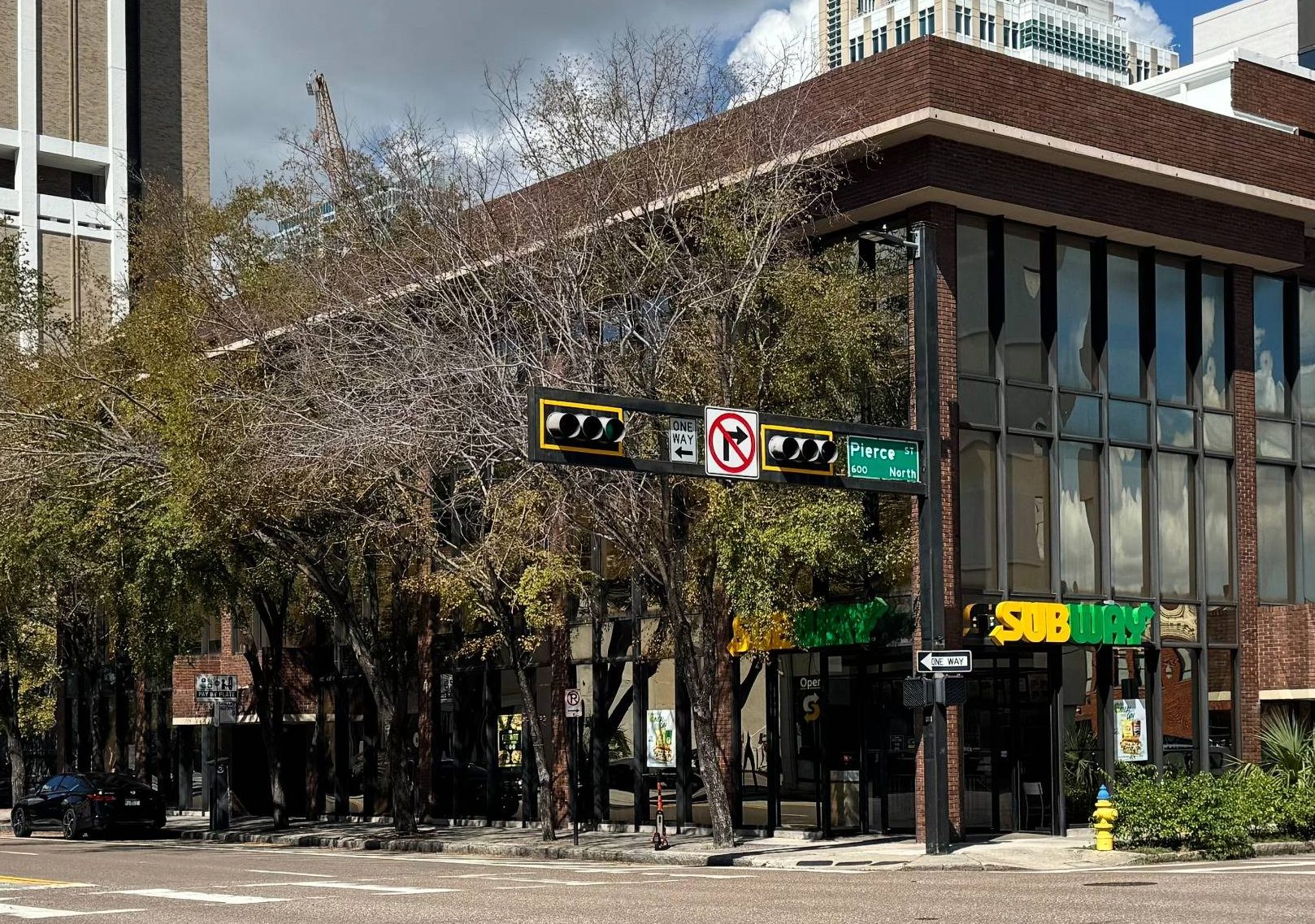
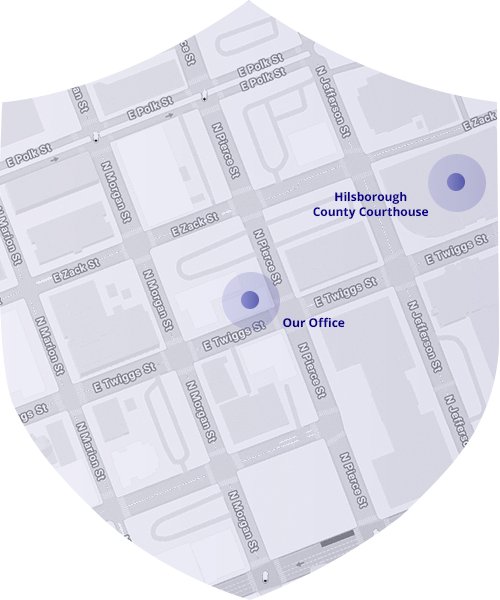
620 E. Twiggs Street, Suite 205, Tampa, FL 33602
(813) 727-7159
The Brancato Law Firm, P.A. is a Tampa-based criminal defense practice serving Hillsborough, Pinellas, and Pasco Counties. We are not affiliated with any other Brancato-named law firms. This page provides general information about Florida statutes and is not legal advice. Reading it does not create an attorney-client relationship.
Visit Us
Tampa, FL 33602
Contact Us Now
Free Legal Consultation (813) 727-7159