- Free Consultation 24/7: (813) 727-7159 Tap Here To Call Us


From First DUI to Death Penalty



Tampa Internet Crimes Attorney | Brancato Law Firm, P.A.



A Tampa internet crimes attorney defends people charged with offenses involving computers, the internet, and digital evidence. These cases include cyberstalking, online solicitation, computer hacking, identity theft, and possession of child sexual abuse material. At The Brancato Law Firm, P.A., Rocky Brancato has defended internet crime cases throughout Tampa Bay for more than 25 years, with 150+ jury trials to verdict and a defense team that works with certified digital forensics experts to challenge how evidence was collected, stored, and interpreted.
As the former Chief Operations Officer and Chief Assistant Public Defender of the Hillsborough County Public Defender’s Office, Rocky oversaw a staff of over 100 attorneys and understands how internet crime investigations work, including the surveillance techniques, the forensic tools, and the assumptions prosecutors rely on. Our attorneys know how to challenge them.
Internet crime investigations move fast. Police investigators may have already seized your computer. Detectives may want to “ask a few questions” about your online activity. You may have received a target letter mentioning images or files you’ve never seen. Prosecutors build these cases for months before you know you’re a suspect.
If you face cybercrime charges, our firm can help.
Internet Crimes We Defend in Florida
| Charge | Florida Statute |
| Possession of Child Pornography | §827.071 |
| Distribution of Child Pornography | §847.0137 |
| Online Solicitation of a Minor | §847.0135 |
| Traveling to Meet a Minor | §847.0135(4) |
| Computer Hacking / Unauthorized Access | §815.06 |
| Identity Theft / Internet Fraud | §817.568 |
| Cyberstalking / Online Harassment | §784.048 |
| Revenge Porn / Non-Consensual Images | §784.049 |
Important: Internet crime cases in Florida carry serious penalties, including prison time and sex offender registration for certain offenses. Early intervention by an experienced Tampa internet crimes defense attorney is critical to protecting your rights and your future.
The Constructive Possession Defense
Police often assume that if illegal content appears on your device, you’re automatically guilty. Florida law requires prosecutors to prove both knowledge of the content and control over it.
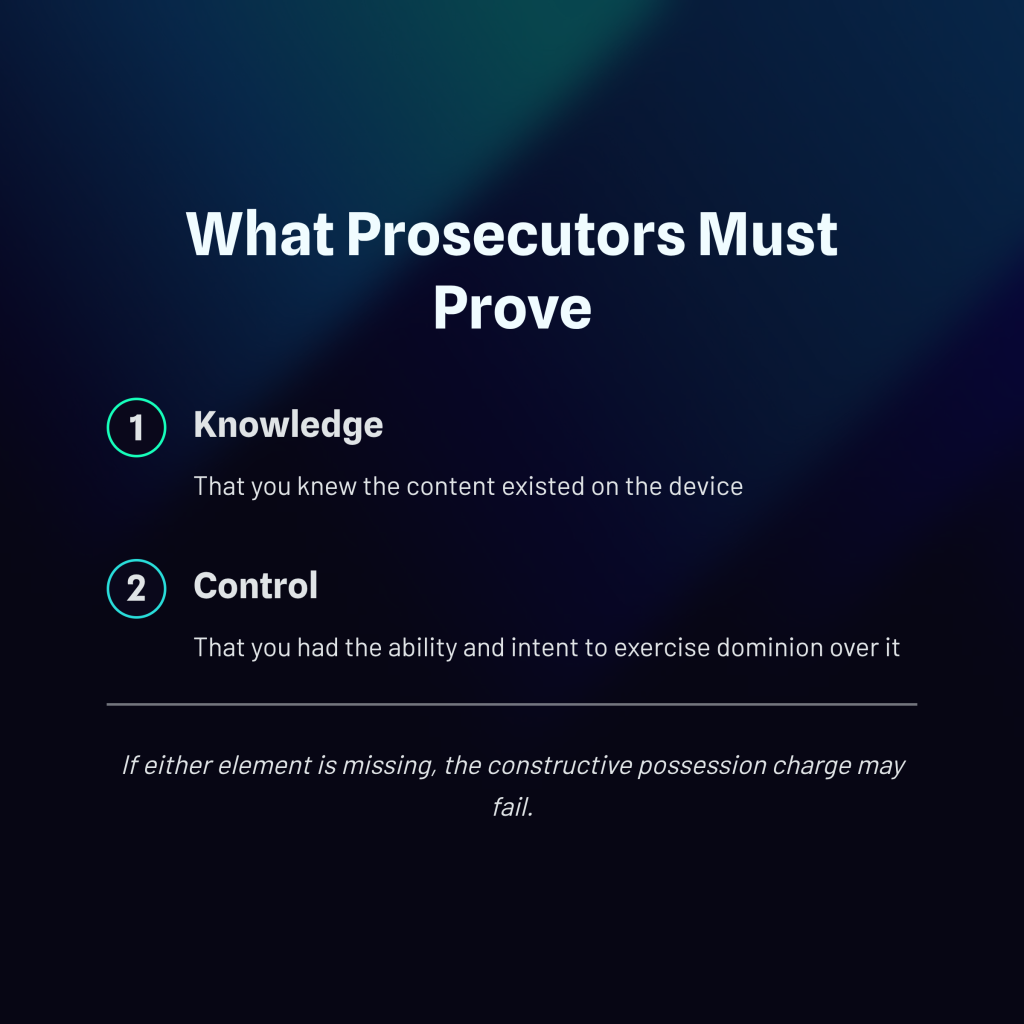
This standard creates significant defense opportunities when:
- Multiple people use the same computer, tablet, or smartphone
- Shared cloud storage accounts (Google Drive, iCloud, Dropbox) contain disputed files
- Household members or roommates have access to devices
- Malware, remote access, or hacking compromised the device
If the State cannot prove you specifically knew about and controlled the content, their case for constructive possession may collapse.
BitTorrent and File-Sharing Defense
Many internet crime prosecutions stem from peer-to-peer file-sharing programs like BitTorrent (uTorrent, qBittorrent), FrostWire, Soulseek, eMule, and Tixati. These programs can automatically share files without your direct knowledge or intent. You might not realize you’re “distributing” content simply by having certain software installed.
Our defense team challenges these assumptions by demonstrating:
- Software misconfiguration that enabled unintended sharing
- Mislabeled files that disguised actual content
- Third-party access to the device or network
- Automatic seeding features the user never activated intentionally
How We Challenge Digital Evidence
Internet crime cases depend almost entirely on digital evidence. That evidence is not always what prosecutors claim. Our defense team works with forensic experts to analyze:
- Cloud Data: Google Drive, iCloud, OneDrive, and Dropbox each create syncing errors and shared-access scenarios that produce reasonable doubt
- Timestamps and Metadata: Verifying when files actually appeared and who accessed them
- IP Address Evidence: IP addresses trace to routers, not individuals. This matters most with unsecured Wi-Fi or shared networks
- Deleted Files: Recovery context matters. Was content intentionally saved or automatically cached?
- Social Media Evidence: Screenshots, messages, and posts can be taken out of context or fabricated
Challenging Law Enforcement Surveillance
Digital intelligence units in Tampa Bay monitor social media, track online activity, and use keyword detection tools, often for months before making an arrest. These techniques are not infallible. Our defense team challenges:
- Illegal surveillance that violated your Fourth Amendment rights
- Overbroad warrants that exceeded constitutional limits
- “Fishing expeditions” based on speculation rather than evidence
- Unreliable forensic tools and questionable analysis methods
What Police Claim vs. What the Law Requires
| What Police Claim | The Legal Reality |
| Content on your device equals automatic guilt | State must prove knowledge AND control (constructive possession) |
| BitTorrent use proves intent to distribute | File-sharing can be automatic, unintentional, or misconfigured |
| IP address identifies you specifically | IP traces to a router or location, not a specific person |
| Dark web activity is inherently illegal | Using Tor or dark web browsers is legal; only specific conduct isn’t |
| Deleted files are gone forever | Police recover deleted data, but full context often helps the defense |
Spoliation: When Evidence Disappears
Digital evidence can disappear, sometimes due to law enforcement mishandling. When police return devices without preserving data, delete partial files, or allow crucial footage to expire, our defense team raises spoliation arguments. Under State v. Powers, 555 So. 2d 888 (Fla. 2d DCA 1990), when prosecutors benefit from missing evidence that could have proven innocence, our attorneys file motions seeking dismissal or other remedies.
We defend clients facing internet crime charges across Hillsborough, Pinellas, and Pasco counties. Internet crime cases often overlap with sex crime allegations, white collar crime, and drug trafficking charges when prosecutors allege online facilitation. The cross-practice expertise at The Brancato Law Firm meets the complexity these matters demand.
Pre-File Advocacy in Internet Crime Cases
Internet crime investigations often involve months of surveillance before an arrest. That window is the most valuable time to retain counsel. Pre-file advocacy means engaging an attorney before formal charges are filed, while the case is still under review by the State Attorney’s Office.
During this stage, our defense team can:
- Communicate directly with detectives and prosecutors to present mitigating facts
- Submit independent forensic analysis that contradicts the investigation’s conclusions
- Negotiate against filing decisions or argue for reduced charges
- Preserve evidence that police may not have prioritized
Cases that look serious in the investigation phase sometimes never result in formal charges when an experienced defense attorney intervenes early.
Defense Strategies for Internet Crime Cases
Every internet crime case requires a defense strategy tailored to the specific technology involved. Our attorneys work with certified digital forensics experts who examine hard drives, cloud storage, IP address logs, and network traffic data. The defense team identifies unauthorized access to devices, shared network vulnerabilities, and metadata that contradicts the prosecution’s timeline.
Our defense team also files pretrial motions to suppress evidence obtained through warrantless searches of electronic devices. The Supreme Court’s ruling in Riley v. California, 573 U.S. 373 (2014) requires law enforcement to obtain a warrant before searching cell phones. Evidence gathered in violation of Fourth Amendment protections may not be admissible at trial.
Frequently Asked Questions
What should I do if police seize my computer or phone in Tampa?
Do not answer questions about your device, your accounts, or your online activity. Invoke your right to remain silent and contact our firm immediately. Do not consent to additional searches, and do not attempt to log into accounts remotely, as this could be viewed as evidence destruction. Our attorneys can intervene early to protect your rights while digital evidence is being processed.
Can I face internet crime charges if someone else used my device?
Yes, but the State must prove you knowingly possessed or transmitted the illegal content. Shared devices, open Wi-Fi networks, and malware infections all create reasonable doubt. Our firm works with independent digital forensics experts who can analyze device logs, IP records, and user activity timestamps to demonstrate that someone else may have been responsible.
What are the penalties for internet crimes in Florida?
Penalties vary widely depending on the specific charge. Computer fraud under Florida Statute 815 can carry up to 15 years in prison. Online solicitation charges carry severe mandatory minimums, and a conviction for possession of child sexual abuse material can result in decades in prison plus lifetime sex offender registration. Our attorneys evaluate every internet crime case for constitutional violations and forensic weaknesses that can reduce or eliminate charges.
How does law enforcement investigate internet crimes in Hillsborough County?
Internet crime investigations in Hillsborough County typically involve the Tampa Police Department, HCSO, or FDLE working with the State Attorney’s Office in the 13th Judicial Circuit. Investigators may use undercover chat operations, IP address tracing, search warrants for digital devices, and data requests to service providers. Our firm scrutinizes every step of the investigation for Fourth Amendment violations, improper warrant execution, and entrapment tactics.
Can internet crime charges be dropped or reduced in Florida?
Yes. Charges can be dropped if the defense demonstrates constitutional violations such as illegal searches, defective warrants, or entrapment. Charges may also be reduced through pre-file advocacy, where an attorney intervenes before formal charges are filed. The Brancato Law Firm brings more than 25 years of criminal defense experience to every case and evaluates each one for suppression opportunities, forensic flaws, and negotiation leverage.
What is entrapment in an online sting operation?
Entrapment occurs when law enforcement induces someone to commit a crime they would not have otherwise committed. In online sting operations, officers sometimes initiate conversations, introduce sexual topics, and pressure targets into making statements or arrangements. Our firm examines the full chat logs, the officer’s conduct, and the timeline of the conversation to determine whether the investigation crossed the line from detection into inducement.
Do I need a lawyer for a misdemeanor internet crime charge?
Yes. Even misdemeanor internet crime charges can result in a criminal record that affects your employment, professional licenses, and housing. Some charges that start as misdemeanors can be elevated to felonies based on the evidence recovered from your devices. The Brancato Law Firm defends clients facing internet crime charges at every level in Hillsborough, Pinellas, and Pasco Counties.
A Defense Built Around the Evidence
Internet and cybercrime charges, including computer fraud and online solicitation, require a firm that understands the technology behind the evidence. Every defense strategy is built under the direct oversight of Rocky Brancato, a trial attorney with over 150 jury trials, and focuses on search warrant validity, the legality of digital surveillance, and the reliability of cloud-based evidence.
Call to discuss your case.
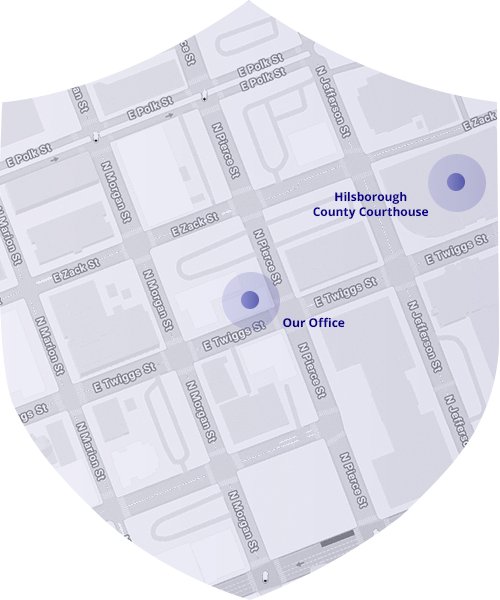
The Brancato Law Firm, P.A. 620 E. Twiggs Street, Suite 205, Tampa, FL 33602 Phone: (813) 727-7159
The Brancato Law Firm, P.A. is a Tampa-based criminal defense practice. We are not affiliated with any other Brancato-named law firms.
This page is for informational purposes only and does not constitute legal advice. Each case is unique, and outcomes depend on the individual facts and circumstances involved. Past results do not guarantee future outcomes.
Visit Us

Suite #205
Tampa, FL 33602
Contact Us Now
Free Legal Consultation (813) 727-7159